Why Do Car Seats Have Different Foam Densities?
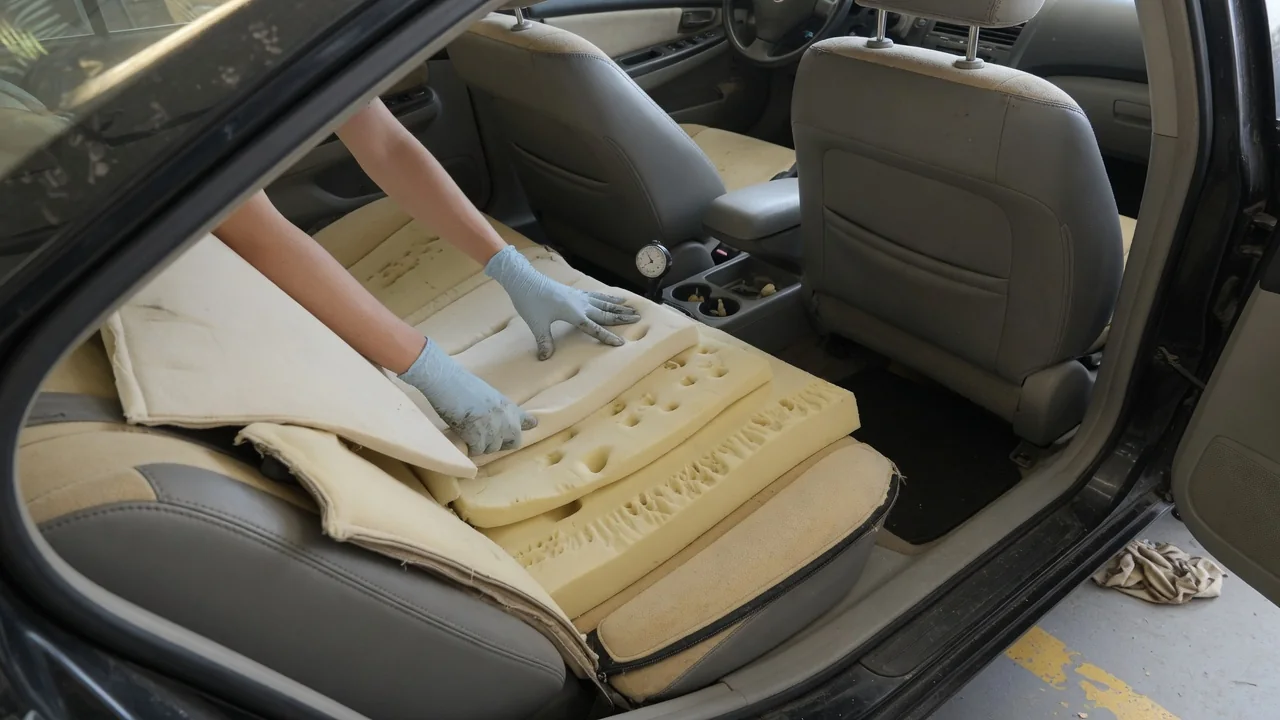
Press different areas of almost any modern car seat with your hand and the cushion usually won't feel uniform. The side bolsters, the front edge of the cushion, the center of the seat and the backrest often respond differently. That variation is deliberate. Car seats commonly use foam of different densities and firmness in different zones. This lets the seat hold the occupant in place, stay comfortable over long drives and keep its shape over years of use.
Support: Holding the Body in Position
A seat has to carry the occupant's weight. It also has to resist the forces that push a body sideways, forward and down while the car is moving. Those loads are not spread evenly. The area under the pelvis and thighs carries most of the seated weight. The side bolsters take lateral force in corners. The front edge of the cushion supports the thighs during braking and when someone gets in or out of the car. Firmer, often denser, foam in these high-load regions lets the seat resist deep compression where it matters most. If the entire cushion were soft, the occupant would sink until the pelvis met the seat frame or suspension. The body would also roll more easily in turns.
Two terms are often used interchangeably and are worth separating. Density describes how much foam material is packed into a given volume. Firmness describes how much force it takes to compress the foam. The two are related, but foam chemistry and cell structure also affect firmness. That means a seat maker can tune how hard a zone feels partly independently of its density. In molded automotive seats, manufacturers can produce cushions with distinct regions of different hardness within a single part, or they can bond separate foam sections together. Side bolsters are a common place for firmer material because they must hold their shape against repeated sideways loading rather than conform deeply to the body. How firm each zone is, and exactly where the boundaries sit, varies by vehicle and seat design.
Comfort: Conforming Surfaces Over a Stable Base
Comfort in a car seat is not simply a matter of softness. A seat that feels plush in a brief showroom test can become tiring on a long drive if the body sinks unevenly and the muscles have to work to stay upright. Car seat foam density zones address this by combining a softer, more conforming surface with firmer material underneath or around it. The softer layer adapts to the shape of the body and spreads contact over a larger area, which helps reduce concentrated pressure points. The firmer material beneath keeps posture stable so the occupant does not bottom out.
The backrest follows similar logic. The lumbar area often needs enough resistance to support the natural curve of the lower spine, while the upper back and shoulder areas may be shaped and tuned differently. Vibration also matters. A seat sits between the occupant and a vehicle body that transmits road inputs, and the stiffness and damping of the foam influence how those vibrations reach the person sitting on it. Different zones can be tuned so the seat absorbs small, repeated inputs without feeling vague or unstable.
Temperature and airflow are part of comfort as well. Foam structure affects how air moves through the cushion. Seats with heating or ventilation integrate those components into the foam and trim layers. These features are vehicle-specific, so their interaction with foam zones depends on the particular seat design.
Aging: How Foam Zones Wear Over Time
Polyurethane foam changes with use. Repeated compression gradually breaks down the cell structure, and the foam can lose some height and resilience. This process is often described as fatigue or compression set. Heat, sunlight through the windows, moisture and the constant flexing from getting in and out of the car can all contribute. Because the load on a seat is uneven, wear is uneven too. Two areas typically show breakdown first. One is the outer bolster on the entry side, which is pressed and dragged each time someone slides in. The other is the center of the cushion, which bears the most weight.
Using different densities is one way designers try to manage this. Denser foam generally resists permanent compression better than lower-density foam of similar firmness, so more durable material in high-wear zones can help a seat keep its shape longer. Softer comfort layers, by contrast, may soften sooner. When zones age at different rates, a seat can come to feel quite different from how it felt when new. The cushion may sag in the middle, the bolster may collapse on the entry side, or the occupant may feel the frame or support structure through worn foam. The actual rate of change depends on the foam formulation, the seat construction, how the car is used and the climate it operates in, so there is no universal timeline.
Practical Implications and Limits
For owners, the zoned design explains why a seat can feel fine in one area and worn in another. A collapsed side bolster or a dip under the hips does not necessarily mean the whole cushion has failed. When a seat is reupholstered or repaired, the foam underneath matters as much as the cover. Replacing a cover over degraded foam usually restores appearance more than support. A new cover stretched over an uneven base can also wear faster. Upholstery repairs commonly involve rebuilding or replacing the affected foam section. Matching the original firmness of each zone is not always straightforward, especially when original parts are unavailable.
A general explanation like this one has limits. Each manufacturer sets foam density and firmness targets for a specific seat, and owner documentation does not usually state them. Seats with adjustable lumbar supports, air bladders, heating, ventilation, occupant-detection sensors or seat-mounted airbags contain components that interact with the foam, and some of these are safety-related. Foam work on such seats should follow the vehicle's service information, because altering the cushion or backrest could affect how those systems operate. How a seat feels is also personal. Body size, driving posture and trip length all change how the same foam zones are perceived, so a design that suits one driver may feel too firm or too soft to another.