Why Do Car Plastics Need UV Stabilizers?
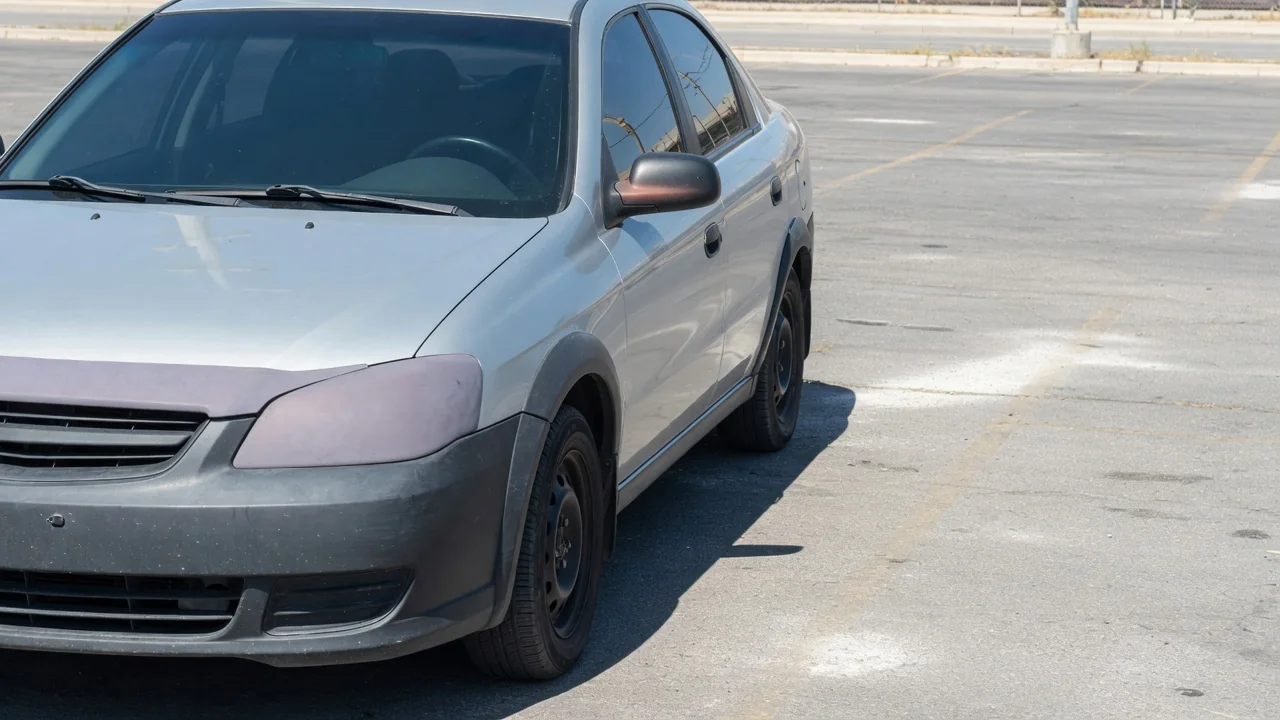
Modern cars use plastics everywhere: bumpers, mirror housings, grilles, trim strips, dashboards, door panels and light lenses. Most of these polymers would degrade quickly in direct sunlight if they were left unprotected. UV stabilizers are additives mixed into the plastic to slow that damage. Here is why car plastics need UV stabilizers, how the additives work, and what aging looks like once the protection starts to run out.
How Sun Exposure Attacks Automotive Plastics
Sunlight that reaches the ground includes ultraviolet radiation, mainly in the UVA and UVB ranges. UV photons carry more energy than visible light, and that energy is enough to break chemical bonds in many polymers or to excite small light-absorbing sites in the material. These sites, called chromophores, can come from the polymer structure itself, from residues left during manufacturing, or from oxidation that has already started. Once a bond breaks, it forms reactive free radicals.
In the presence of oxygen, those radicals start a chain reaction known as photo-oxidation. Radicals react with oxygen, form peroxides, and attack neighboring polymer chains, which creates more radicals. The result is chain scission, where long molecules are cut into shorter ones, along with new chemical groups that absorb even more UV. Polyolefins such as polypropylene, which is widely used for bumpers and interior trim, are especially vulnerable to this process without stabilization.
Vehicles make these conditions worse. Exterior parts face direct sun, rain, road chemicals and repeated heating and cooling. Interior parts sit behind glass that filters much of the UVB but may still pass a meaningful share of UVA, depending on the glass type and any coatings. Cabins and dark surfaces can also become very hot when parked in the sun, and heat speeds up oxidation reactions. For this reason, UV protection for automotive plastics matters both outside and inside the car.
What UV Stabilizer Additives Do
UV stabilizers are not a single chemical. They are a group of additives that interrupt degradation at different stages. UV absorbers, such as benzotriazole, benzophenone and triazine types, absorb ultraviolet energy and release it as small amounts of heat before it can break polymer bonds. They work best when there is enough material depth for absorption, so their effect depends on part thickness and on the concentration used.
Hindered amine light stabilizers, usually shortened to HALS, work differently. Instead of blocking UV, they trap the free radicals that drive photo-oxidation. Much of their value comes from a regenerative cycle that lets them neutralize many radicals before they are used up. This makes them effective in thin sections and at surfaces, where absorbers have less material to work with. Formulators often combine HALS with UV absorbers because the two mechanisms complement each other.
Other ingredients support the system. Carbon black, which colors many black trim pieces, is a strong UV screen in its own right. Antioxidants, often phenolic and phosphite types, protect the polymer during molding and against heat-driven oxidation in service. Pigments, fillers and the base resin all affect how well a stabilizer package performs, so each formulation is matched to the polymer, color, part location and expected exposure. Painted parts gain extra protection because automotive clearcoats also usually contain UV absorbers and HALS.
How Plastics Age When Protection Runs Out
Stabilizers are gradually consumed, and they can also migrate to the surface, wash off or evaporate over time. As their concentration near the surface falls, photo-oxidation speeds up. Visible signs usually show up first on the exposed face of a part. Color fades or shifts, gloss drops, and textured black trim turns gray or whitish. A chalky residue may form as degraded polymer and loosened pigment or filler particles collect at the surface.
Mechanical changes follow the chemical ones. Shorter polymer chains make the material more brittle, so a degraded surface layer can develop fine microcracks. Those cracks concentrate stress, which means a part that once flexed may snap during a minor impact or while being removed. Interior components can warp, crack or turn sticky depending on their material, and heat often contributes as much as UV. Clear plastics such as polycarbonate headlight lenses rely on hard coatings for UV protection. When those coatings wear away, the lens can yellow and haze. Degradation is often concentrated in the outer layer at first, but once it starts the damage is permanent.
Practical Implications and Limits
For owners, the key point is that UV stabilizers slow aging but do not stop it. How long a part keeps its appearance depends on its formulation, color, thickness, orientation to the sun, local climate and how the car is stored. No single lifespan applies to all vehicles or parts. Horizontal surfaces such as dashboard tops, cowl panels and roof-facing trim generally receive the most direct sunlight, so they often show wear before vertical or shaded areas.
Reducing exposure is the most reliable measure under an owner's control. Garage or shaded parking, windshield sunshades and regular cleaning that removes grime help limit both UV and heat load. Protectant products designed for automotive plastics may add a temporary surface barrier and improve appearance, but follow the product directions and test on an inconspicuous area first. Trim restorers and dressings mostly change how a surface looks. They cannot rebuild polymer chains that have already broken, so the effect fades and needs to be reapplied.
Appearance is also an imperfect guide to condition. A faded part may still be structurally sound, while a part that looks acceptable after cleaning may be brittle underneath, which matters for clips, tabs and fasteners during repairs. When buying replacement parts, keep in mind that the stabilizer package is not visible and generally cannot be judged by eye. Repainting or refinishing exterior plastics brings its own UV protection through the coating system, but only if the parts are properly prepared and the surface is sound.