Why Do Car Headliners Sag?
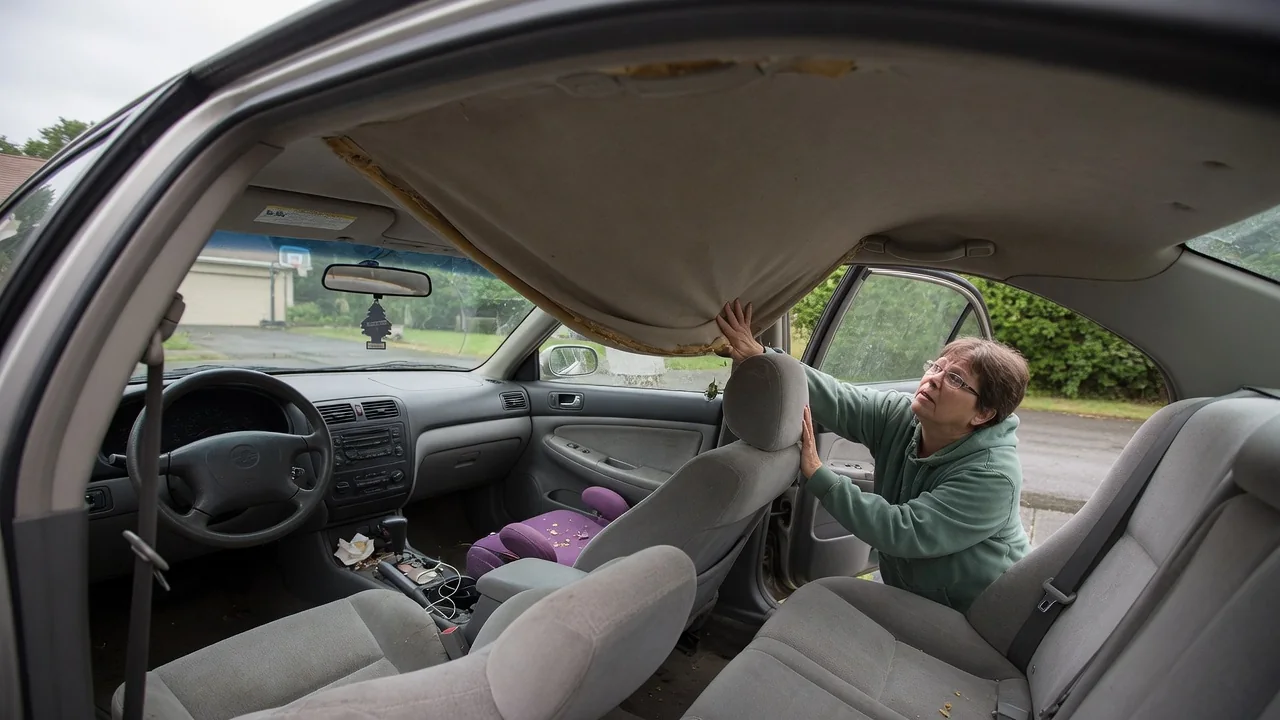
A drooping roof lining is one of the most common interior complaints on older vehicles, and the question of why do car headliners sag usually comes down to chemistry rather than abuse. The fabric rarely fails on its own. Instead, the thin foam layer and adhesive holding it to the roof board age, weaken, and eventually let go under heat, humidity, and time.
Where sagging begins
Most headliners are built as a sandwich: a molded backing board made of fiberglass, pressed fiber, or a similar composite, a thin layer of polyurethane foam, and a face fabric bonded on top. Sagging almost always begins in the foam, not the cloth. As the foam ages, it oxidizes and crumbles into a fine, sometimes sticky powder, and the fabric loses the surface it was attached to even though the original glue may still cling to the board.
The first signs tend to appear where stress and heat concentrate. Edges near the rear window, the area around a sunroof opening, and the sections above the sun visors are common starting points, though the pattern differs by vehicle design and how the board is contoured. A small bubble or soft ripple usually comes first, then spreads as the weight of loose fabric pulls on neighboring areas where the deteriorated foam is barely holding.
Moisture and heat
Heat is the main accelerator. A roof panel sitting in direct sun passes much of that warmth to the board just beneath it, and cabin air trapped in a closed car gets hottest near the ceiling. Repeated cycles of baking and cooling speed the breakdown of foam and soften adhesive, which is why vehicles that spend years parked outdoors in hot climates often show a drooping liner sooner than garage-kept examples of the same model.
Moisture adds a second line of attack. Humid air, a leaking sunroof drain, a failed windshield or rear glass seal, or a poorly sealed roof antenna can all let water reach the backing board. Damp foam degrades faster, and a board that absorbs water may warp, stain, or lose stiffness. Brown tide marks, a musty smell, or sagging concentrated around one opening suggest a leak worth tracing before any fabric is replaced, since new material will fail again over a wet board.
Repair scope
Because the failure lies in the foam, repair scope depends on how much of that layer has broken down. Pins, tacks, or spray glue applied through or behind old fabric tend to be temporary at best, because there is nothing sound to bond to, and adhesive can soak through and leave dark spots on the face cloth. These stopgaps may hold a small corner for a while, but they seldom stop the rest of the panel from releasing.
A lasting repair generally means removing the board from the vehicle, stripping the old fabric, cleaning away every trace of crumbled foam, and bonding new foam-backed material with an adhesive rated for high cabin temperatures. The work involved varies considerably between vehicles. Sunroofs, overhead consoles, grab handles, dome lights, and especially side curtain airbags routed along the roof rails all complicate removal, so trim around airbag areas is best left to someone familiar with that vehicle's service information.
Everyday Use and Observations
Daily habits rarely cause a headliner to fall, but they can hasten a liner that is already weak. Driving with windows down sends air pulsing against loose fabric and widens a small bubble. Pushing the material back up by hand, loading tall cargo that rubs the ceiling, or scrubbing a stain with a wet cleaner can separate cloth from the fragile foam. Aggressive steam or soaking shampoo is a particular risk, since moisture and rubbing attack the bond directly.
Owners can learn a lot from simple observation. Pressing lightly on a suspect area and feeling it move freely over the board, or hearing a faint crunch, points to powdered foam. Orange or yellow dust on seats and shoulders after touching the ceiling tells the same story. Note whether the droop is spreading evenly with age or centered on one damp spot, and whether it blocks the rearview mirror or brushes occupants' heads, which turns a cosmetic annoyance into a visibility concern.
Limits and Next Steps
There are limits to what can be concluded from appearance alone. A sagging liner on a car that has seen many years of service usually reflects ordinary material aging, but the same symptom on a newer vehicle, or one accompanied by stains, deserves a closer look for water entry. Construction also differs between manufacturers: some use thicker foam, some bond fabric to different board materials, and some trucks or older models use other designs altogether, so no single timeline or cause applies to every vehicle.
A sensible next step is to decide how far the deterioration has gone and whether a leak is involved, then choose between a short-term hold and a full re-cover. Parking in shade, using a windshield sunshade, and keeping drains clear may slow further aging but will not restore foam that has already crumbled. When the fabric begins to interfere with visibility, or the roof area houses airbags and wiring, having an upholstery or trim shop assess it is the more dependable route.