Why Do Car Doors Freeze Shut?
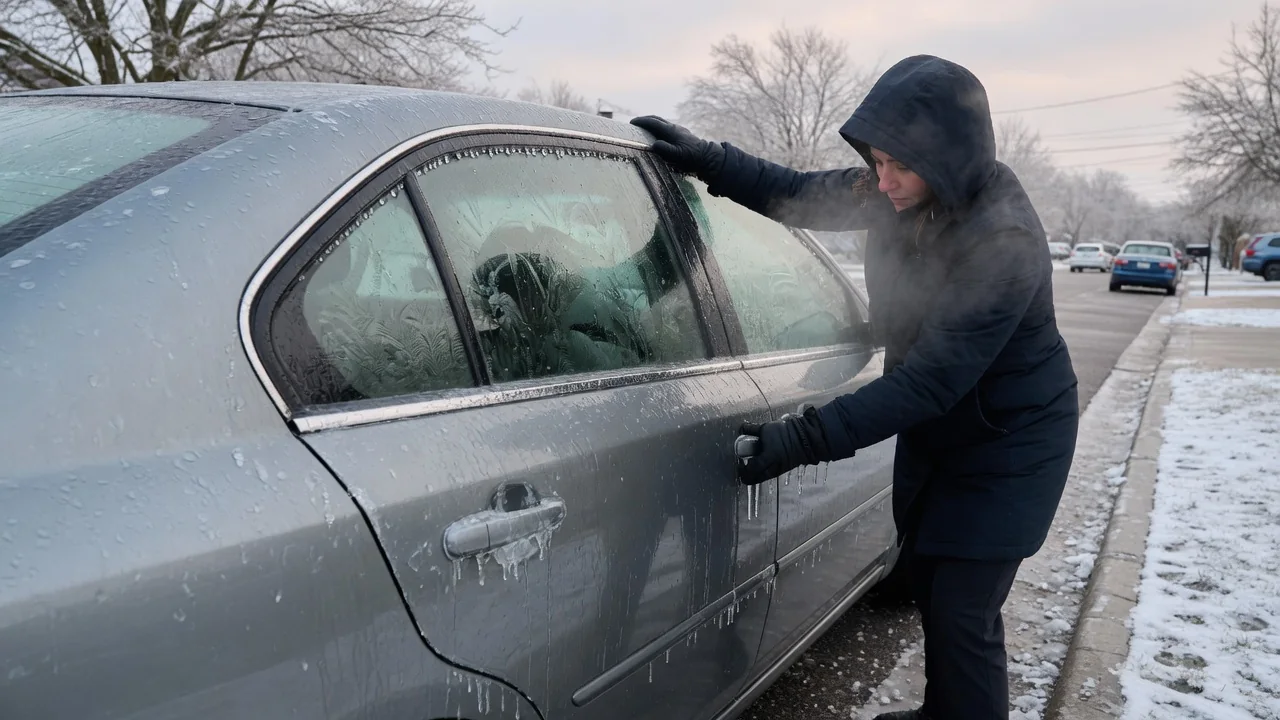
Why do car doors freeze shut on some mornings and open normally on others? The answer is almost always water in the wrong place at the wrong time. Moisture settles on rubber seals, seeps into lock cylinders and latch mechanisms, then turns to ice when temperatures fall. Understanding where that water collects makes it easier to free a stuck door without damage and to keep it from happening again.
Where ice forms
The most common bond forms between the rubber weatherstrip and the painted metal it presses against. Rain, melted snow, or condensation sits in the thin gap where the seal meets the door frame, and because the seal is compressed when the door is closed, even a light film of water freezes into a surprisingly strong glue. The door handle may move normally and the latch may release, yet the door stays put because the seal itself is stuck along its length.
Ice can also form inside the hardware. A keyed lock cylinder can admit water that freezes around the tumblers, so the key will not go in or turn. The latch and its linkage inside the door can stiffen, leaving a handle that feels limp or does not spring back. Frameless windows, flush or retractable handles, and sliding doors add their own trouble spots, so the exact place where a vehicle freezes depends on its design and on how its drain paths are arranged.
Gentle release
Start by working out which part is frozen. If the lock clicks and the handle feels normal, the seal is the likely culprit, and pressing firmly on the door around its edge with the palm of a hand often cracks the ice better than pulling. Pushing inward flexes the seal against the frame and breaks the bond in small sections. Pulling hard on the handle risks tearing the weatherstrip or snapping a plastic handle, which becomes brittle in deep cold.
Trying another door is often the quickest solution, since the side facing the sun or away from the wind may be free, and once inside, running the heater warms the cabin and softens the remaining seals. A commercial de-icer made for automotive use can help with locks and seal edges. Avoid pouring hot water over the door or glass, because the sudden temperature change can crack a window and the runoff simply refreezes. Remote start, where fitted, lets the cabin warm before anyone touches a handle.
Prevention after washing
A winter wash is one of the most reliable ways to end up with frozen doors, because high-pressure water is driven into door jambs, lock cylinders, handle recesses, and the channels around the windows. Automatic dryers clear the body panels but rarely reach the seal faces. If the car then sits outside in freezing air, that trapped water sets within a short time, and it often catches the fuel filler door, the trunk or liftgate, and folding mirrors as well.
After washing, open each door and wipe the rubber seals and the metal surfaces they contact with a dry towel, paying attention to the lower edge where water pools. Opening and closing the doors a few times and cycling the locks helps shake out droplets. Driving for a while with the heater on dries the jambs further before parking. Washing earlier in the day, when temperatures are highest, gives remaining moisture a chance to evaporate rather than freeze overnight.
Everyday Use and Observations
Daily habits bring moisture into the door openings even without a wash. Snow brushed off the roof falls into the jamb when the door opens, wet boots and coats raise cabin humidity, and warm interior air condenses on cold seals after parking. Freezing rain and a thaw followed by a sharp overnight drop are the classic conditions. Many drivers notice that the driver's door, opened most often, or whichever side faces the prevailing weather, is the one that sticks first.
Seal condition matters as much as weather. Rubber that is clean and supple sheds water, while seals that are dirty, cracked, or flattened hold it against the metal. A rubber care product or silicone-based protectant intended for weatherstripping leaves a film that keeps ice from gripping, though the owner's manual is the best guide to what suits a particular vehicle's materials. Knocking snow away from the door edges before opening, and parking in a garage or under cover when possible, reduces how much water reaches the seals at all.
Limits and Next Steps
Patience has limits worth respecting. If a door will not release with moderate effort, forcing it can bend linkage, tear a seal, or damage a window regulator when frameless glass is frozen to its upper seal and cannot drop as the handle is pulled. Power-operated items, including windows, sliding doors, liftgates, and deploying handles, should not be run repeatedly against ice, because the motors and gears can be strained. Warming the vehicle and waiting is slower but much gentler on the hardware.
A door that freezes repeatedly in the same place points to an underlying cause. Blocked drain holes along the bottom of the door can let water stand inside the shell, and a torn or misaligned seal may channel water where it should not go. A door that fails to latch after thawing, or a lock that stays stiff in mild weather, deserves inspection by a qualified technician, since a door that will not close securely is a safety concern. Latch layouts and seal designs differ between vehicles, so model-specific guidance applies.