Why Do Car Batteries Self-Discharge While Parked?
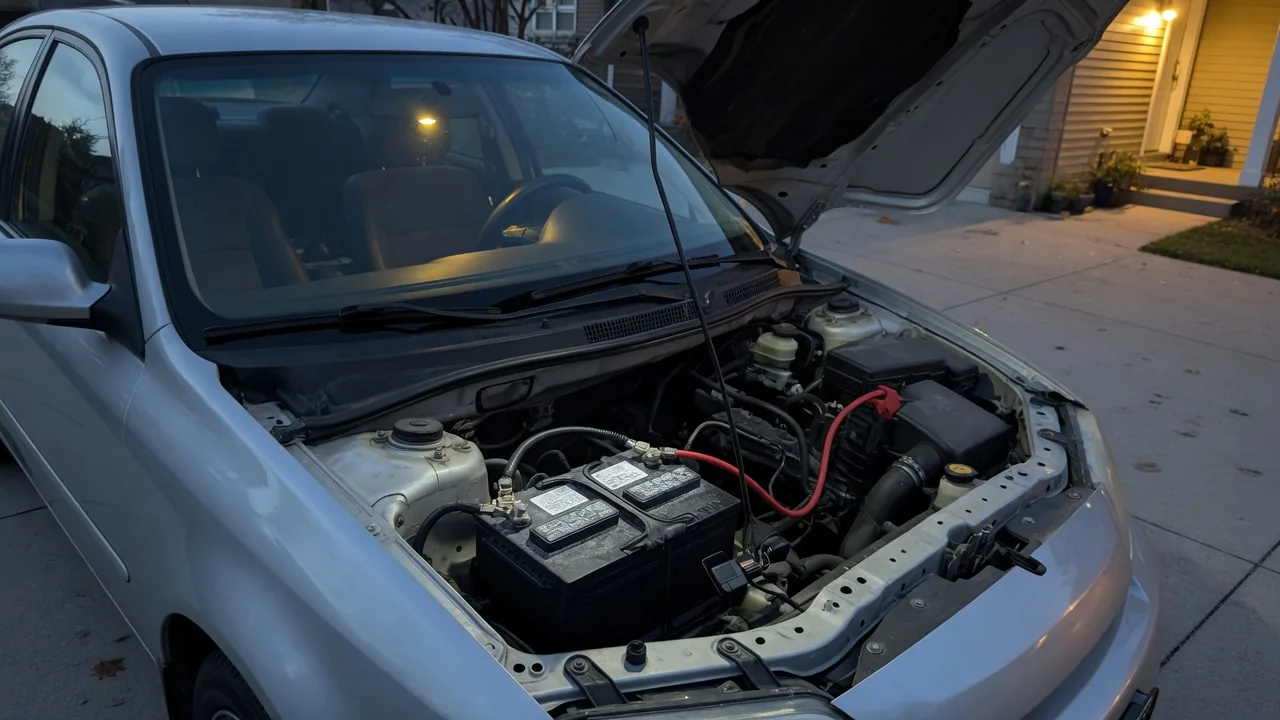
Drivers who ask why car batteries self-discharge while parked are really asking about two separate processes. One is chemical and happens inside the battery case even when nothing is connected. The other is electrical and comes from the vehicle itself, which keeps drawing small amounts of current after the key is removed. Together they explain why a car left sitting can struggle to start.
Normal loss
A lead-acid battery stores energy as a chemical difference between its lead plates and the sulfuric acid electrolyte surrounding them. That arrangement is never perfectly stable. Slow side reactions at the plate surfaces consume a little of the stored charge every day, even with both cables disconnected and the battery resting on a shelf. This is true self-discharge, and it is a property of the chemistry rather than a defect. Impurities in the plates, the alloy used in the grids and the battery's age all influence how quickly it happens.
Temperature is the biggest outside influence. Heat speeds up chemical reactions, so a battery in a car parked through a hot summer loses charge faster than the same battery in a cool garage. Cold slows self-discharge but also reduces the power available for cranking, which is why a weakened battery often reveals itself on the first frosty morning. Battery design matters too: absorbed glass mat types generally hold charge longer at rest than conventional flooded batteries, though the rate for any particular unit depends on its construction and condition.
Vehicle systems
The second drain comes from the car's electronics. Modern vehicles keep several circuits alive with the ignition off, including the clock, alarm, remote entry receiver, engine computer memory and, on many newer models, a telematics unit that stays in contact with a cellular network. This standing demand is usually called parasitic draw or key-off drain. It is designed into the vehicle and is normally small, but it adds to chemical self-discharge and works around the clock for as long as the car sits.
Control modules also need time to go to sleep. After the doors are locked, many cars stay partly awake for a period before dropping to their lowest draw, and anything that wakes them, such as a key fob left nearby or a door that is not fully latched, can restart that cycle. Abnormal drains are different: a trunk light that stays on, a sticking relay, or poorly wired aftermarket equipment such as a dash camera can pull far more current than intended. Acceptable draw varies by vehicle.
Storage checks
Before leaving a car parked for weeks, a few checks help. A resting voltage reading taken with a multimeter after the car has sat for several hours gives a rough picture of state of charge; a healthy, fully charged twelve-volt lead-acid battery typically rests a little above twelve and a half volts, and noticeably lower readings suggest it is going into storage partly depleted. Clean, tight terminals matter as well, because corrosion adds resistance and dirt and moisture on the case can create a slight leakage path between the posts.
For longer storage, a battery maintainer is usually the gentlest solution. Unlike a simple trickle charger, a smart maintainer monitors voltage and tops up only when needed, which offsets both self-discharge and key-off drain without overcharging. Disconnecting the negative cable removes the vehicle's draw but not the internal chemical loss, and on some cars it clears stored settings or requires relearning procedures afterward, so the owner's manual is worth checking first. Some vehicles also offer a transport or storage mode that reduces standby demand.
Everyday Use and Observations
Daily habits shape how a battery copes with parking. Starting the engine takes a substantial burst of energy, and the alternator needs driving time to return it. A routine of short trips with headlights, heated seats and the rear defroster running can leave the battery slightly lower after each journey, so it begins every parked period with less in reserve. A car driven that way may fail after only a few idle days, while the same model used for longer runs sits happily for much longer.
The warning signs are usually gradual. Slower cranking, interior lights that dim as the starter engages, a stop-start system that stops operating, or a low-battery message on the instrument cluster all hint that the charge is falling between drives. Some cars shed convenience features automatically to protect starting power. Noting how long the car sat, the weather and whether any accessories were left plugged into a power outlet helps separate ordinary loss from a drain worth investigating. Whether an outlet stays live with the ignition off differs between vehicles.
Limits and Next Steps
Self-discharge cannot be eliminated, and letting a battery sit low causes harm of its own. As a lead-acid battery discharges, lead sulfate forms on the plates; if it stays there, the crystals harden and reduce capacity permanently, a process called sulfation. That is why a battery that has gone flat several times rarely performs like new even after a full recharge. Age compounds the problem, because an older battery has less usable capacity to give up before the starter no longer turns.
When a battery goes flat repeatedly after short parking periods, the cause needs to be identified rather than assumed. A load or conductance test shows whether the battery itself can still hold charge, a charging system check confirms the alternator is replenishing it, and a parasitic draw test measures what the car consumes at rest. Any stored fault codes are clues to interpret alongside those results, not proof that a particular part has failed. Because sleep behavior and acceptable draw are vehicle-specific, a qualified technician with the correct service information is the sensible next step.