Why Do Brakes Sometimes Squeak on the First Stop?
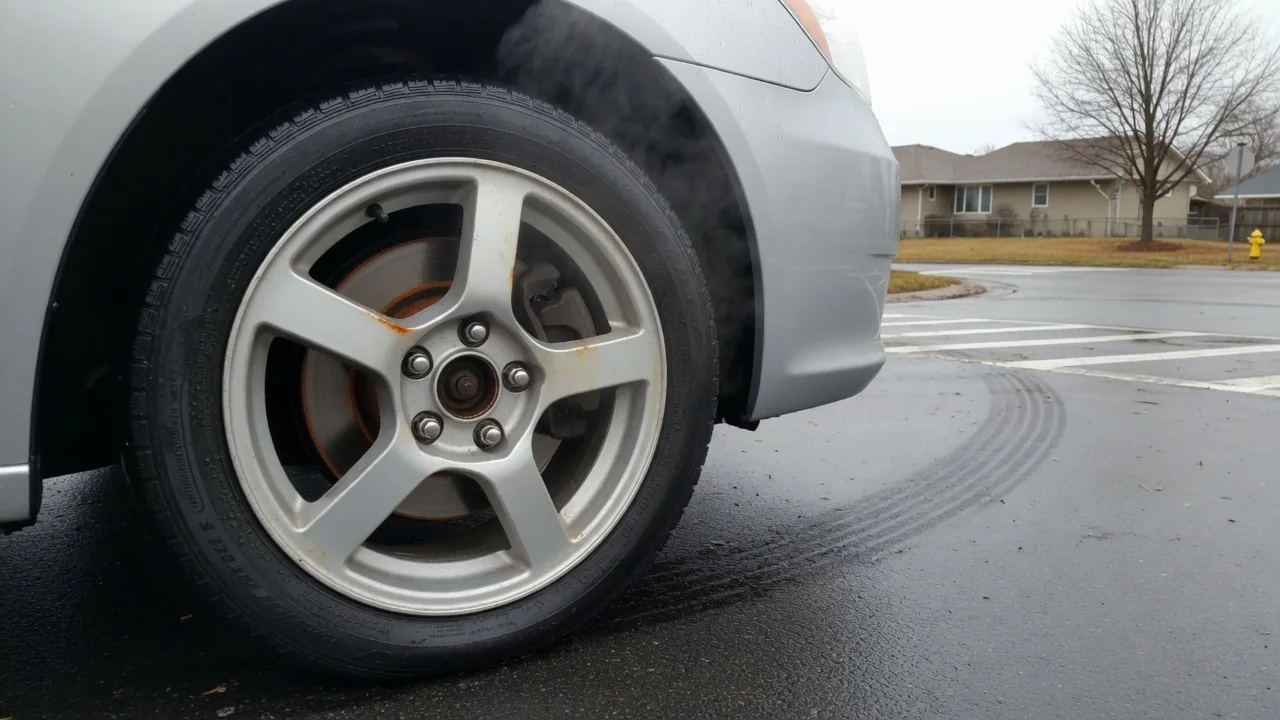
A brief squeak as you back out of the driveway, then silence for the rest of the trip: it is one of the most common brake noises drivers notice. Understanding why brakes sometimes squeak on the first stop comes down to moisture, a thin layer of surface rust, and pad temperature. Knowing where that harmless explanation ends helps you judge when a noise deserves closer attention.
Morning surface film
Most brake rotors are cast iron, and bare iron reacts quickly with moisture. After a night of dew, rain, high humidity, or a car wash, a thin orange-brown film of flash rust can form on the swept surfaces where the pads make contact. When the pads clamp down for the first time, they scrape across that slightly rough layer instead of smooth metal, and the uneven grip sets up a high-pitched vibration heard as a squeak or light grinding.
The film usually wipes away within the first few brake applications, which is why the sound fades so fast. You can often see the evidence: a dull orange tint on the rotor through the wheel spokes that turns bright and silver after a short drive. Cold pads also play a part, since friction material tends to be harder and less compliant before it warms. How noticeable this is varies with pad compound, rotor coating, climate, and whether the vehicle parks outdoors.
Persistent squeal
A noise that continues after the brakes have warmed up and the rotors have been wiped clean belongs to a different category. Squeal is a vibration between pad, caliper, and rotor, and several conditions can sustain it: glazed friction material, a hardened or uneven rotor surface, missing or worn anti-noise shims, dry contact points in the caliper hardware, or dust packed around the pads. Some friction formulations, particularly harder performance-oriented compounds, are also simply noisier than others in ordinary driving.
Many pads carry a small metal wear indicator designed to touch the rotor and squeal once the friction material gets thin. That sound is typically consistent, often present during light braking, and does not disappear after a few stops; not every vehicle uses this style, as some rely on electronic sensors and a dashboard warning instead. A deep grinding or scraping noise is more serious, because it can mean metal contacting the rotor. None of these sounds identifies a failed part by itself.
When to inspect
The useful dividing line is whether the noise follows the morning pattern. A squeak confined to the first stop or two after the car sat in damp conditions, with normal pedal feel and stopping, rarely calls for action. An inspection makes sense when the squeal shows up on dry days, persists through a whole drive, grows louder over weeks, or returns at every stop regardless of weather. Change over time matters more than any single noisy morning.
Other symptoms raise the priority. Grinding, a pedal that pulses, feels soft, or travels farther than usual, a vehicle that pulls to one side under braking, a brake warning light, a burning smell, or one wheel noticeably hotter or dustier than the others all justify a prompt look by a qualified technician. A vehicle that has sat for weeks may build heavier rust that does not clear quickly, and that too is worth having checked rather than assuming it will wear off.
Everyday Use and Observations
Daily habits shape how often you hear it. Vehicles parked outside, near the coast, or in regions with heavy dew and road salt tend to squeak more on the first stop than garaged ones. Short trips with gentle braking may never fully clean the rotors, and cars driven only occasionally give corrosion more time to develop. Hybrids and electric vehicles can be more prone, because regenerative braking does much of the slowing and the friction brakes get used less often.
A few simple observations help you describe the noise accurately. Note whether it happens moving forward, in reverse, or both, whether it occurs with a light or firm pedal, and how many stops it takes to vanish. Pay attention to the weather the night before and whether the car was washed. Listening with the windows down on a quiet street can suggest front or rear, though sound travels through the body and the location is easy to misjudge. Rear brakes, which do less work, often hold rust longer.
Limits and Next Steps
The moisture explanation has clear limits. It accounts for a brief, weather-related noise that clears on its own, and nothing more. It cannot tell you how much pad material remains, whether a caliper slides freely, or what condition the rotors are in. Pad thickness, hardware design, and wear-indicator type differ between makes and models, so the owner's manual and the manufacturer's service information are the right references for what is normal and when brake components should be checked on a particular vehicle.
If the squeak fits the harmless pattern, the reasonable next step is simply to keep watching for change. If it does not, share your notes with a technician, who can measure the pads and rotors and inspect the hardware with the wheels off. Brakes are a safety system, so diagnosis and repair are best left to trained hands with the correct procedures. Spraying lubricants or other products on pads or rotors to quiet a noise is never a safe remedy, because contamination reduces friction.