Why Do Brake Pads Have Wear Indicators?
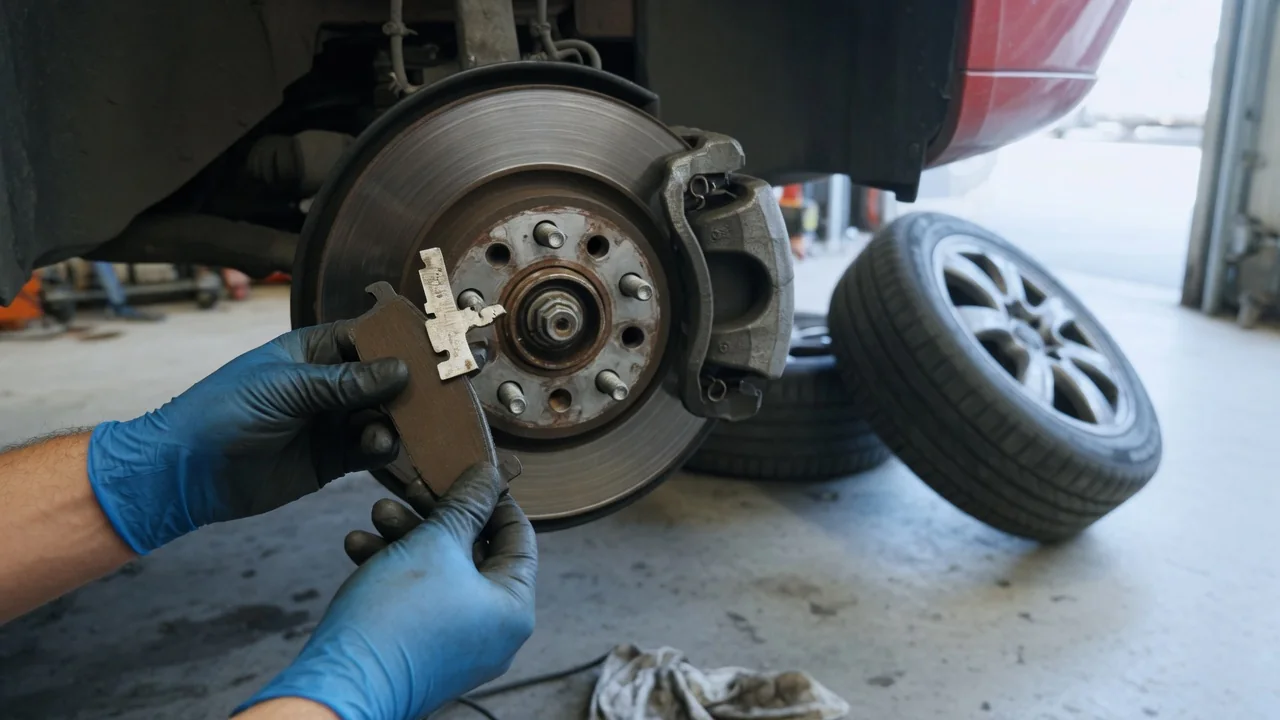
Brake pads wear down gradually and out of sight, tucked behind the wheel where few drivers ever look. So why do brake pads have wear indicators? They turn a hidden, slow change into a signal you can hear or see on the dashboard, giving you time to schedule service before the friction material runs out and the rotors are damaged.
Indicator types
The simplest design is an audible indicator, sometimes called a squealer. It is a small spring-steel tab attached to the pad backing plate, positioned so its tip sits a little above the plate. As the friction material thins, the tab eventually touches the spinning rotor and produces a high-pitched squeal. Nothing electrical is involved, so there is no warning light, only sound. Depending on the pad design, the tab may be fitted to only one pad per axle, or to the inner pad alone.
Electrical indicators use a sensor embedded in or clipped to the pad. In a common arrangement, a small wire loop sits at a set depth in the friction material; when the rotor wears through it, the circuit changes and the instrument cluster displays a brake wear message or lamp. Some systems use staged sensors that let the vehicle estimate remaining pad life. Which wheels carry sensors, and whether a vehicle has them at all, differs by manufacturer and model, so the owner's manual is the right reference.
Response to alert
An alert means the pads are approaching the end of their useful life, not that the brakes are about to fail. The indicator is deliberately set to trigger while some friction material remains, which leaves a margin for arranging an inspection. That margin is not a fixed distance, though. It shrinks quickly with heavy traffic, towing, steep grades or hard braking, so the sensible response is to book a brake check soon rather than wait for the noise or light to become familiar.
The type of signal also shapes the response. A wear squeal that appears during light driving and persists over several trips points toward pad thickness, while a dashboard message should be read alongside the manual, because brake warning lamps can cover several conditions, including low fluid or a parking brake fault. A red brake warning, a soft or sinking pedal, or a harsh metallic grinding calls for more caution: reduce driving and have the vehicle examined before continuing normal use.
Inspection
An alert is evidence to confirm, and a visual inspection settles it. On many vehicles, the outer pad can be seen through the wheel spokes, with the friction material visible as a block between the backing plate and the rotor. The inner pad is harder to see and often wears faster, particularly on sliding calipers, so a glance through the wheel can be misleading. A technician will usually remove the wheel and measure both pads against the manufacturer's minimum thickness for that vehicle.
A proper inspection looks beyond pad depth. The rotor surface is checked for scoring, a raised lip at the edge or heat discoloration, since a pad that reached its indicator may already have marked the disc. The indicator itself is examined too: a squealer tab that is polished at the tip has been touching the rotor, and an electrical sensor that has been worn through generally needs replacing with the pads. Comparing left and right sides on the same axle shows whether wear is even.
Everyday Use and Observations
Wear indicators are easy to confuse with other everyday brake noises. A brief squeak on the first few stops of a damp morning is usually light surface rust being wiped off the rotors, and it fades quickly. Dust, glazed pads or missing hardware can also create squeals unrelated to pad thickness. An indicator tab tends to produce a consistent, thin metallic squeal that returns on every drive, and on some designs it is heard while rolling and quiets when the pedal is pressed.
Electrical alerts behave differently in daily driving. A wear message typically stays on once the sensor circuit has been worn through, appearing at every start until the pads and sensor are serviced, and some vehicles show an estimated remaining distance that updates with driving style. Other clues are worth noting alongside any alert: a longer pedal travel, a brake fluid level that has dropped as the caliper pistons extend, heavier dust on one wheel, or the car pulling to one side under braking.
Limits and Next Steps
Indicators have real limits. A mechanical tab can corrode, bend or break off, and it only reports on the pad it is attached to. An electrical sensor monitors only the wheels where it is fitted, and a damaged wire or connector can trigger a false warning or none at all. Pads can also wear unevenly or at a taper because of a sticking caliper or seized slide pins, leaving one pad dangerously thin while the monitored one still looks acceptable.
For that reason, silence and a clear dashboard are not proof that the pads are healthy, and an alert is not proof of exactly which part needs replacing. Having pad thickness checked at routine service visits, such as tire rotations, catches wear the indicators miss. When a warning does appear, the practical next step is a measured inspection of pads, rotors and hardware on both axles, with replacement parts and any sensor reset procedure confirmed against the specifications for the particular vehicle.