Why Do Armrests Affect Driving Comfort?
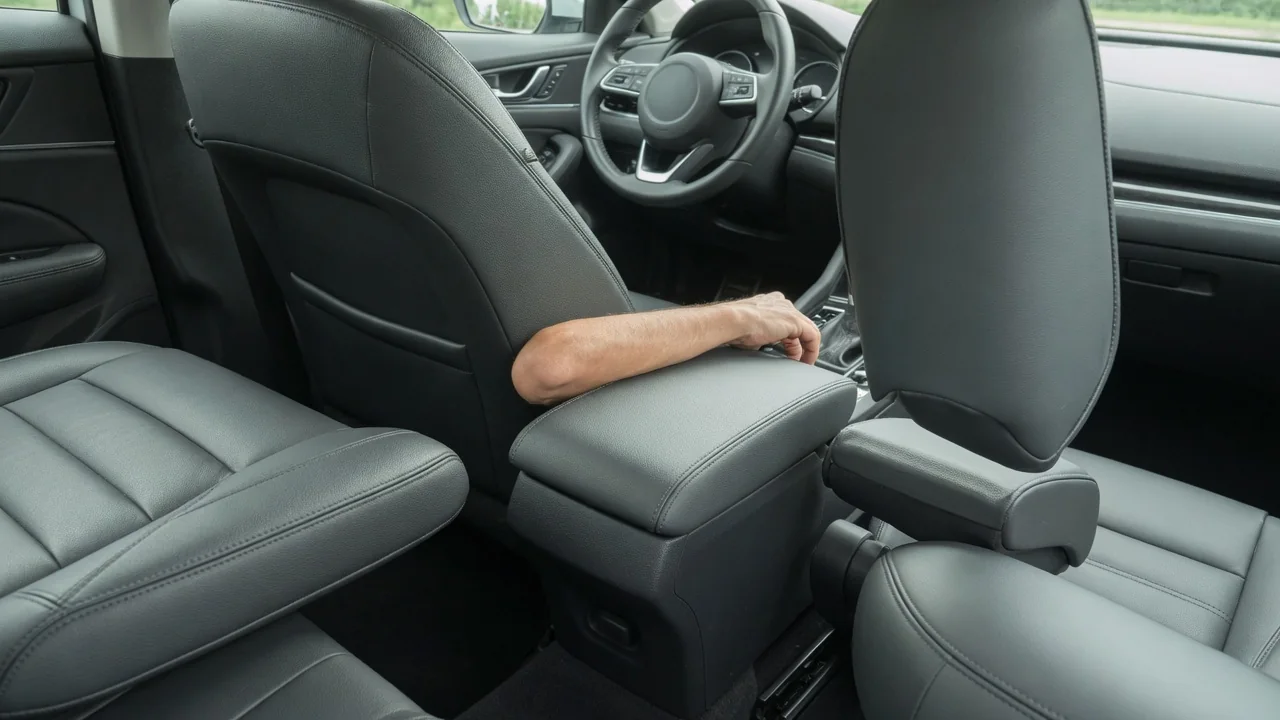
Armrests look like a minor interior detail, but they influence how the shoulders, neck, and lower back share the work of a long drive. Understanding why armrests affect driving comfort comes down to three connected factors: how well the arm is supported, whether the driver can still reach the controls naturally, and how the armrest relates to the seat and the driver's body. Good car armrest ergonomics depends on all three working together, not on padding alone.
Arm support
Each arm is a meaningful load that has to be held somewhere while you drive. Without support, the muscles around the shoulders and upper back keep the arms raised toward the steering wheel, and they do so in a mostly static way. Static muscle effort tends to cause fatigue faster than movement does. That is why long drives can leave the neck and shoulders feeling tight even when steering inputs are light. An armrest gives the elbow or forearm a place to settle, so the vehicle carries part of the arm's weight instead of the shoulder muscles.
Height determines whether that support actually helps. When an armrest sits too high, it pushes the elbow upward and the shoulder rises with it, creating a slight shrug that can load the neck. When it sits too low, the driver tends to lean toward it to reach the pad. That bends the trunk sideways and loads one side of the spine more than the other. A well-placed armrest lets the elbow rest while the shoulder stays relaxed and level, close to where it would sit if the arm simply hung at the side with the elbow bent.
The contact surface matters as well. A padded, reasonably wide armrest spreads pressure across the forearm, while a narrow or hard edge concentrates it in a small area. The inner side of the elbow is especially sensitive because a nerve runs close to the surface there. Sustained pressure on that spot can cause tingling or numbness in the hand.
Reach
Support only improves comfort if the hands can still reach the controls without strain. The steering wheel is the main reference point. If resting the elbow pulls the hand away from the rim, or forces the wrist to bend sharply to keep a grip, tension in the forearm and wrist cancels out the relief at the shoulder. In a comfortable setup, the elbow can rest while the arm stays slightly bent and the hand holds the wheel with a relaxed grip, typically at the sides of the rim rather than at the top.
The fore-and-aft position of the armrest affects this balance. A center console armrest that ends too far back leaves the elbow hanging when the hand is on the wheel. It then only helps when the driver lets go or drops the hand low. One that extends too far forward can crowd the gear selector, cupholders, or switches and get in the way of elbow movement. Door armrests are shaped by the door panel, so the cabin design largely fixes their distance from the driver.
Reach also changes with the driving situation. During steady highway cruising, a supported arm and a light grip can reduce fatigue noticeably. During turns, parking, and quick corrections, the arms need to move freely through a wide range, and an armrest that sits in the path of the elbow becomes an obstacle. Good car armrest ergonomics therefore means support that is available when the arm is still and out of the way when the arm moves. It should not encourage a slack grip or one-handed driving.
Seat fit
An armrest's height is only meaningful relative to the seat and the person in it. Raising the seat cushion effectively lowers the armrest in relation to the driver's elbow, and lowering the seat does the opposite. In many vehicles the console and door armrests are fixed to the cabin while the seat moves on its rails, so every seat adjustment shifts the relationship. Some vehicles use armrests mounted to the seat itself. These travel with the seat and keep a more consistent position relative to the driver's body.
Body proportions add another variable. Torso length, shoulder width, and upper arm length differ widely between drivers, so an armrest that suits one person can be too high, too low, or too far away for another. Seat width and side bolsters also set how far the hips sit from the console and the door. A driver centered on a wide seat may find both armrests out of easy reach.
Backrest angle and lumbar support complete the picture. A more reclined backrest moves the shoulders back and increases the distance to both the steering wheel and the front of the armrest. A more upright position brings the shoulders forward and can make a rear-mounted console pad harder to use. Because the seat establishes where the shoulders and elbows sit, the armrest cannot be judged apart from the overall seating position.
Practical implications and limits
For a practical check, set the seat first, then the steering wheel, and only then evaluate the armrests. Seat height, distance to the pedals, backrest angle, and lumbar support define the base posture, and the wheel position follows from it. Then rest each elbow in turn. Notice whether the shoulder drops, rises, or stays level, and whether you have to lean. Several minutes of normal driving tell you more than a brief sit in a parked car, because pressure points and muscle tension develop gradually. The owner's manual describes which seat, wheel, and armrest adjustments a particular vehicle actually offers.
There are clear limits to what an armrest can do. It cannot correct a seat that is too far from the pedals or a steering wheel set too low or too far away. Aftermarket cushions and console extensions can change height or length, but they may also block storage lids, seat belt buckles, or controls. Take particular care with anything attached near seat sides or door panels, because some vehicles have side airbags in those areas. The owner's manual is the place to confirm what may be safely added.
Comfort also remains individual. A shared center armrest may be occupied by a passenger, and a setting that suits one driver may not suit another who uses the same car. An armrest reduces static load, but it does not replace regular breaks on long trips, changes of position, or attention to overall posture. If you have persistent pain or numbness in the arms, neck, or back during or after driving, talk to a healthcare professional rather than blaming the vehicle's interior alone.