Why Do ABS Pumps Make Noise During Activation?
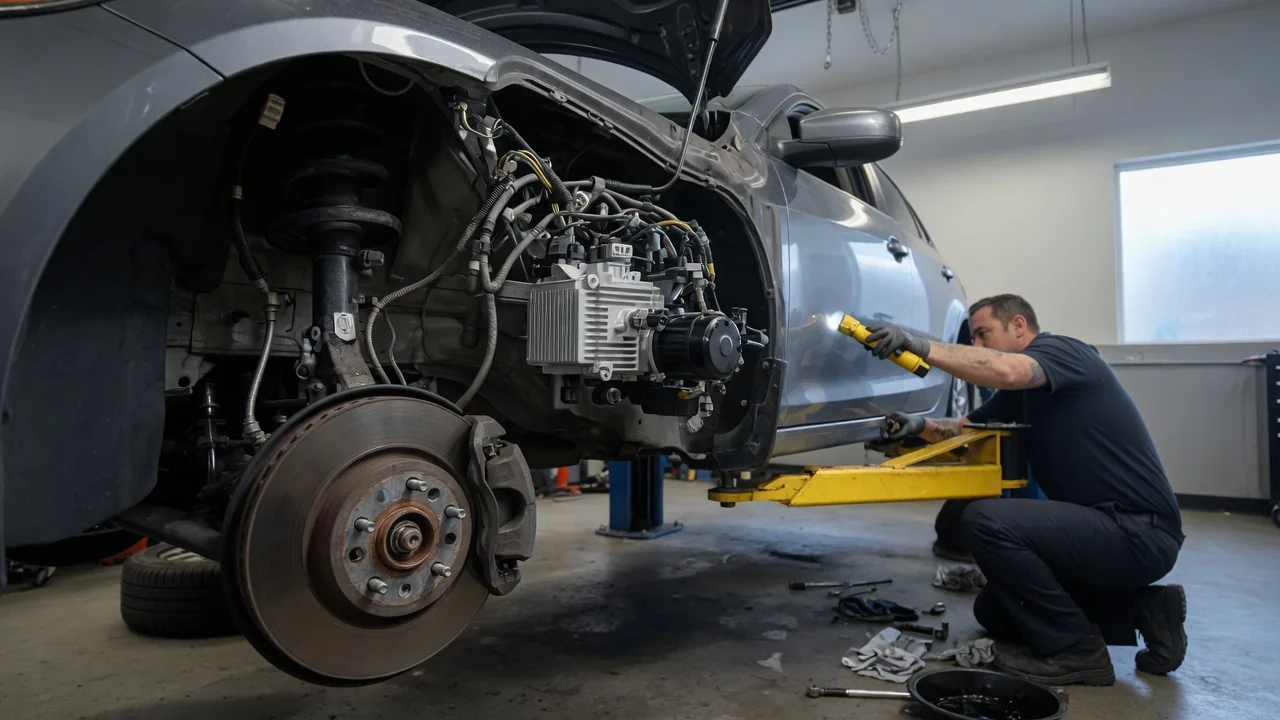
If you have ever braked hard on a wet or icy road, you may have heard a buzzing, grinding, or rapid clicking from under the hood and felt the brake pedal pulse underfoot. That is usually the anti-lock braking system doing its job. Knowing why ABS pumps make noise during activation helps you tell normal operation from a genuine problem. It also explains why the sounds and sensations can feel alarming the first time you experience them.
Pump operation
An ABS system relies on wheel speed sensors and a control module. The module watches for a wheel slowing much faster than the vehicle, which is a sign that the wheel is about to lock. When that happens, the module commands a hydraulic control unit, often called the modulator, to adjust pressure at that wheel. Solenoid valves inside the unit can hold pressure steady, release some of it, or let it build again. This cycle repeats many times per second while the tire stays near lockup, and each valve movement produces a sharp click. Heard together, these rapid cycles blend into a buzz or chatter.
When the valves release pressure, brake fluid leaves the caliper or wheel cylinder and has to go somewhere. In most designs it is sent to a small low-pressure reservoir inside the unit. An electric motor then drives a return pump, typically a set of small pistons pushed by an eccentric on the motor shaft, which forces that fluid back toward the master cylinder side of the circuit. The motor spinning up, the pistons stroking, and the pressure pulses traveling through rigid brake lines create the familiar whirring or grinding sound. Because the unit is mounted to the vehicle structure and connected by metal lines, vibration can carry into the cabin and sound louder than you might expect.
The pump is not used only during emergency stops. On many vehicles the same hydraulic unit also serves traction control and electronic stability control, which can build pressure at individual wheels without the driver pressing the pedal. Many systems also run a brief self-check, often at startup or shortly after the vehicle first moves, in which the motor and valves are energized for a moment. Whether and when that check happens, and how audible it is, depends on the specific system, so the owner's manual is the best reference for what a given vehicle should do.
Pedal feel
The same pressure changes that cause the noise also reach your foot. As the valves release and reapply pressure and the pump pushes fluid back toward the master cylinder, the pedal may pulse, vibrate, or push back against your foot. Some drivers describe a rapid thumping, others a coarse grinding sensation. The pedal can also rise slightly or feel firmer while the pump is returning fluid. This feedback is a normal byproduct of how the system works, not a sign that the brakes are failing.
The correct response during an ABS stop is to keep firm, steady pressure on the pedal and steer where you want to go. Lifting off or pumping the brakes interrupts the system and works against it; manual pumping was a technique intended for vehicles without anti-lock brakes. After the stop, the pedal should return to its usual height and feel. If the pedal feels noticeably softer, sinks further than normal, or behaves unusually during ordinary braking after an ABS event, that change is worth having checked, because it may point to air or another issue in the hydraulic circuit.
It also helps to separate ABS pulsation from other vibrations. A pulsing pedal during gentle, routine stops on dry pavement, with no ABS noise, is more often linked to brake rotor or drum problems than to the anti-lock system. ABS pulsation normally appears only when a wheel is close to locking, such as on ice, gravel, wet leaves, or during a very hard stop.
Fault signs
In most cases, ABS pump noise is normal during genuine activation, but some patterns suggest a problem. The most direct sign is an illuminated ABS warning light, which usually means the module has detected a fault and may have disabled anti-lock function while leaving conventional braking in place. Another is ABS activating when it should not, such as during light braking on dry pavement or at very low speeds just before stopping. That behavior is commonly associated with a faulty or dirty wheel speed sensor, a damaged sensor ring, wiring problems, or mismatched tire sizes, any of which can make the module think a wheel is locking when it is not.
Pay attention to sounds that do not match normal operation. A pump motor that seems to run continuously, keeps running long after the vehicle has stopped, or produces harsh grinding or squealing outside of braking events may indicate an internal motor, valve, or relay fault. The opposite can also matter: if a system that normally performs an audible self-check goes silent and a warning light appears, the pump or its circuit may not be working. Visible brake fluid leaks near the hydraulic unit, a falling fluid level, or a brake warning light alongside the ABS light call for prompt inspection, since those can affect basic braking, not just anti-lock function.
Practical implications and limits
For everyday driving, the main implication is that ABS noise should not cause you to back off the brake. The system is designed to keep the wheels turning so you can steer while braking hard. It does not guarantee shorter stopping distances on every surface; on loose gravel or deep snow, for example, a stop with ABS can take longer than one with locked wheels, because a locked tire can build up material in front of it. The benefit is control, so leave following distance appropriate to conditions rather than relying on the system to make up for it.
Sound alone is a limited diagnostic tool. Pump and valve noise varies between systems, mounting locations, and levels of cabin insulation, so a sound that is normal on one vehicle may be quieter or louder on another. Hearing the pump during an ABS stop does not prove the whole system is healthy, and failing to notice it does not prove a fault. Warning lights, the vehicle's documented behavior, and stored fault codes read with a scan tool that supports ABS diagnostics are more reliable indicators than impressions from the driver's seat.
Maintenance also plays a role. Brake fluid absorbs moisture over time, and contaminated fluid can contribute to corrosion inside the small passages of valves and pump components. Following the manufacturer's recommended fluid service interval and using the specified fluid type supports long-term reliability of the hydraulic unit. Work on the modulator itself, including bleeding it, often requires specific procedures and equipment that can command the pump and valves, so it is best handled with proper service information.