Why Did Some Cars Have Rear-Hinged Doors?
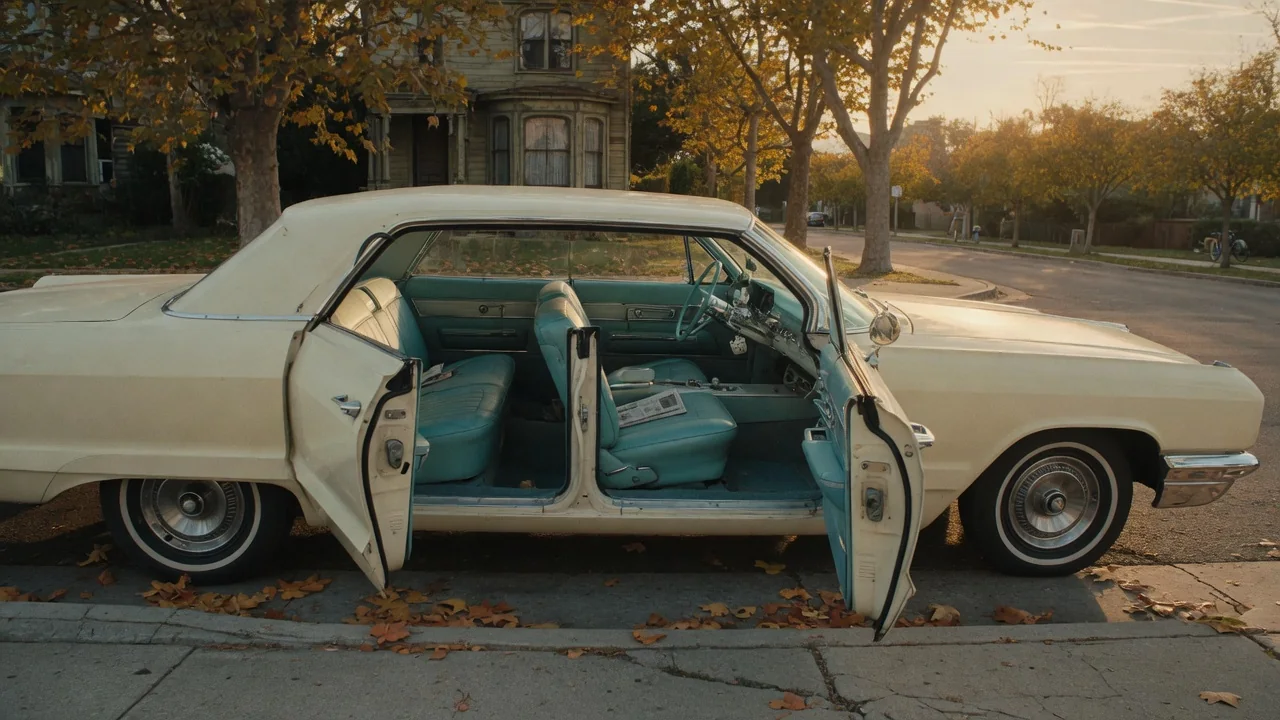
Rear-hinged doors pivot on their trailing edge and swing open toward the back of the car. They look unusual today, but they were once a common sight. The reasons behind them come down to three things: how people got in and out, how bodies were built around pillars and frames, and which jobs the design still suits. This look at rear hinged car door history explains why some cars had rear-hinged doors and why the idea never fully disappeared.
Access: Why the Door Swung the Other Way
The most direct answer to why some cars had rear-hinged doors is entry and exit. When a door is hinged at its rear edge, the opening faces a person approaching from the front of the car. A passenger can step straight in toward the seat instead of working around the leading edge of a door that swings forward. Getting out works the same way in reverse. The occupant can turn, put both feet down and stand up without the door frame sitting directly in their path.
This mattered most for rear seats. On a conventional front-hinged rear door, the rear wheel arch and the angle of the open door can squeeze the space for feet and hips. A rear-hinged rear door moves the opening forward relative to the seat. That can make it easier to sit down gracefully, to manage formal clothing or long coats, or to help someone who needs assistance. This is part of why the arrangement became associated with chauffeur-driven cars, where rear passengers were the priority and a driver or attendant could hold the door.
Early automobiles also inherited habits from horse-drawn carriages. On carriages, door placement depended on steps, running boards and how a passenger climbed aboard. Coachbuilders who moved from carriages to car bodies brought many of those conventions with them. In that period, a rear-hinged door was not seen as odd. It was simply one of several accepted ways to arrange an opening.
Body Layout: Pillars, Hinges and Openings
Body construction shaped door design as much as passenger comfort did. A door needs a strong mounting point for its hinges, and on many cars the most convenient strong structure was the central pillar between the front and rear seats. Designers could hang the front door from the front pillar and the rear door from that same central pillar, swinging backward. The result was a pair of doors that opened away from each other. With both open, the side of the car exposed one wide opening, which made it easier for people to get in and for bulky items to be loaded.
Some body styles went further by shrinking or eliminating the central pillar. In these layouts, the rear-hinged door usually latches to the front door or to reinforced points at the roof and floor, and the two doors open in sequence like a clamshell. This creates a very large opening, but it shifts load paths into the sills, roof rails and the doors themselves. The body must be reinforced elsewhere to stay stiff and to manage side-impact loads, which adds engineering effort and often weight.
Packaging also played a role. Two-door bodies with long doors were awkward in tight spaces. Short rear-hinged doors could give access to a rear seat or storage area without lengthening the body or adding a full conventional door. Designers used hinge direction as a tool to fit an opening into whatever space the wheelbase, wheel arches and seating layout allowed.
Later Uses: Where Rear-Hinged Doors Returned
Over time, rear-hinged doors became less common on mainstream cars. A widely cited concern is that if a rear-hinged door unlatches while the vehicle is moving, the airflow can push it open rather than closed. The nickname suicide doors reflects that reputation. Several changes then made the forward-hinged door the default for most passenger cars: better latches and door locks, evolving safety standards, the spread of unibody construction and the settling of front-hinged conventions.
The design did not vanish, though. Extended-cab pickup trucks have used small rear-hinged access doors that open only after the front door is open. These give access to a rear seat or storage area without a full-length second door. Some compact cars and coupes have adopted similar clamshell arrangements for rear access. At the other end of the market, some luxury and show vehicles have used rear-hinged rear doors to create a ceremonial, carriage-like entrance for rear passengers. Modern versions typically rely on improved latch designs. In many cases they also add interlocks intended to keep the doors from opening out of sequence or while the vehicle is moving.
Practical Implications and Limits
For owners and buyers, the key point is that behavior varies by vehicle. Some designs require the front door to be opened first. Others allow each door to open independently. Still others use electric locking that depends on vehicle speed, gear selection or door sequence. The owner's manual or service documentation for the specific vehicle is the reliable reference for how its doors, latches and interlocks should work. General descriptions of the design cannot replace it.
In daily use, clamshell-style doors can be less convenient than they look. In a narrow parking space, the front and rear doors may block each other or the person stepping in. A rear occupant may be unable to get out until someone in front opens their door. On pillarless designs, parts that would normally sit in a central pillar, such as seat belt anchors or latch hardware, may be mounted in the doors. As a result, door alignment and latch condition matter more than on a conventional layout.
On older cars with rear-hinged doors, pay particular attention to hinge wear, door sag and latch engagement, since a worn mechanism can affect both sealing and security. On any vehicle with this layout, it is sensible to check regularly that each door closes fully, engages its intended catch and stays securely shut. Converting a car to rear-hinged doors is a structural change, not a cosmetic swap. It can affect crash behavior, door retention and legal compliance.