Why Did Cars Move From Running Boards to Lower Floors?
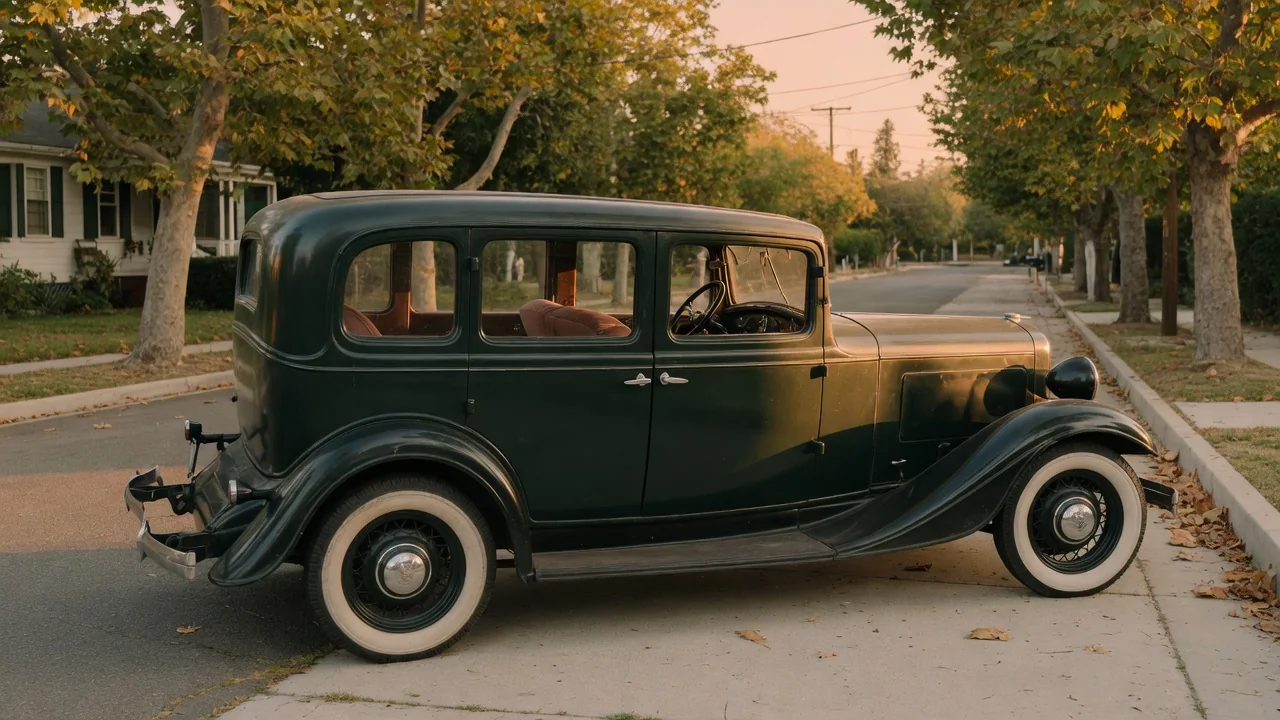
Early automobiles almost always had a running board, a flat step along each side between the front and rear fenders. Within a few decades it had largely disappeared from passenger cars, replaced by bodies with floors low enough to step into directly. So why did cars move from running boards to lower floors? No single invention caused the change. It came from three linked factors: how bodies were mounted, how people got in, and what designers wanted cars to look like.
Body Height: Why Early Floors Sat So High
Most early cars were built on a separate ladder-type frame: two steel rails running front to rear, joined by crossmembers, with the axles, springs and engine attached below or between them. The body was a separate structure bolted on top of those rails. The floor rested on the frame, and the frame had to clear the axles, springs and driveshaft, so the floor ended up well above the ground. Large-diameter wheels, chosen partly to cope with unpaved and rutted roads, added more height. The result was a passenger compartment that sat noticeably higher than where a person's foot naturally lands when stepping in from the street.
Several engineering changes gradually brought that floor down. Frames were redesigned so the rails dropped between the axles or curved outward around the passenger area. That let the floor sit between or alongside the rails instead of on top of them. Rear axle designs that placed the driveshaft lower relative to the axle centerline reduced the height of the tunnel running through the cabin. Later, unit-body construction made the floor pan itself part of the load-bearing structure, so no separate frame was needed beneath it. Each change reduced the vertical gap between the road surface and the cabin floor.
Road conditions mattered too. As paved roads became more common and tires improved, designers could use smaller wheels. They could also accept less clearance than earlier cars needed for mud, ruts and crowned dirt surfaces. Smaller wheels lowered the axle line, which in turn let the rest of the structure come down. Lower bodies were therefore not purely an engineering preference. They depended on cars being driven where a low body would not constantly scrape or bottom out.
Entry: From an Outside Step to a Door Sill
On a car with a high floor, the running board worked as an intermediate stair. Passengers stepped onto it first and then up into the cabin, splitting one large climb into two manageable ones. It also gave a place to stand while reaching inside. It filled the gap between separately mounted front and rear fenders, shielding the lower body from mud and stones thrown up by the tires. In that layout the running board solved real problems, which is why it lasted as long as it did.
Once the floor dropped to roughly the height of a normal step, the intermediate stair was no longer needed. Occupants could swing a leg over the door sill and sit down directly. At the same time, bodies grew wider, often extending outward over the space the running board had occupied. The cabin gained interior width in place of a separate external step. The lower edge of the door opening became a sill, or rocker panel, that formed part of the body structure rather than an add-on. Doors could also be cut lower and wider, which helped access in a way an external step could not.
Styling: Integrated Fenders and Smooth Sides
Styling pushed in the same direction. As designers became interested in streamlining, the separate fender, running board and upright body looked increasingly dated. Fenders were gradually blended into the body sides, first partially and then fully, producing a single envelope from front to rear. A running board interrupts that surface with a horizontal shelf and an exposed gap beneath the body. Integrating the fenders therefore removed the structure the running board had been attached to. Some designs went through a transitional stage in which the step was narrowed or partly hidden behind the door bottoms before it disappeared.
A lower, smoother body also matched broader changes in taste. A long, low profile came to signal modernity and speed, and a flat side with no protruding step made a car look sleeker and wider. There was a functional element as well. A smoother lower body with fewer exposed edges generally creates less aerodynamic disturbance than open fenders and a projecting shelf. How much that helped depended heavily on the overall shape and the speeds involved. Styling and engineering reinforced each other, which helps explain why the shift became so widespread once it started.
Practical Implications and Limits
For anyone owning, restoring or evaluating an older car, this history shows up in specific places. Running boards on vintage vehicles are typically mounted on brackets attached to the frame and sit between the fenders. Worn mounts, cracked coverings or rusted brackets can therefore affect how the surrounding panels fit and align. On later integrated bodies, the rocker panels that replaced running boards are structural and often enclose cavities where moisture collects. Drain paths and corrosion there deserve attention, because the sill now carries load rather than just serving as a step.
The same logic explains why steps returned on some modern vehicles. Pickups, vans and many SUVs ride high for clearance, payload or off-road capability, which recreates the old gap between ground and floor. Side steps or tube bars are added to bridge it. Those accessories bring familiar trade-offs: they can collect mud, reduce effective clearance at the sides and add width. Low-floor cars have their own trade-off, since getting into a very low seat requires more bending, which some occupants find harder than climbing a step.
Finally, this account describes a general trend, not a fixed timeline that every manufacturer followed. Market, body type, intended use and production methods all influenced when and how running boards were dropped. Commercial vehicles kept exposed steps long after most passenger cars lost them. Details for any particular model are best confirmed from that vehicle's own documentation or service literature.