Why Did Cars Get Third Brake Lights?
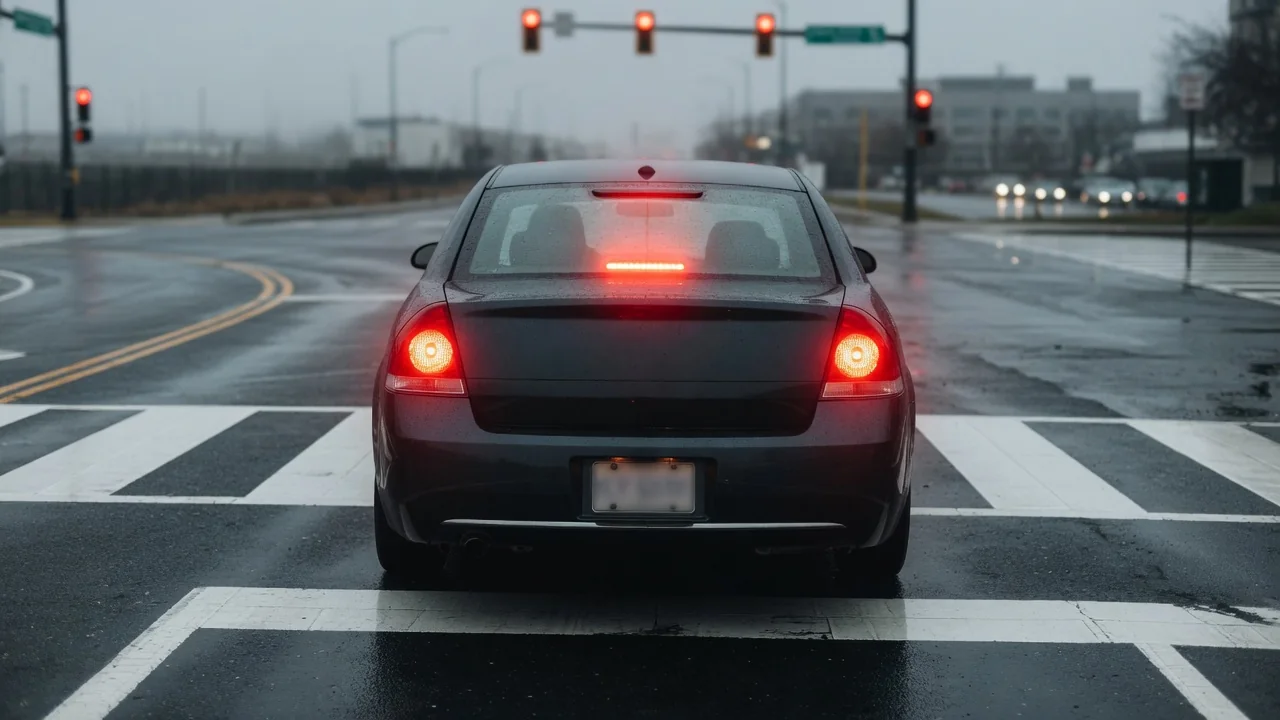
Many drivers wonder why did cars get third brake lights when two already sat at the corners. The short answer is that a single lamp mounted higher and on the centerline gives following drivers a clearer, earlier braking signal, especially in dense traffic. This article explains where the lamp sits, what it adds, and how to keep it working.
Lamp position
The third brake light, often called a center high-mounted stop lamp, sits on the vehicle's centerline and above the two conventional brake lamps. On a sedan it usually appears at the base or top of the rear window, either on the parcel shelf inside the glass or bonded to the glass itself. That placement forms a triangle with the lower lamps, a pattern that reads as braking even when one corner of the car is hidden by another vehicle or a roadside object.
Body style changes where the lamp ends up. Hatchbacks and SUVs commonly carry it in a roof spoiler or along the upper edge of the liftgate, pickups tend to place it on the back of the cab above the rear window, and some convertibles and coupes integrate it into the trunk lid or a rear spoiler. Walk behind a few parked vehicles and you will see the differences, though the logic stays constant: high, central, and separate from the tail lamp clusters.
Visibility
Height is the main visibility advantage. Corner brake lamps sit roughly at bumper or fender level, where the vehicle directly behind can see them but drivers farther back often cannot. A lamp near the roofline can be seen through the windows of the car in between, so a driver two or three vehicles back gets a hint that traffic ahead is slowing. That extra warning helps people ease off the accelerator sooner instead of reacting only when the car immediately ahead brakes.
The center lamp also removes ambiguity. Lower clusters share space with tail lamps, and on some vehicles with turn signals or hazard flashers, so a glowing red corner can mean several things at night. The high lamp has one job: it lights only when the brakes are applied. A driver glancing up from mirrors or instruments sees it close to their natural line of sight and understands the message immediately, even in rain, glare, or when dirt has dulled the lower lenses.
Service check
Checking the lamp is simple but easy to overlook, because the driver never sees it from the seat. Ask a helper to stand behind the vehicle while you press the brake pedal, or back up near a garage door, wall, or shop window after dark and watch for the reflection in the mirror. All three lamps should light together and release together. Some vehicles display a bulb warning on the instrument cluster, but not every model monitors this circuit.
If the center lamp stays dark while the others work, the cause is not automatically the lamp itself. Depending on the design, possibilities include a failed bulb, a faulty LED strip, a corroded connector, damaged wiring where the harness flexes at a liftgate or trunk hinge, or a fuse. LED units are often replaced as an assembly, while bulb types may be serviceable separately. The owner's manual or a technician can confirm what your vehicle uses and how the housing is accessed.
Everyday Use and Observations
In daily driving, the lamp earns its keep in stop-and-go traffic. Watch a line of cars approaching a red signal and you will notice the high lamps flicker on in sequence, visible above trunk lids and through glass, well before each car's lower lamps come into view. Behind a tall van or a loaded pickup the effect is weaker, since the vehicle blocks the view ahead, which is one reason leaving a generous following distance still matters.
Owners can also unintentionally reduce the lamp's usefulness. Cargo stacked against the rear window, items left on the parcel shelf, dark window tint, a bike rack, or snow piled on the liftgate may cover or dim it. Lamps mounted inside the glass depend on a clean window, while spoiler-mounted units are exposed to road grime and car-wash wear. A quick wipe during fueling and a look at the lens for cracks or moisture keeps the signal clear to drivers behind.
Limits and Next Steps
A third brake light improves communication, but it does not shorten stopping distance or compensate for a distracted driver behind you. It reports only that the brake circuit is active, not how hard the car is slowing, although some newer vehicles add flashing or emergency-stop signaling under heavy braking, and behavior varies by manufacturer. The lamp's benefit also depends on the other two working, since a single high lamp without its lower partners gives a weaker sense of the vehicle's width and distance.
The practical next step is to add the center lamp to the same routine as tire pressures and washer fluid. Check all three brake lamps periodically and before long trips, and deal with an outage promptly, since inspection and equipment rules differ by location and a dark lamp can attract attention from enforcement. If a replacement does not restore operation, or the lamp works intermittently, have the circuit diagnosed properly instead of swapping parts, because wiring and switch faults produce similar symptoms.