Why Did Cars Adopt Disc Brakes?
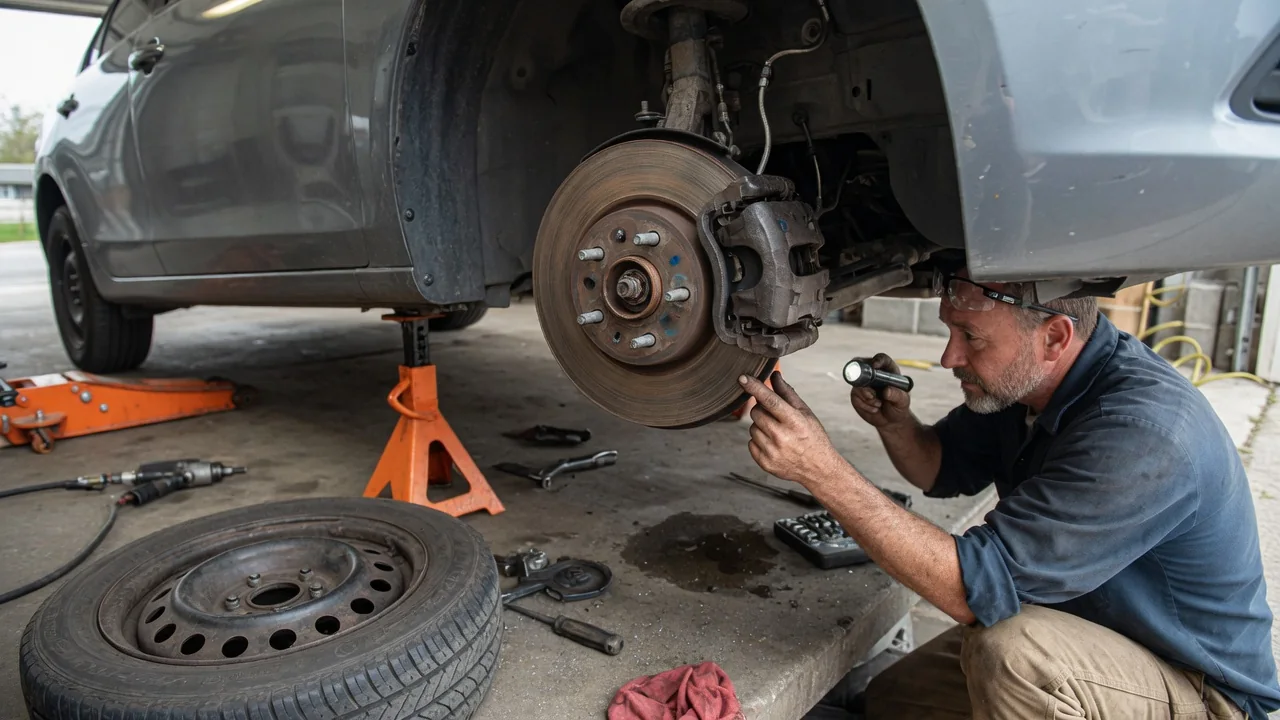
Asking why did cars adopt disc brakes leads to a story about heat more than raw stopping force. As vehicles grew heavier and highway speeds rose, engineers needed a brake that behaved consistently stop after stop. The disc design offered a different way to shed heat and manage friction, though drum brakes remain in use where their traits still fit the job.
Disc operation
A disc brake clamps a rotor that spins with the wheel. When the driver presses the pedal, hydraulic pressure pushes one or more pistons inside a caliper, squeezing friction pads against both faces of the rotor. Friction converts the car's motion into heat, slowing the wheel. Because clamping force rises fairly directly with pedal pressure, the response tends to feel proportional, which helped engineers tune predictable pedal behavior as road speeds increased.
A drum brake, by contrast, presses curved shoes outward against the inside of a closed drum, and its geometry can make the shoes wedge themselves tighter. That self-energizing effect multiplies force but can make output more sensitive to changes in friction. Looking through the wheel spokes, readers can often see a shiny rotor with a caliper straddling it. Caliper designs vary by vehicle, with floating and fixed types, and some cars still use drums at the rear axle.
Heat behavior
Every stop turns kinetic energy into heat, and a brake that cannot shed heat quickly enough gradually loses effectiveness, a condition known as fade. A rotor's friction surfaces are exposed to passing air, and many front rotors are ventilated, with internal vanes between the two faces that move air through the center. A drum holds its friction surfaces inside an enclosure, so heat has to travel through the drum's metal before it reaches the airstream.
Heat also changes shape. A hot drum expands away from its shoes, which can lengthen pedal travel, while a rotor grows mainly thicker toward the pads, so pedal position tends to stay more stable. Long mountain descents, towing, and repeated stops from highway speed are where these differences matter most. Neither design is immune to overheating, however; rotor size, pad compound, vehicle weight, and airflow around the wheel all shape how a given car behaves.
Maintenance
Serviceability was part of the appeal. On many vehicles, pad thickness can be judged without dismantling the brake, whereas drum linings stay hidden until the drum comes off. Disc brakes also compensate for wear on their own, because the caliper piston simply rests farther out in its bore as the pads thin. Many pads carry a small metal wear indicator that squeals against the rotor, and some cars use electronic sensors that trigger a dashboard warning.
Exposure has trade-offs. Rotors live in the open, so a film of surface rust after rain or a wash is normal and usually clears in the first few stops, but long storage or road salt can leave pitting. Caliper slide pins and pistons can stick if corrosion or old fluid is left unattended, causing uneven pad wear. Brake fluid absorbs moisture over time with either design. Inspection and fluid schedules differ by manufacturer, so the owner's manual is the right reference.
Everyday Use and Observations
In daily driving, the differences are subtler than the history suggests. A commuter in light traffic rarely works the brakes hard enough to approach fade, which is one reason drums continue at the rear of some economy cars and light trucks, where the rear axle handles a smaller share of braking. Wet weather is another consideration: a spinning rotor throws water off and the pads wipe its surface, while a drum that takes on water may need a few applications to dry.
Drivers can notice several things for themselves. A pulsing pedal or steering wheel shake under braking often points to uneven rotor thickness or pad deposits, while a light grinding on the first stop after rain is usually surface rust clearing. Dark dust on the front wheels comes from pad wear and varies with compound. Hybrids and electric vehicles do much of their slowing through regenerative braking, so their friction brakes work less often and can show more surface corrosion as a result.
Limits and Next Steps
Disc brakes did not make drums obsolete, and it would overstate the case to call one design simply better. Drums are enclosed against dirt, can double conveniently as a parking brake, and suit lightly loaded rear axles. Stopping distance also depends heavily on tires, road surface, vehicle weight, and the anti-lock system, not only on brake type. The move to discs reflects a balance of heat capacity, consistency, serviceability, and cost that shifted as vehicles and driving conditions changed.
For an individual car, the useful next step is knowing what is fitted and how it is behaving. A look through the wheels, along with the owner's manual, shows whether discs are used at all four corners. A soft or sinking pedal, pulling to one side, persistent grinding, a burning smell, or a brake warning light deserves prompt inspection by a qualified technician. A warning light or stored fault code is a starting point for diagnosis, not proof that a particular part has failed.