Why Did Automatic Climate Control Spread Through Cars?
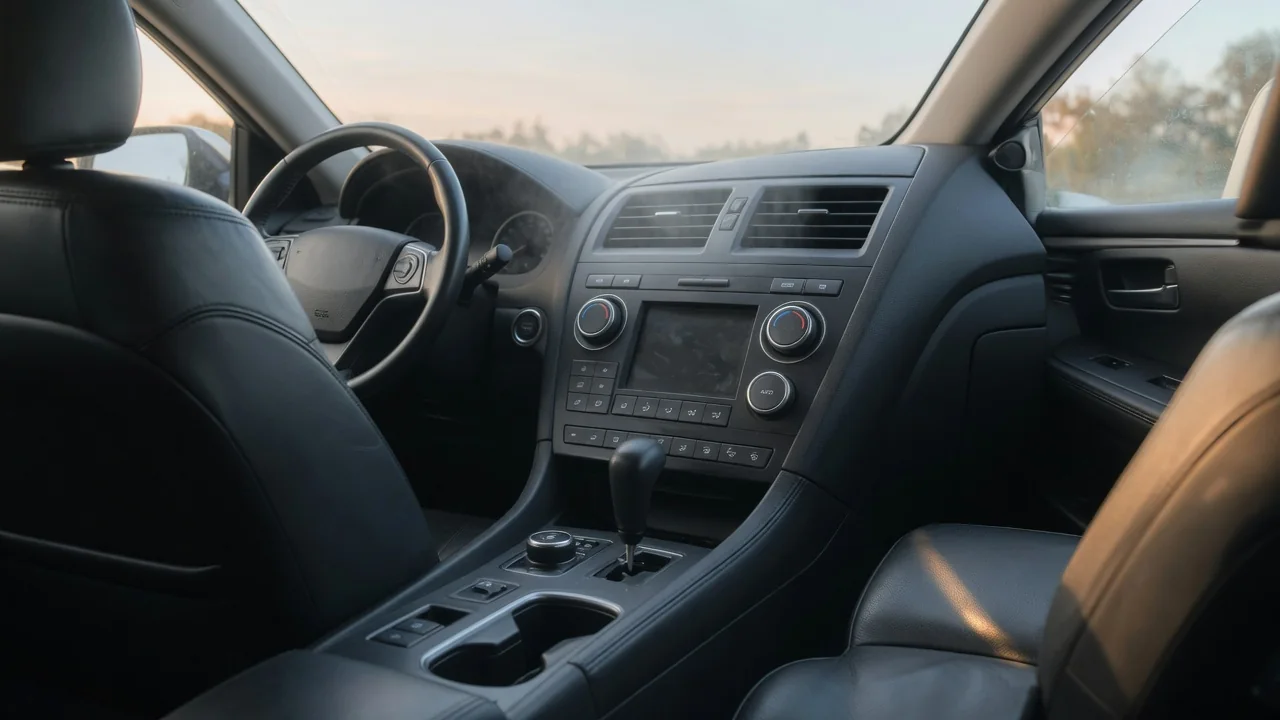
Automatic climate control moved from a rare luxury feature to a common sight on dashboards because several trends converged. Electronic sensors became cheaper and more dependable, drivers came to expect a cabin that manages itself, and carmakers found ways to package the extra hardware and software without overwhelming owners. Looking at car climate control history through those three lenses explains why so many vehicles now let you set a temperature instead of juggling fan speeds and blend levers.
Sensors: Giving the System Something to Measure
A manual heater and air conditioning system only does what the occupant asks. The driver chooses a fan speed, moves a blend control toward hot or cold, and picks where the air goes. Automatic climate control replaces much of that guesswork with measurement. At minimum, the system needs to know the cabin air temperature, usually through an interior sensor placed where it can sample representative air. Many designs also read outside air temperature, which helps the controller anticipate how hard it must work rather than simply reacting after the cabin drifts away from the target.
Additional inputs refine the picture. A sun load sensor, often a small light-sensitive element on top of the dashboard, estimates how much solar heat is entering through the glass, so the system can add cooling or fan speed when bright sunlight hits occupants even before the air temperature changes much. Engine coolant temperature tells the controller whether heat is actually available, which is why many systems hold the blower at a low speed on a cold start instead of blowing cold air. Evaporator temperature sensing helps protect the air conditioning core from icing. Some vehicles add humidity sensing to help prevent windshield fogging, though the exact sensor set varies from vehicle to vehicle.
The spread of these sensors followed the broader shift to electronics in cars. Once vehicles already carried microcontrollers, wiring networks and electrically driven actuators for other functions, adding a few temperature and light inputs became a modest increment rather than a standalone engineering project. Thermistors and similar sensing elements are simple, compact components, and electric motors replaced cable-operated air doors in many designs. That combination made closed-loop temperature control practical well beyond the expensive vehicles where it first appeared.
User Convenience: Set It Once and Drive
The core appeal is that the occupant states a goal rather than managing a process. With a manual system, staying comfortable on a changing day means repeated small adjustments: more fan when the sun comes out, less heat once the engine warms, a switch to defrost when the windshield starts to fog. An automatic system makes those adjustments continuously, choosing blower speed, air distribution and blend position to approach and then hold the chosen temperature. Because it tapers its output as the cabin nears the target, it also tends to avoid the overcorrection that happens when someone sets a manual system to full hot or full cold. For many drivers that removes a recurring distraction, which is part of why the feature migrated from a luxury talking point toward an expected comfort item.
Convenience also grew through features layered on top of the basic control loop. Dual-zone and multi-zone arrangements let the driver and passengers choose different temperatures, which only makes sense when a controller is managing separate blend doors. Automatic recirculation, defog strategies that use the air conditioning compressor to dry incoming air, and memory of preferred settings all depend on the same electronic foundation. Once the hardware existed, manufacturers could differentiate trim levels largely through software and control layout, giving them a relatively efficient way to add perceived value.
Complexity: The Cost of a Self-Managing Cabin
Automation adds parts, and every added part is a possible fault. Compared with a basic manual setup, an automatic system typically adds a control module, several sensors, multiple actuator motors for blend, mode and recirculation doors, and a blower controlled in fine steps rather than a few fixed speeds. Each actuator may need calibration so the controller knows its position, and some systems run self-tests or relearn procedures after battery power is disconnected. These details are invisible when everything works, yet they mean diagnosis often requires reading fault codes or following a service manual procedure rather than simply checking a cable or a fuse.
Carmakers accepted this complexity because it was shrinking in relative terms. Integrated control modules, shared vehicle networks and standardized actuator designs reduced the cost and wiring burden of each additional function. In many modern vehicles the climate system exchanges information with other modules, using data such as vehicle speed or engine status, so part of the work happens in software and wiring that already exist. The control panel also got simpler for the user: a temperature knob and an AUTO button can hide a system that is more intricate underneath than the row of levers it replaced.
The tradeoff shows up across a vehicle's life. Repairs involving a failed blend door actuator, an inaccurate sensor reading or a module fault can be more involved than equivalent manual-system problems, and reaching some actuators requires removing dashboard trim. Manufacturers weighed this against the comfort benefits and buyer expectations, and the balance tipped toward automation as automotive electronics proved durable enough for everyday use.
Practical Implications and Limits
For owners, the most useful habit is to let the system do its job. Picking a reasonable temperature and leaving the system in automatic mode usually gives the controller the best chance to manage fan speed and airflow sensibly. Manually overriding fan speed or vent selection can put the system into a partly manual state, depending on the design, which may suspend some of its logic until AUTO is selected again. The owner's manual for a specific vehicle is the place to check how overrides, recirculation and defrost interact, because those behaviors differ between manufacturers.
Automatic control also has physical limits. It cannot deliver heat that the engine or heating hardware is not yet producing, so warm-up still takes time on a cold morning, and it cannot cool a heat-soaked cabin instantly. A blocked or faulty sensor can mislead it: covering the dashboard sun sensor, obstructing the interior temperature sensor opening, or a failing outside air sensor may produce cabin temperatures that feel wrong even though the setpoint has not changed. When comfort seems inconsistent, checking for obvious obstructions and stored fault codes is a sensible first step before assuming a refrigerant or compressor problem.
Finally, the displayed number is a target, not a guarantee of identical comfort in every seat or every vehicle. Sensor placement, cabin size, glass area and calibration choices all affect how a given setting feels, so the same number can feel different from one car to another. Seeing the system as a feedback loop built from sensors, actuators and software explains both why it spread so widely and why it still benefits from clean cabin filters and correctly functioning components.