Why Can Sun Exposure Damage a Stored Car Interior?
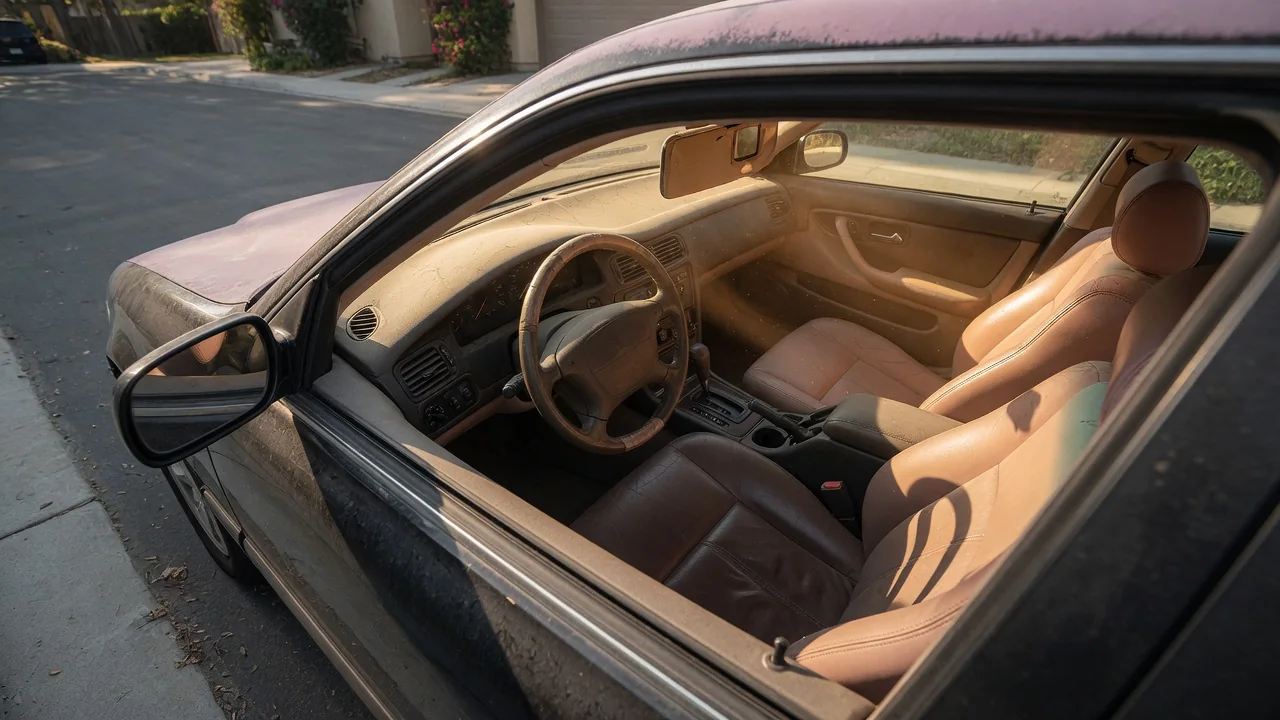
A car parked for weeks or months in the same spot sees the same sunlight hit the same surfaces day after day. That steady exposure is why sun damage to a stored car interior can be more pronounced than on a car that is driven and parked in different places. Understanding how heat and ultraviolet light act on cabin materials, how shade changes the picture, and how existing condition affects vulnerability helps owners plan storage that keeps the interior in better shape.
Heat and UV
Sunlight carries two distinct threats for interior materials. The first is ultraviolet radiation. UV light has enough energy to break chemical bonds in many polymers and in the dyes used to color fabric, vinyl, plastic and leather. Over repeated exposure this shows up as fading, a chalky or dull surface, and a loss of flexibility. Glass changes how much UV reaches the cabin, but it does not remove the problem entirely. Laminated windshields generally block a large share of UV, while side and rear glass often let more through unless the glass or an applied film is designed to filter it. Actual performance depends on the specific vehicle and any aftermarket treatment, so it is safer not to assume the windows offer complete protection.
The second threat is heat. Sunlight passing through the windows is absorbed by the dashboard, seats and trim, which then release that energy as heat that the closed glass largely holds inside. This is the familiar greenhouse effect of a parked car, and dark surfaces facing the sun usually get hottest. Elevated temperatures speed up chemical aging, can drive plasticizers out of vinyl and some plastics, and may leave an oily film on the inside of the glass. Heat also softens adhesives, which is one reason headliners and trim pieces can sag or lift. Leather tends to lose moisture and natural oils, making it stiffer and more prone to cracking.
Storage adds a factor that daily driving does not: repetition without variation. A stored car warms during the day and cools at night, and each cycle makes materials expand and contract. Rigid parts such as dashboards can develop cracks at stress points like vent openings or speaker grilles. Because the car never moves, the same panel or seat bolster absorbs nearly all of the exposure, which can produce uneven fading where one side of the cabin looks noticeably older than the other.
Shade
Shade addresses both threats at their source by keeping direct sunlight off the glass. An enclosed garage or storage building is the most complete form, since it blocks direct light entirely and limits the daily temperature swing. A carport or covered parking spot removes the overhead sun but may still let low-angle morning or evening light reach the side windows, and it does little about hot ambient air. If a garage has windows, sunlight entering through them can still fall on the same part of the car every day, so it is worth checking where light lands as the seasons change.
When outdoor storage is the only option, a few measures reduce exposure. A fitted, opaque car cover blocks light from every window at once; a breathable fabric is generally preferred so that moisture is not trapped against the paint and inside the cabin. A reflective windshield sunshade protects the dashboard, which usually takes the most direct light, though it leaves side and rear windows uncovered unless additional shades are used. Parking so the windshield faces away from the strongest afternoon sun can also help. Natural shade from trees reduces heat but tends to bring sap, debris and droppings, which create their own cleaning and finish problems.
Condition
The condition of the interior before storage influences how much damage sun exposure causes. Materials that are already dry, faded or slightly cracked have less resistance left, and small splits in a seat or dashboard give heat and UV direct access to the underlying foam and backing. Dirt matters too, because dust can hold residues against surfaces, and abrasive particles can scratch soft materials when a cover or shade shifts. Cleaning the interior thoroughly and letting it dry completely before storage removes these contributors and makes later changes easier to spot.
Protective products can help when used correctly. Leather conditioners can replenish some of the moisture that heat removes, and protectants made for vinyl and plastic trim are often formulated with UV-absorbing ingredients. Compatibility varies with the material and finish, so the vehicle owner's manual or the product label should guide the choice, and testing on a hidden area is sensible. Greasy or high-gloss products on the dashboard can create windshield glare and attract dust, which matters when the car returns to use. Photographing the interior before storage gives a reference for judging later whether anything has changed.
Practical implications and limits
No storage method makes an interior immune to aging. Shade, covers and conditioning slow the processes involved, but materials still age with time, and some degradation continues even in darkness through heat and oxidation. How quickly a particular cabin shows sun damage depends on its specific materials, colors and glass, the local climate and the length of storage, so there is no single timeline that applies to every car. Two vehicles stored side by side can age at noticeably different rates.
Some sun damage cannot be fully reversed. Faded dye, a cracked dashboard or brittle plastic usually call for repair, recoloring or replacement rather than cleaning, which is why prevention is more practical than correction. Owners should also remember that anything left in the cabin shares its environment: items such as aerosol cans, lighters, electronics or plastic bottles are exposed to the same heat, and their manufacturers' storage guidance applies. During long-term storage, checking the interior periodically allows small problems like a shifted sunshade, a torn cover or a damp carpet to be corrected before they turn into lasting damage.