Why Can Short Trips Dilute Engine Oil?
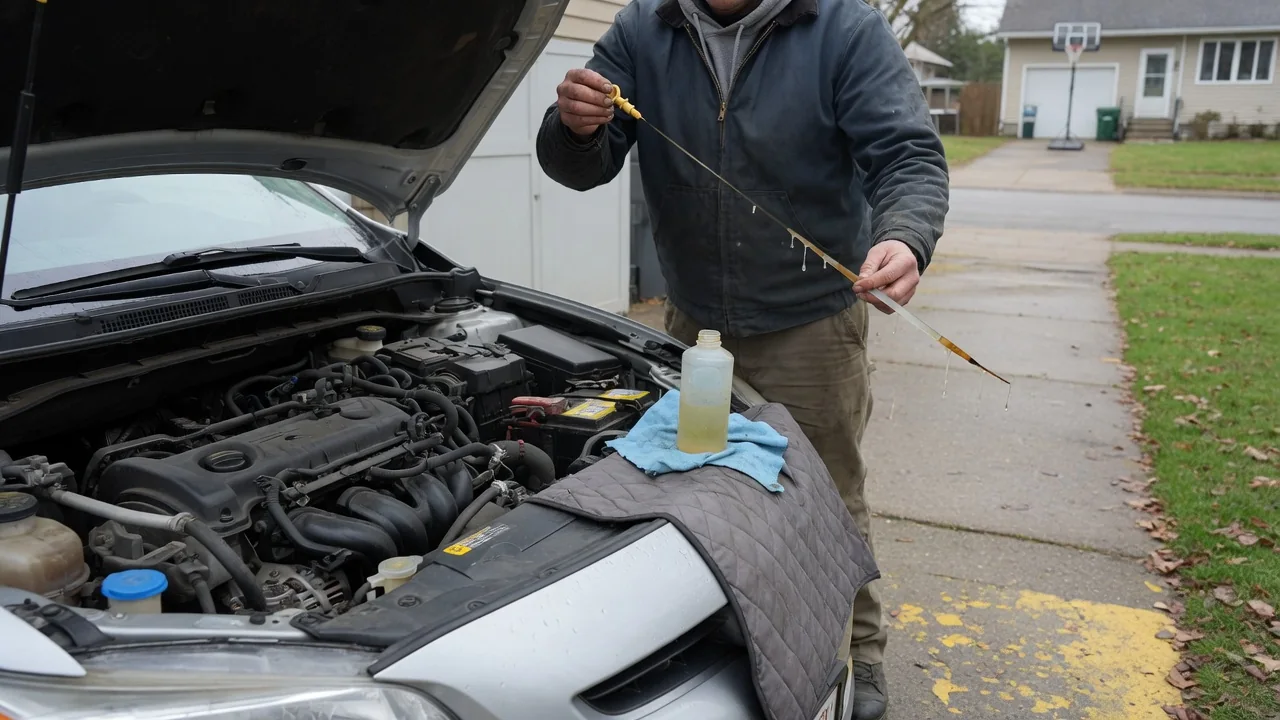
Short trips can dilute engine oil because the engine rarely gets hot enough, for long enough, to drive off the fuel and water that naturally find their way into the crankcase. Every engine produces some of these contaminants, and sustained operating temperature normally evaporates them so the ventilation system can carry them away. When a car is driven only a few miles at a time, that cleanup cycle is cut short. Contaminants can then build up in the oil between changes.
Incomplete Warmup: Why a Cold Engine Collects Contaminants
A cold engine runs differently from a warm one. During a cold start, the engine management system typically supplies extra fuel because gasoline vaporizes poorly on cold intake surfaces and cylinder walls. Some of that fuel does not burn completely. Instead, it condenses as liquid on the cylinder walls, and the piston rings can scrape it down into the oil sump. At the same time, the piston rings and cylinder bores have not yet reached their designed operating clearances. As a result, more combustion gas, known as blow-by, slips past the rings into the crankcase.
In normal driving, this does not last. Once the oil reaches full operating temperature and stays there, the lighter fuel fractions and water evaporate out of it. The positive crankcase ventilation (PCV) system then draws those vapors back into the intake to be burned. Coolant generally warms up faster than oil, so a temperature gauge reading in the normal range does not necessarily mean the oil itself is fully warm. A trip that ends just as the engine seems warmed up may never give the oil the sustained heat it needs to purge what it collected during the cold start.
Repeating that pattern day after day turns a routine, temporary effect into a cumulative one. Each cold start adds a little fuel and moisture, and each short drive removes less than was added.
Fuel or Moisture: What Actually Ends Up in the Oil
Fuel dilution is the most direct form of the problem. Gasoline is a solvent with very low viscosity, so when it mixes with motor oil it thins the blend. Thinner oil may form a weaker film between moving parts such as bearings, cam lobes and cylinder walls, which reduces the margin of protection the oil was designed to provide. Fuel in the oil can also wash lubricant off the cylinder walls. Engine design influences how much fuel reaches the crankcase. Direct-injection gasoline engines are often discussed in connection with fuel dilution because fuel is sprayed straight into the cylinder, but the actual amount varies widely with the engine, its calibration and driving conditions. In some diesel engines, particulate filter regeneration that uses extra late fuel injection is another recognized route for fuel to reach the oil when trips are too short for regeneration to finish.
Moisture is the second contaminant. Burning hydrocarbon fuel produces water vapor as a normal combustion byproduct, and some of that vapor enters the crankcase with blow-by gases. Humid outside air drawn through the ventilation system adds more. In a warm engine, the vapor stays in gas form and leaves through the PCV system. In a cold crankcase, it condenses on cool metal surfaces and mixes with the oil. Combined with other combustion byproducts, water can contribute to acidic compounds and to a creamy, light-colored emulsion sometimes seen under the oil filler cap. Over time, persistent moisture and contamination can encourage sludge formation and place extra demand on the oil's detergent, dispersant and anti-corrosion additives.
Maintenance: Matching Oil Care to Short-Trip Driving
Many vehicle manufacturers address this situation directly in their maintenance schedules. Owner's manuals commonly describe a severe or special operating conditions schedule, and frequent short trips, especially in cold weather, are often listed among those conditions. When a vehicle is used this way, the manual may call for shorter oil change intervals than the standard schedule. The definitions and intervals differ between manufacturers and models, so the owner's manual for the specific vehicle is the authoritative reference, not a general rule of thumb. Vehicles with an oil life monitoring system may already account for some operating conditions, but how each system calculates oil life is manufacturer-specific.
Routine checks help as well. Checking the oil level at regular intervals, on level ground and following the procedure in the manual, can reveal a level that rises between changes, which is one possible sign that fuel or other fluids are accumulating. A noticeable fuel odor on the dipstick is another possible indicator. When the vehicle's use allows it, an occasional longer drive at steady speed lets the oil reach and hold operating temperature long enough to evaporate accumulated fuel and water. Extended idling is generally a weaker substitute, because an engine at idle warms slowly.
Practical Implications and Limits
For most drivers, the practical takeaway is about patterns, not individual trips. An occasional short errand is not a concern on its own. The risk grows when nearly all of a vehicle's driving consists of brief cold-start trips with little opportunity for full warmup. Climate also changes the picture. Cold, damp conditions slow warmup and encourage condensation, while warm weather shortens the time an engine needs to reach operating temperature.
There are also clear limits to what a driver can judge without testing. A rising oil level or a milky deposit under the filler cap can point toward fuel or moisture, but neither sign confirms the cause or measures how severe the dilution is. A small amount of condensation under the cap after cold short trips is commonly reported and may clear with longer driving. Larger amounts of milky oil, however, can also come from a coolant leak, such as a failing head gasket, which is a separate and more serious problem. A used oil analysis performed by a laboratory can estimate fuel content, water and viscosity change, which replaces assumptions with actual data.
If the signs persist, such as a steadily climbing oil level, a strong fuel smell, or emulsified oil that does not clear after extended driving, the vehicle should be inspected by a qualified technician. Fuel dilution far above normal can point to an underlying fault, such as a leaking injector or a condition that keeps the engine running rich, rather than driving habits alone. Treating short trips as a maintenance factor keeps the response proportionate: follow the schedule the manual specifies, watch for changes, and get a diagnosis when the evidence goes beyond what normal short-trip driving explains.