Why Can Rust Return After a Body Repair?
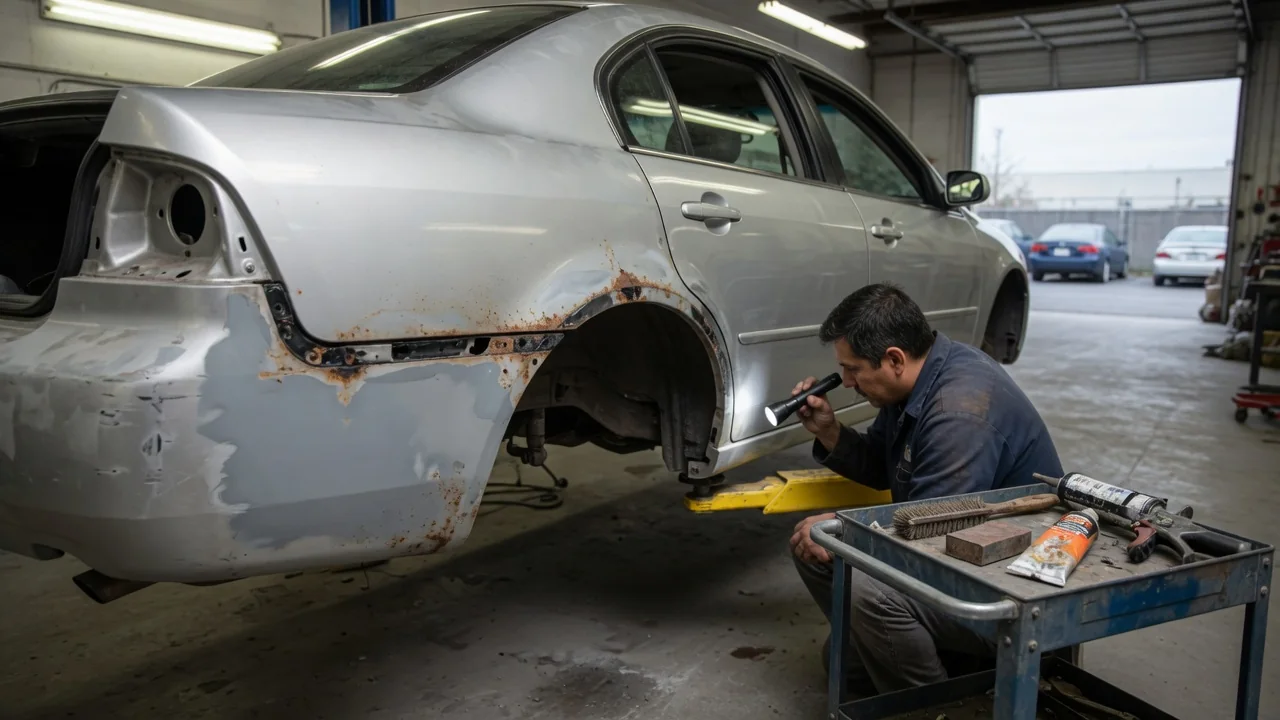
A body repair can look perfect on the day the car leaves the shop and still show bubbling paint a year or two later. When owners ask why rust can return after a body repair, the answer usually comes down to three linked factors. Some corrosion or contamination was never fully removed. Moisture found its way back to bare or poorly protected steel. Or the coating system did not seal the metal completely. Understanding each one explains most cases of rust recurring after car repair.
Hidden contamination left under the repair
The most common reason rust comes back is that some of it never left. Corrosion does not stop at the visible edge of a brown patch. It spreads beneath sound-looking paint, into pits, along seams and onto the back side of a panel that cannot be seen from outside. Grinding or sanding can make a surface look bright while leaving rust at the bottom of small pits. Those pits can also hold salts from road de-icing or the environment. Salts attract moisture and keep the corrosion reaction going even under fresh primer. Once sealed in, that residue is hidden from view, but it is still chemically active, so the repair can begin to lift from underneath.
Overlapping panels and spot-welded flanges are especially difficult. Rust between two layers of steel is hard to reach with abrasives, and welding a patch over it traps the old corrosion inside a new joint. Welding also burns away protective coatings on the reverse side and around the heat-affected area. That leaves fresh bare steel in places that may never get primed. Other contaminants matter too. Oils, wax, silicone residues, fingerprints, sanding dust and leftover paint stripper can all weaken the primer's bond to the metal. Rust converters and acid-based metal treatments can be useful, but they can also cause problems. If they are used on heavy scale they were not designed for, or are not cleaned off or finished according to the product directions, they can leave a weak or reactive layer under the paint instead of a stable base.
Moisture trapped in and around the panels
Steel needs both oxygen and water to rust, and moisture is the factor most often underestimated after a repair. Many body structures contain closed box sections, such as sills, crossmembers and the lower parts of doors and pillars. These areas are designed with drain holes and some air flow, but repairs can block the drains with seam sealer, underbody coating or debris. Water can get in through window channels, door seals or cracked seams. It then sits against the inner surface of the steel, often where the repair left the least protection. Condensation can also form inside these cavities as temperatures change, even on a car that rarely sees rain.
Moisture also enters during the repair. Bare steel can develop a thin layer of flash rust surprisingly quickly in a humid workshop, and if that film is painted over, it becomes a starting point for later corrosion. Some body fillers can absorb water if they are left unsealed for long or applied over poorly prepared metal. After the work is finished, tight crevices such as lap joints and the edges of patch panels can hold water by capillary action. The result is a damp pocket that never fully dries. Storage habits play a part as well. A damp garage, a car cover that traps humidity against the body, or salt and mud packed into the wheel arches all keep the repaired area wet for longer.
Coating systems that do not fully seal the steel
Paint and primer act as a barrier between the steel and its environment, and a barrier only works where it is continuous. Coating films tend to be thinner on sharp edges, flanges, holes and the inside of folds, so rust frequently reappears first in these spots. Pinholes in primer, sanding through to bare metal during finishing, or a stone chip in a newly painted area can all expose steel. Once corrosion starts at a small break, it can creep sideways under the paint. It lifts the film and produces the familiar bubbles some distance from the original damage.
Product choice and compatibility matter as well. Body repairs typically use a layered system: a primer chosen for adhesion and corrosion resistance, followed by filler, surfacer, color and clear. Combining products from incompatible systems, or ignoring recoat and cure times, can weaken adhesion between layers. Another common gap is the inside of repaired areas. New panels and welded sections are often painted carefully on the outside while their inner surfaces get little or no primer, seam sealer or cavity wax. Joining dissimilar metals, such as certain fasteners or aluminum parts against steel, can also encourage galvanic corrosion if the metals are not isolated. In classic car restoration, cavities may have had minimal factory protection to begin with. Missing internal treatment is therefore a frequent reason a repair does not last.
Practical implications and limits
Where and how rust comes back can hint at the cause. Bubbles that start at the edge of a repair and spread outward often suggest corrosion left under the paint or a weak bond at the boundary. Rust that appears from the inside out, particularly along lower edges or around drain areas, more often points to trapped moisture or untreated inner surfaces. These patterns are clues rather than proof, and a proper diagnosis usually requires removing the coating to see what lies beneath. A visual inspection of a finished repair cannot confirm what was done to hidden surfaces. It helps to ask the repairer three things: whether rusted metal was cut out or treated in place, which primer and cavity protection were used, and whether photos of the work in progress are available.
Ongoing care can slow recurrence, but it cannot fully make up for weak preparation. Useful habits include keeping drain holes clear, washing salt and mud from the underside and wheel arches, and storing the car in a dry, ventilated space. Renewing cavity wax or underbody protection as the product maker recommends also reduces the time steel spends wet. Any new chip or bubble is easier to deal with while it is small. There are limits worth keeping in mind. Body construction, seam design and original corrosion protection vary widely between vehicles, so the risk areas on one car may not match another. The factory service manual or a specialist familiar with the model is the best guide to its specific weak points. No repair makes steel permanently immune to rust. The goal is to remove the causes as thoroughly as possible and keep moisture away from the metal for as long as possible.