Why Can Household Glass Cleaner Be Wrong for Some Car Surfaces?
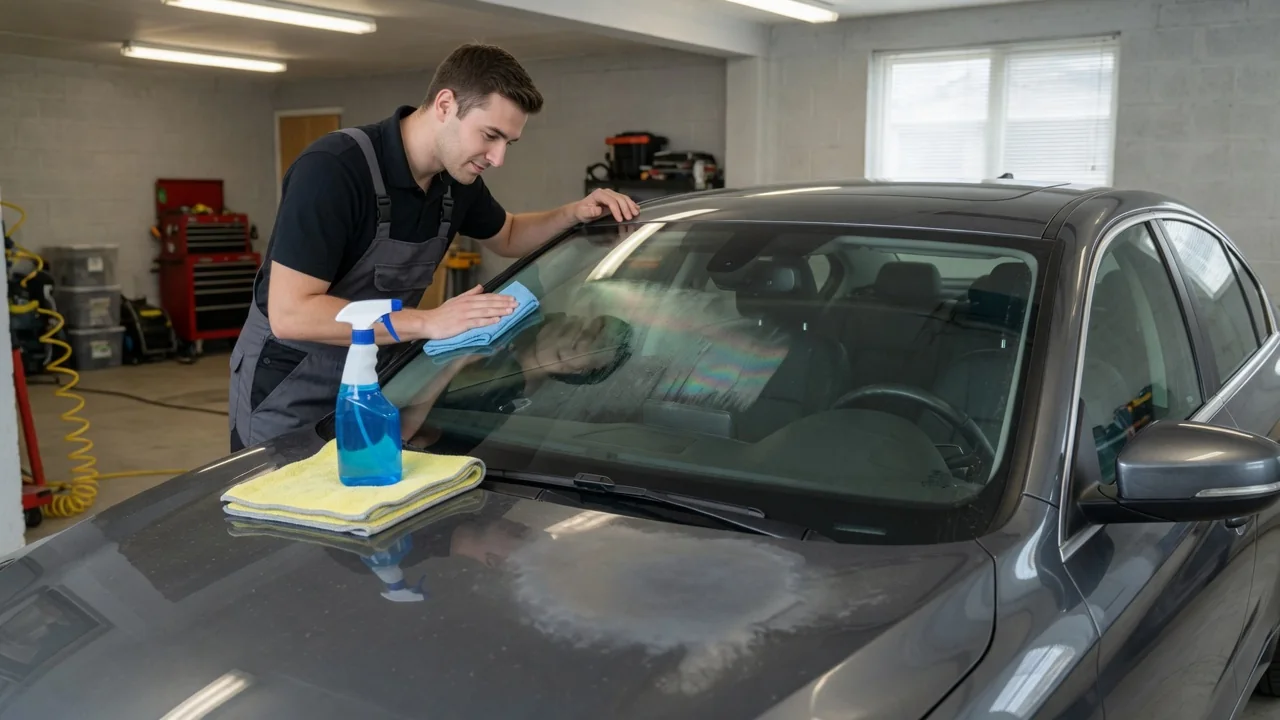
Household glass cleaner seems like a natural fit for car windows, and on plain glass it often works. The trouble is that a car's glass areas are rarely just glass. Tint films, factory and aftermarket coatings, plastic lenses, rubber seals, and touchscreens all sit close to where the spray lands. This article explains why material compatibility matters for car glass cleaners, how ammonia and solvents interact with those surfaces, and what to look for on a product label before using one.
Ammonia and coatings
Many household glass cleaners contain ammonia, often listed as ammonium hydroxide, because it cuts grease and evaporates quickly, leaving few streaks on household windows. Ammonia is alkaline, and alkaline chemistry is effective at loosening fingerprints and oily film. That same activity is why it is a concern on surfaces that are not bare glass. Ammonia does not meaningfully harm the glass itself. The risk lies in what is bonded to the glass or sits next to it.
Aftermarket window tint is the most commonly cited example. Tint film is a layered polyester product attached to the inside of the window with an adhesive, usually with a scratch-resistant top layer. Repeated exposure to ammonia-based cleaners is widely associated with hazing, discoloration, bubbling, or lifting edges, particularly on some dyed films and as the film ages. Many tint installers recommend ammonia-free cleaners for this reason, and film care instructions often say the same. Factory privacy glass is different. Its color is generally part of the glass itself, so the concern applies mainly to applied film.
Other coatings deserve similar caution. Strong alkaline or solvent-heavy cleaners can weaken or strip some treatments faster than intended. These include water-repellent windshield treatments, anti-reflective layers, and the ceramic or polymer glass coatings some owners apply. Overspray matters too. Ammonia and some solvents in household cleaners can dry out rubber weatherstrips. Over time they can also contribute to staining or dulling of nearby dashboard vinyl, leather, or soft-touch plastics.
Screens
Modern cars add another category of glass-like surface: infotainment touchscreens, digital instrument displays, and the clear lenses over gauges. Despite appearances, many of these are not plain glass. Some use plastic covers such as polycarbonate or acrylic. Many also have thin anti-glare or anti-fingerprint (oleophobic) coatings that keep them readable in sunlight and easier to wipe clean.
Household glass cleaner can be harsh on these layers. Ammonia and some alcohols or solvents can gradually wear down anti-glare and oleophobic coatings. The result is patchy, smeared-looking areas that cannot be polished back to their original finish. Clear plastic lenses can be prone to clouding or to fine surface cracking, known as crazing, when exposed to certain solvents. Spraying any liquid directly at a display also risks it running into the edges of the bezel and toward the electronics behind it.
General electronics-care practice is to switch the screen off and wipe it first with a clean, dry microfiber cloth. If more is needed, put a small amount of a screen-safe cleaner on the cloth rather than on the display. Display construction varies across vehicles, so the owner's manual is the best source for what the manufacturer recommends for the specific screens in a given car.
Product label
The label is the most reliable way to judge whether a cleaner suits a car surface. Read both the ingredient listing and the stated uses. Ammonia may appear as ammonia or as ammonium hydroxide. Other common glass-cleaner ingredients include isopropyl alcohol, glycol ethers such as 2-butoxyethanol, and surfactants. These ingredients do not automatically make a product unsafe. They do show that the formula is designed to dissolve oils, and that same action can affect delicate films and coatings.
Claims such as "ammonia-free" or "tint safe" are useful signals, but read them precisely. Ammonia-free means one ingredient is absent. It does not guarantee the product is suitable for screens or for every coating. Check the directions and warnings as well. Many products state which surfaces to avoid, whether to spray onto a cloth or onto the surface, and whether to avoid use in direct sun. If a label lists only household surfaces such as windows and mirrors, it makes no claim about automotive films or displays.
When the container lacks detail, the manufacturer's safety data sheet usually lists hazardous ingredients. Instructions from a tint installer, coating maker, or vehicle manufacturer outrank general advice. Where those sources conflict with a cleaner's label, follow the guidance for the surface being cleaned.
Practical implications and limits
None of this means a single wipe with household cleaner will ruin a window. The effects described above are usually gradual. They depend on formula strength, how often the product is used, the quality and age of the film or coating, and heat exposure. Exterior glass without aftermarket treatment generally tolerates ordinary glass cleaners well. The real risk is repeated exposure on the wrong surfaces. That risk is hard to predict for any particular car because manufacturers and installers use different materials.
A sensible routine matches each surface to a suitable product rather than using one bottle for everything. Use an automotive ammonia-free cleaner on tinted or coated windows and a screen-specific approach for displays. On the inside of the windows, mist the towel instead of the glass so the spray does not land on surrounding trim. Clean in the shade on cool glass so the product does not dry before you wipe. If you are unsure about a surface, test on a small, low-visibility area first and check for haze or residue.
This guidance is general. It cannot confirm whether a specific film, coating, or display in your vehicle is vulnerable. Visible damage such as hazing or lifting tint usually cannot be reversed by cleaning. When a warranty is involved, the documented care instructions are the deciding reference.