Why Can EVs Deliver Torque From a Stop?
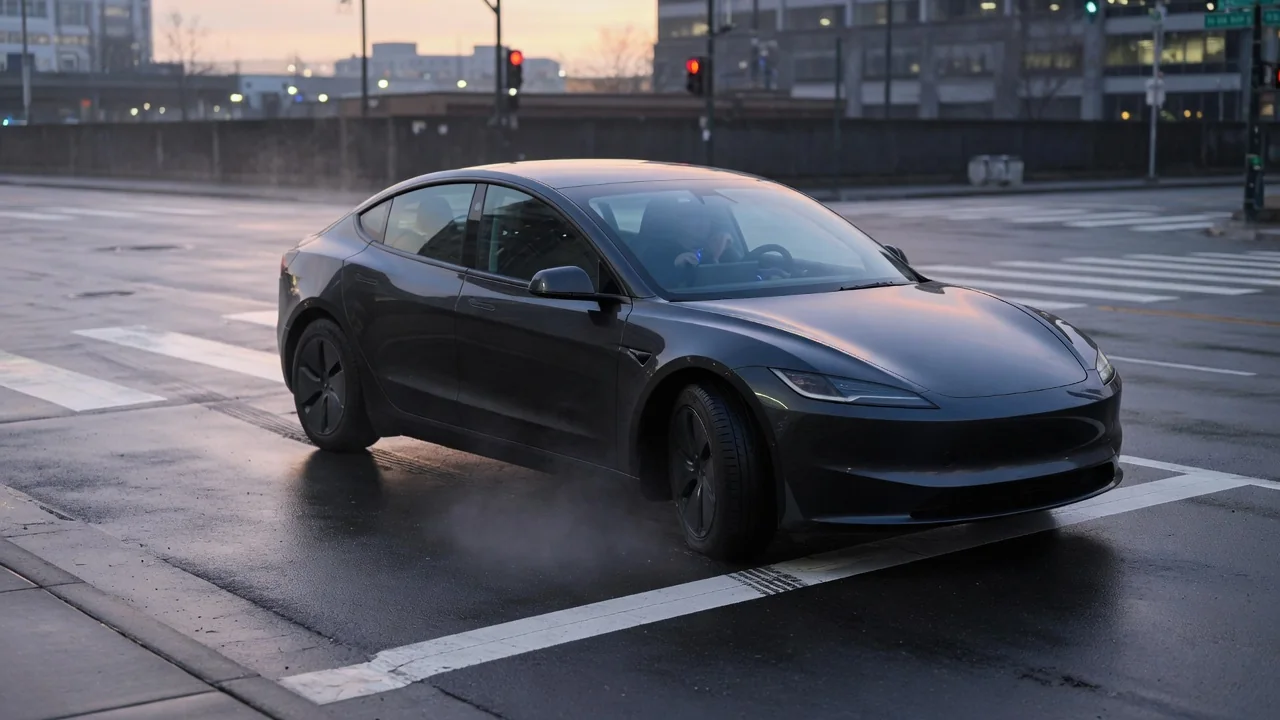
Press the accelerator in an electric vehicle at a stoplight and the car moves off with strong, immediate pull, with no wait for engine revs to build. That behavior is not just tuning. It comes from how an electric motor makes force, how the inverter feeds it current, and how much of that force the tires can pass to the road. Here is how each piece contributes to electric motor low speed torque.
Magnetic force: torque without waiting for speed
An electric traction motor produces torque from the interaction of magnetic fields. Current flowing through copper windings in the stationary stator creates a magnetic field, and that field pulls on the rotor. In a permanent magnet motor, the rotor carries magnets with their own field. In an induction motor, the stator field induces currents in rotor bars, which then form a field of their own. Either way, the force on the rotor depends mainly on the strength of the fields and the current in the windings, not on how fast the rotor is already turning. That is the core answer to why EVs can deliver torque from a stop: the motor does not need speed to make force, it needs current.
A gasoline or diesel engine works differently. It makes torque only through combustion events, so it has to be spinning before it can produce useful output, and its torque typically builds as revs rise toward a middle band. That is why conventional cars need an idle speed and a clutch or torque converter to get moving. An electric motor can be stationary and still produce strong torque the moment current flows.
This does not mean a motor gives unlimited force at any speed. At low speeds, torque is limited mainly by how much current the windings, magnets and electronics can safely carry, so the torque curve is roughly flat. As speed rises, the spinning motor generates an opposing voltage, often called back-EMF, that grows with rotor speed. Eventually the available supply voltage can no longer push full current against it, and torque begins to fall while power stays roughly level. Strong pull from rest and a tapering push at highway speed are two ends of the same physics.
Inverter control: turning battery power into usable torque
The battery supplies direct current, but the traction motors in most modern EVs run on alternating current. The inverter bridges the two. Using fast power semiconductors, such as IGBTs or silicon carbide MOSFETs, it switches the battery voltage on and off thousands of times per second in a pattern called pulse-width modulation. The result is a three-phase current whose frequency, amplitude and timing the controller can set precisely.
That precision is what turns magnetic potential into usable torque at zero speed. A sensor such as a resolver or encoder reports the rotor's exact angle, and the control software, commonly using a method called field-oriented control, places the stator current where it produces the most torque for the current used. At standstill the inverter can feed the windings current at very low or zero frequency, so the motor pushes on the rotor immediately instead of needing to spin up first. For an induction motor, the controller sets the field frequency slightly ahead of the rotor speed to create the slip that produces torque, even from rest.
The inverter also decides how much torque you get and how quickly. The accelerator pedal acts essentially as a torque request, and the controller can change output far faster than a combustion engine can change its airflow and fuel delivery. Manufacturers use that responsiveness deliberately: software shapes the ramp-up so starts feel smooth, limits jolts that could stress driveshafts and gears, and applies different maps in different drive modes. So how a particular EV feels off the line reflects calibration choices as well as the motor's raw capability.
Tire grip: where torque meets the road
Motor torque only becomes acceleration if the tires can transmit it. Many EVs pass the motor's output through a single fixed reduction gear, which multiplies torque at the wheels without any need to shift. The force at each contact patch is then limited by friction: roughly, the grip available equals the tire-to-road friction coefficient multiplied by the load pressing the tire down. Dry pavement offers far more friction than wet roads, gravel, snow or ice, and tire compound, tread depth and temperature all change the picture.
During a hard launch, weight shifts toward the rear of the car. That adds load and grip to the rear tires while unloading the fronts, which is one reason rear-drive and all-wheel-drive layouts tend to put power down more effectively from a stop than front-drive layouts with the same torque. A motor that can produce full torque at zero speed can also overwhelm the tires on a slippery surface sooner than an engine that is still building revs.
Traction control is how EVs manage this. Because the inverter adjusts motor current so quickly, the system can trim torque very rapidly when it detects wheel slip, then restore it as grip returns. Vehicles with a motor on each axle can also shift torque between front and rear. The practical effect is that the electronics, not the driver's foot alone, decide how much of the available torque reaches the road at any moment.
Practical implications and limits
In everyday driving, torque from rest shows up as easy merging, confident hill starts and little hesitation when pulling away in traffic. It also means a light right foot matters. Repeated hard launches use more energy than gentle ones and can increase tire wear, since the tires spend more time working near their grip limit. Drivers coming from combustion cars often find that easing into the pedal gives a calmer and more efficient start.
Peak performance is not always available. The battery must be able to deliver high current, and its output can be reduced when it is cold, very hot or at a low state of charge. Motors and inverters also have thermal limits: holding the car on a steep grade with the accelerator, or repeating full-power starts, concentrates heat in specific components and may cause the system to reduce power temporarily to protect them. These protections are normal behavior, not a fault.
The general mechanisms described here apply broadly, but how a specific vehicle uses them varies. Motor type, drive modes, traction control settings, tire choice and software updates can all change launch behavior. For details about a particular model, such as recommended tires, towing guidance or what a reduced-power warning means, the owner's manual and the manufacturer's service information are the authoritative references.