Why Can Brakes Stick After Long Parking? Causes and Checks
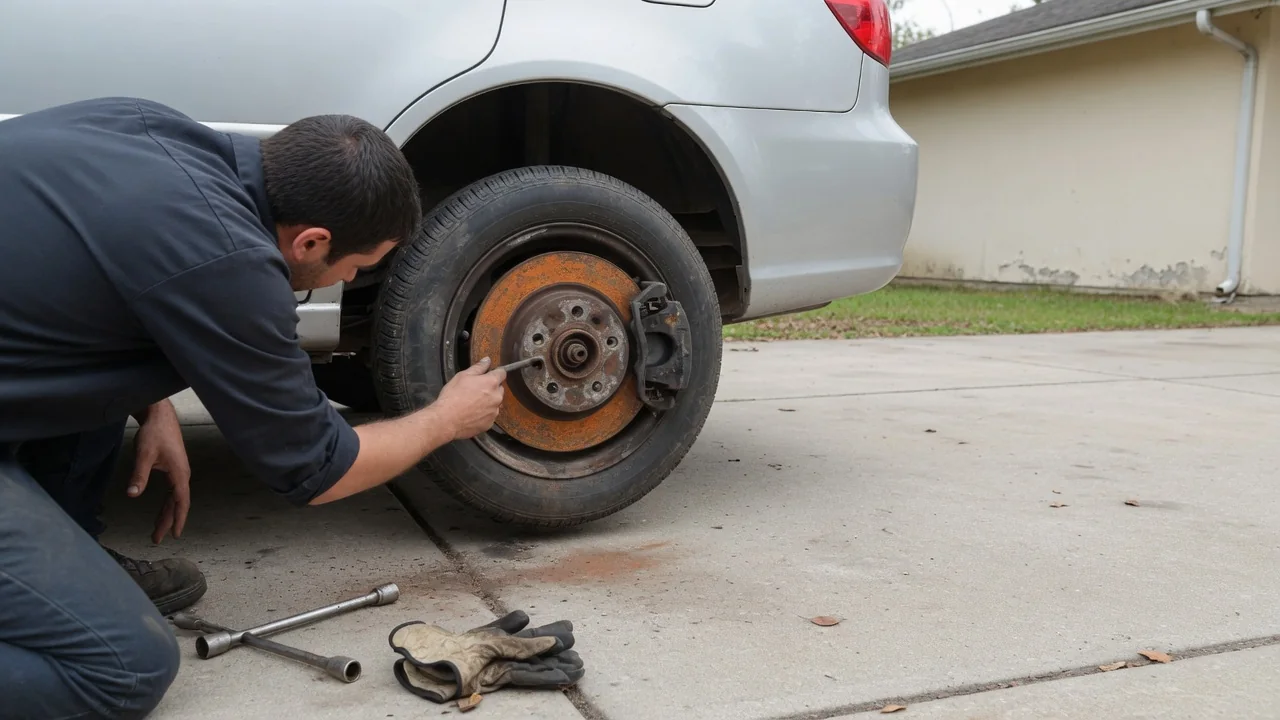
A car that sat for weeks or months can feel reluctant to roll when you finally drive it. Sometimes the wheels stay locked for a moment and then release with a clunk. Other times one wheel drags for longer. Brakes sticking after storage usually come down to two things: corrosion on the friction surfaces and a parking brake that does not fully release. Knowing how each develops helps you decide what to check and when to involve a technician.
Surface Corrosion on Rotors, Pads and Drums
Most brake rotors and drums are made of cast iron, which has no protective coating on its friction surface. Iron rusts readily when exposed to moisture, so a thin orange film can appear after a rainy night, a car wash or a few humid days. On a car driven regularly, this flash rust is scraped away by the pads during the first few stops and rarely matters. The problem changes when the vehicle stays parked long enough for corrosion to build up in one place instead of being wiped off repeatedly.
When a car sits, the pads rest against the same small area of the rotor. Moisture can collect at the edge of that contact patch, and corrosion forming there can bond the pad material to the rotor surface. The longer the car stays put and the more humid the environment, the stronger that bond can become. Garages are not automatically dry: temperature swings can cause condensation, and a car parked with wet brakes or road salt residue carries that moisture into storage. Corrosion is not limited to the rotor face either. Rust can form under the pad backing plates and in the caliper brackets, causing the pads to bind in their guides. Caliper slide pins and pistons can also stiffen if their lubricant or seals have degraded, which keeps the pads pressing against the rotor after the pedal is released.
Drum brakes follow a similar pattern. The shoes sit against the inside of the drum, and corrosion between the two can hold them together. Because the drum surrounds the shoes, moisture may take longer to evaporate, and the internal springs and adjusters can corrode as well. When a stuck shoe or pad finally lets go, drivers often hear a single loud pop or bang as the car starts moving.
How the Parking Brake Can Seize
A mechanical parking brake typically uses steel cables running through protective sheaths to the rear brakes. If water gets past worn seals or damaged sheaths, the cable can corrode inside its housing. While the brake is applied for a long period, the cable stays under tension in one position, and corrosion can lock it there. Releasing the lever or pedal then does not pull the mechanism back, and the rear brakes remain partly engaged. The levers, pivots and return springs at the wheel end, whether in a drum, a drum-in-hat design or on a rear caliper, can seize in the same way.
Electronic parking brakes replace the cable with electric actuators, often mounted on the rear calipers. They remove the cable corrosion problem but still rely on the same friction surfaces, so pads can still bond to rotors. They also depend on electrical power and control logic, and behavior varies between vehicles. A weak battery after long storage may cause warnings or affect release, so the owner's manual is the right reference for how a specific system works and what to do if it will not release. Whether to leave the parking brake set during storage is a tradeoff: an applied brake keeps the car from rolling but holds the components under load. Many storage guides suggest wheel chocks on level ground with the parking brake released, but the right choice depends on the vehicle, the surface and the manufacturer's guidance.
What to Inspect Before and After Driving
Before moving the car, look at the rotors through the wheel spokes. A light, even orange tint is common. Heavy scaling, flaking or a distinct rectangular mark where the pad rested suggests deeper corrosion. Check under the car and around each wheel for brake fluid leaks, confirm the fluid level in the reservoir is within its marked range, and note any dashboard warnings after starting the engine. Release the parking brake and confirm the indicator goes out and the lever or switch returns fully.
For the first movement, choose a clear, level area and roll forward slowly with light throttle. A brief resistance followed by a pop and free rolling usually means a pad or shoe has broken loose. Pay attention to grinding or scraping noises, a car that feels like it is towing something, or a pull to one side under braking. A few gentle stops at low speed help clean light rust from the rotor faces before you drive in traffic.
After a short, careful drive, signs of a brake that is still dragging include a burning smell, smoke from a wheel, or one wheel radiating noticeably more heat than the others when you hold a hand near it without touching, since brake parts can be very hot. Reduced coasting and unusual pedal feel are also clues. Any of these points to a caliper, slide pin, piston, hose or parking brake mechanism that has not fully released and needs a closer look.
Practical Implications and Limits
Not every sticking brake is a repair job. Light surface rust and a pad that breaks free on the first roll are often resolved by normal driving. A car that will not move without heavy throttle is a different situation. Forcing it can tear friction material from its backing, overheat a dragging brake, or strain drivetrain components. If gentle attempts in forward and reverse do not free the wheels, stopping and arranging an inspection is usually safer than pushing harder. Deep pitting on a rotor, pads separated from their backing, or a caliper that stays clamped are signs that parts may need service or replacement, which goes beyond what a visual check can settle.
Storage habits can reduce the risk but not remove it. A dry, ventilated space, clean and dry brakes before parking, and moving the car a short distance from time to time when practical all limit how long one contact patch stays exposed. Even so, iron rotors will still corrode, cables and seals still age, and brake fluid absorbs moisture over time regardless of mileage. Designs also differ: some electronic parking brakes have specific service or release procedures, and some vehicles are more exposed to moisture because of how their brakes are shielded. The general mechanisms described here apply broadly, but the details of a particular car belong to its manual and to a qualified technician.