Why Can a Hybrid Move With Its Engine Off?
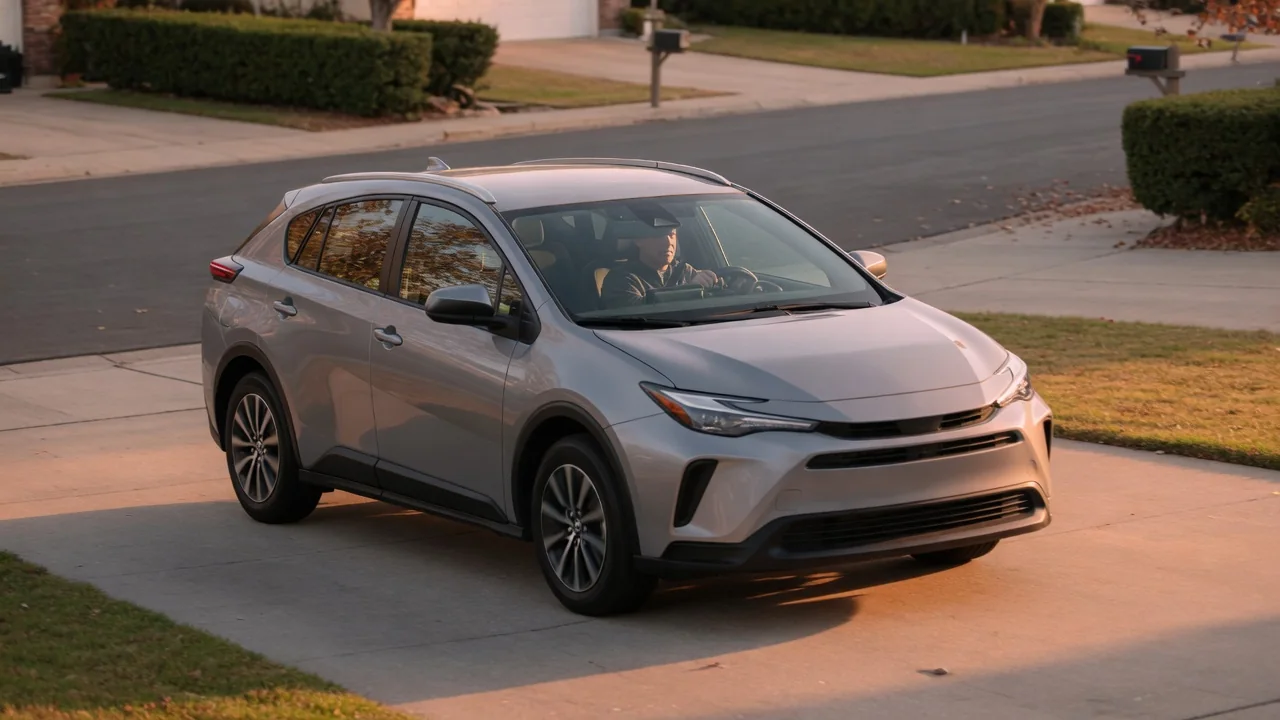
A hybrid can roll away from a stop, creep through a parking lot, or cruise briefly in traffic while its gasoline engine stays silent. This is normal operation, not a fault. An electric motor can turn the wheels on its own using energy from a traction battery, and a control system decides moment by moment whether the engine is needed. Three factors govern this: motor power, battery state, and control limits.
Motor power
In most full hybrids, at least one electric motor is mechanically connected to the driven wheels, either through the transmission or through a dedicated gear set. When that motor receives current from the high-voltage battery, it produces torque directly, as it would in a fully electric car. The engine is not required to create that motion. It is one possible power source rather than the only one. This is the basic answer to why a hybrid can move with its engine off: the drivetrain is designed so the motor can propel the car independently.
Electric motors suit this job at low speed. They deliver strong torque from a standstill and need no idle speed, clutch slip, or warm-up before producing force. A gasoline engine is least efficient at light loads and low rpm, which describes pulling away gently or creeping in traffic. Hybrid electric low speed drive takes advantage of that difference. The motor handles the work where it is strongest, in the conditions where running the engine would waste fuel.
The motor's capacity still sets a ceiling. Its continuous and peak output, together with the inverter that feeds it, determine how much acceleration and speed it can sustain alone. In systems with a smaller motor, electric-only operation is typically gentle and brief. Plug-in hybrids usually carry larger motors and batteries, so they can often stay electric at higher loads and speeds. Mild hybrids are a different category. Their small motor generally assists the engine rather than moving the car by itself, so many cannot drive meaningfully with the engine off. The exact capability depends on the specific system design.
Battery state
The motor can only work if the battery can supply the current. Hybrid control systems track state of charge, an estimate of how much usable energy remains, and keep it inside a window chosen to protect battery life. In a conventional full hybrid that window is usually narrow, because the battery is sized to buffer energy rather than to store a long driving range. When charge sits comfortably inside the window, the system is free to use electric drive. When charge approaches the lower boundary, the controller starts the engine to drive the car and recharge the battery, even at speeds where the engine would otherwise have stayed off.
Charge is not the only battery variable. Temperature strongly affects how much power a battery can safely deliver or accept. A cold battery has higher internal resistance and reduced power capability, and a hot battery may be restricted to prevent damage, so the control system lowers the permitted discharge rate in both cases. A battery with plenty of charge can therefore still be unable to supply enough power for electric driving when its temperature is outside the preferred range. Age and condition can also gradually reduce available power, although how a given vehicle compensates is specific to its design.
Energy returns to the battery mainly through regenerative braking and through the engine driving a generator. Slowing down, coasting downhill, and gentle braking replenish charge, which is why engine-off driving often follows a deceleration. Plug-in hybrids add charging from an external source, so they can begin a trip with a larger reserve for electric operation.
Control limits
Even when the motor and battery could handle a request, the hybrid control unit makes the final decision. It interprets accelerator position, vehicle speed, and the driver's apparent power demand, then compares them with what the electric path can deliver. If the request exceeds available electric power, or if vehicle speed is above the range permitted for electric operation, the engine is started and blended in. Pressing the accelerator firmly is one of the most common reasons the engine wakes up, even in a car that was moving silently a moment earlier.
The controller also starts or keeps the engine running for reasons unrelated to propulsion. Cabin heating in many hybrids relies on engine coolant, so a cold interior or a defroster request may call for the engine. Catalytic converter warm-up after a cold start, coolant temperature, and emissions-related routines can keep it running for a period regardless of driving demand. Drive modes that favor electric operation shift the balance, but they work within the same protective limits rather than overriding them.
Some hybrid layouts also have a mechanical speed constraint. Where the engine, motor, and generator share a planetary gear set, the system must keep each component's rotational speed within safe limits, and at higher road speeds the engine may need to turn or run to stay within range. Which constraint applies, and at what speed, varies by design, so the owner's manual is the reliable reference for a particular vehicle.
Practical implications and limits
For the driver, engine-off motion is conditional rather than guaranteed. Gentle acceleration, low to moderate speed, a battery at a comfortable temperature with reasonable charge, and a cabin that is already warm together create the best conditions. Departing from any of them makes the engine more likely to run. The engine starting and stopping on its own while driving is part of how the system is meant to operate, not a sign of trouble.
Quiet operation has safety implications. Pedestrians and cyclists may not hear a hybrid moving slowly with its engine off, which is why many modern vehicles emit an external warning sound at low speed. A car that is silent at a stop may still be in a ready-to-drive state, so check the ready indicator and shift into park before leaving the seat. Remember too that the engine may start automatically whenever the vehicle is on, which matters in garages and other enclosed spaces.
If a hybrid that normally drives electrically at low speed stops doing so in mild weather and ordinary driving, the change may reflect a battery, cooling, or sensor condition the control system is protecting against. A dashboard warning deserves attention, and diagnosis should follow service information for that specific vehicle. Frequent engine running in cold weather or on short trips, by contrast, usually reflects ordinary control priorities, so judge the system across varied conditions rather than from a single drive.