Why Can a Hybrid Move Quietly at Low Speed?
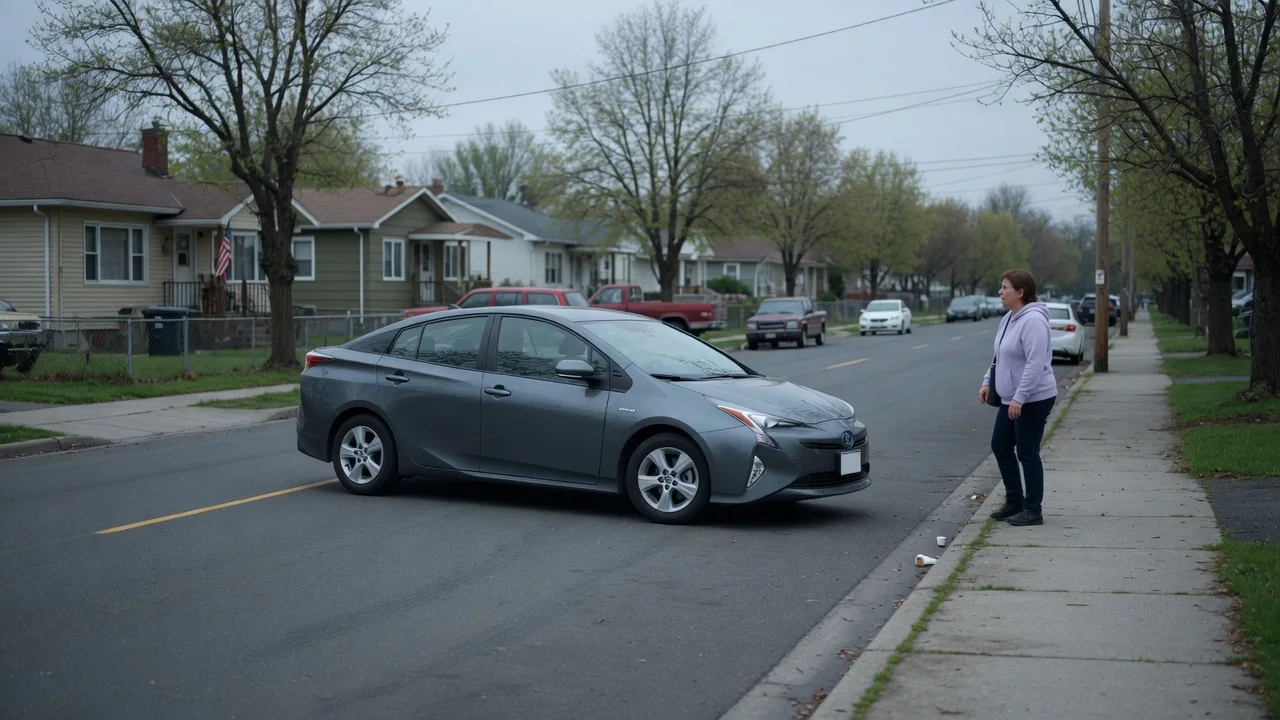
Anyone who has stood in a parking lot and watched a hybrid glide past with barely a whisper has probably wondered why can a hybrid move quietly at low speed. The short answer is that an electric motor, not the gasoline engine, is often doing the work. This article explains how that happens, what alerts exist, and what drivers should notice.
Motor operation
A hybrid pairs a gasoline engine with one or more electric motors fed by a high-voltage battery pack. At parking-lot and neighborhood speeds, the power needed to move the car is small, so the control system can often shut the engine off and let the motor turn the wheels alone. An electric motor has no combustion events, no exhaust pulses, and no valve train clatter, so the loudest sources of ordinary engine noise simply disappear while the vehicle keeps rolling.
Electric motors also deliver strong torque from a standstill, which makes them well suited to creeping forward, backing out of a space, or easing through traffic. What remains audible is usually a faint whine from the motor and power electronics, plus tire and gravel sounds. How long the car stays in electric drive varies widely. Battery charge, cabin heating or cooling demand, outside temperature, and the particular hybrid design all influence when the engine restarts.
Driver awareness
Because there is no engine idle to hear or feel, a hybrid can be fully ready to move while seeming switched off. Most vehicles show a ready indicator in the instrument cluster to confirm that the drive system is active, and many add an energy-flow display or an electric-drive icon showing whether the motor, the engine, or both are working. Learning where these indicators sit helps a driver avoid stepping out of a car that is still able to move.
Quiet operation also changes how others perceive the car. Pedestrians, cyclists, children, and people with visual impairments often rely on engine sound to judge that a vehicle is approaching, and at walking pace tire noise alone may not carry far. A driver in a silent hybrid should assume people nearby have not heard it, especially in parking structures, driveways, and crosswalks. Slower speeds, extra following distance, and deliberate eye contact compensate for the missing sound cue.
Audible signals
To address that gap, many hybrids and electric vehicles are fitted with a pedestrian warning sound, sometimes described as an acoustic vehicle alerting system. An exterior speaker emits a tone, hum, or synthesized whir while the car travels slowly in forward or reverse, and the sound typically changes in pitch or volume with speed so a listener can sense acceleration. Once road speed rises, tire and wind noise become loud enough on their own that the artificial sound fades out.
The character of the sound differs between manufacturers, and older hybrids may have no such system at all, because requirements depend on the market and the model year. Inside the cabin, separate chimes serve the driver rather than bystanders: a reminder that the vehicle is still on when a door opens, a tone when shifting to reverse, or a beep if the key leaves the car. The owner's manual identifies which alerts a specific vehicle provides.
Everyday Use and Observations
In daily driving, the quiet phase shows up in predictable places. Pulling away gently from a stop sign, crawling in stop-and-go traffic, and maneuvering in a garage are all moments when the motor commonly works alone. Press the accelerator harder, climb a grade, or deplete the battery, and the engine starts, often with a slight shudder and a noticeable rise in sound. On a cold morning the engine may run immediately to warm itself and supply cabin heat.
Drivers can also notice regenerative braking, where the motor acts as a generator during deceleration and returns energy to the battery, sometimes with a soft whir. Plug-in hybrids, with larger batteries, generally hold electric drive across a wider range of speeds and distances than conventional hybrids, while mild hybrids may not propel the car on electricity alone at all. Those differences explain why two vehicles wearing a hybrid badge can sound quite unlike each other in the same parking lot.
Limits and Next Steps
Silent running is a normal trait, but it has boundaries. The engine's restarts are decided by the control system, not the driver, so electric-only travel cannot be guaranteed at any given moment, even where a dedicated EV mode button exists. A warning sound that used to be audible and has gone quiet, or a message about the alert system on the dash, deserves attention, since it may point to a speaker, wiring, or software issue that needs proper diagnosis.
Any warning light or stored fault code should be read as a clue rather than a verdict; it narrows the search but does not prove that a particular part has failed, and many codes are manufacturer-specific and need vehicle-specific confirmation. High-voltage components are not suitable for casual inspection, so concerns belong with a technician trained on hybrid systems. For everything else, the owner's manual remains the best guide to the indicators, sounds, and drive modes of a particular model.