Why Can a Car Lose Coolant Without a Visible Puddle?
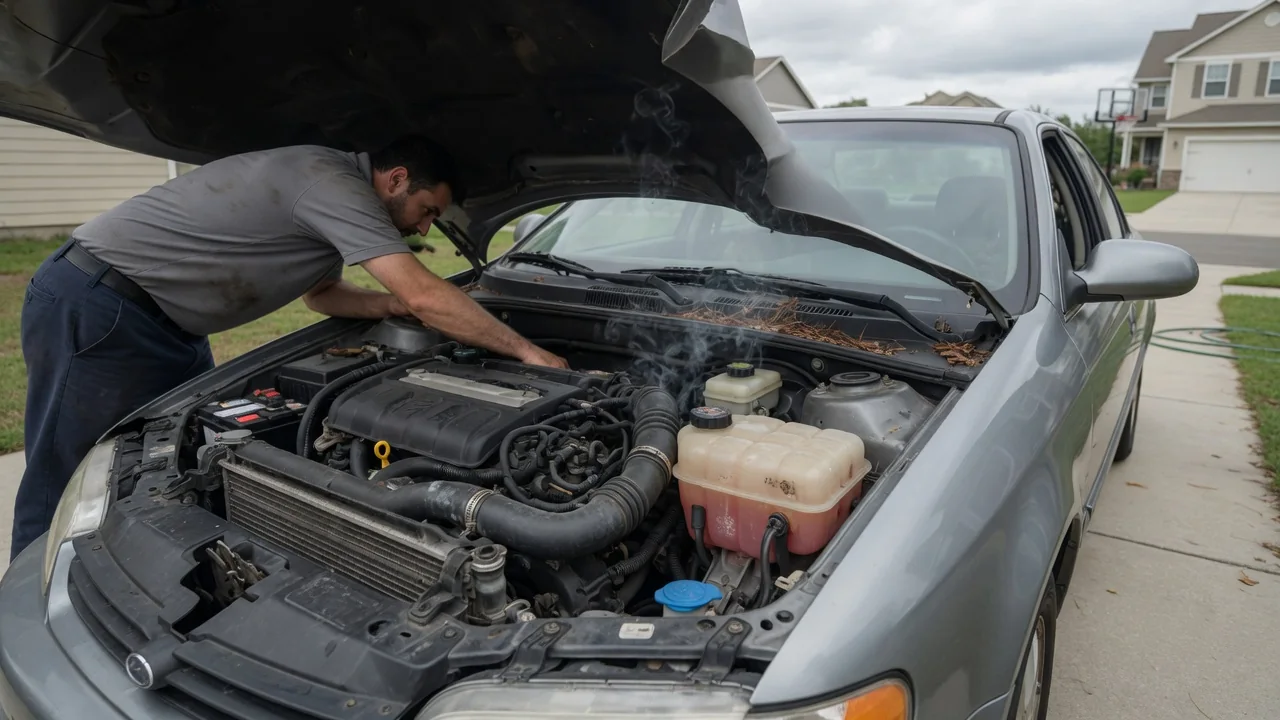
A dropping reservoir above a dry driveway is confusing, and it leads many drivers to ask why a car can lose coolant without a visible puddle. The answer usually falls into three groups: coolant escaping as vapor or steam, small external leaks that dry on hot parts before dripping, and internal loss into the engine or cabin. Each leaves different clues.
Inspect cold
A cooling system is pressurized when hot, so any inspection should start with the engine fully cold, ideally after sitting overnight. Opening a cap on a hot system can release scalding coolant, and a warm engine also hides evidence because seepage flashes off hot metal. Cold, the trail remains: dried coolant leaves a crusty residue, often white, green, pink or orange depending on the coolant type, around hose joints, the radiator seams, the water pump area and the thermostat housing.
These dried deposits explain many no-puddle cases. A slow seep at a hose clamp or radiator end tank may only weep under operating pressure, then evaporate on contact with hot surfaces while driving, so nothing reaches the ground. Look also at the cap seal and the filler neck, since a worn cap can vent vapor through the overflow. Layouts vary widely; some engines hide the water pump behind covers, and undertrays on many modern vehicles catch drips before they ever fall.
Watch levels
Tracking the level turns a vague worry into usable evidence. Check the expansion tank under the same conditions each time, cold and parked on level ground, because coolant expands with heat and a warm reading sits higher. Compare the level to the minimum and maximum marks molded into the reservoir, and note the date and distance driven. A marker line or a photo makes small changes easier to judge than memory does.
The pattern matters as much as the amount. A very slight drop over many months can come from normal vapor loss through the reservoir vent, particularly in hot weather. A steady drop every week or two points toward a leak or internal consumption. A level that falls only after highway trips or towing suggests loss under high pressure and temperature. Some vehicles have a pressurized tank with no separate radiator cap, while others use an unpressurized overflow bottle, so the owner's manual should guide where to check.
Seek diagnosis
When the level keeps falling and no residue is found, professional testing is the sensible step. A workshop can pressurize the cold system with a hand pump and watch whether pressure holds, which exposes seeps that only appear under load. The cap can be tested separately. Ultraviolet dye added to the coolant can reveal tiny leaks under a lamp, and a chemical test of the gases in the expansion tank can indicate whether combustion gas is entering the coolant.
That last test relates to internal loss, where coolant leaves through the engine rather than onto the ground. A failing head gasket, a cracked cylinder head, or on some designs a leaking intake gasket or exhaust gas recirculation cooler can let coolant into the combustion chamber, where it burns off as steam. Coolant can also mix with oil. None of these should be assumed from one symptom; a warning light or stored fault code is evidence to interpret, and confirmation depends on vehicle-specific testing.
Everyday Use and Observations
Daily driving offers clues that need no tools. A sweet, syrupy smell after parking suggests coolant evaporating off hot components. The same smell inside the cabin, a greasy film on the inside of the windshield, or damp carpet in the front footwell points toward the heater core, which leaks into the interior rather than under the car. A heater that blows cool at idle but warms with revs can indicate a low level or trapped air.
The exhaust and the oil deserve attention too. Persistent white vapor with a sweet odor from the tailpipe once the engine is fully warm differs from the ordinary condensation seen on cold mornings, which fades within minutes. A milky, light-brown film under the oil filler cap can suggest coolant contamination, though short trips in cold weather may produce similar moisture deposits. Watch the temperature gauge as well; a needle that climbs or fluctuates is a reason to stop and let the engine cool.
Limits and Next Steps
Home observation has limits. Residue shows where coolant has been, not necessarily where it started, because airflow from the fan and road speed can carry droplets away from the source. Internal leaks may be intermittent and leave no outward sign at all. Topping up is a temporary measure, and the correct coolant type matters, since specifications differ between manufacturers and mixing incompatible formulas can cause problems. Plain water dilutes freeze and corrosion protection.
The practical next step depends on what the notes show. A stable level after one top-up may simply need continued monitoring, while repeated loss, overheating, a sweet-smelling exhaust or contaminated oil warrants prompt inspection, because running an engine low on coolant risks serious damage. Bringing the level log, the conditions under which loss occurs and any observed smells or residue helps a technician narrow the search quickly. Coolant is also toxic to pets and children, so store it securely and clean up spills.