Why Can a Brake Warning Light Have Multiple Causes?
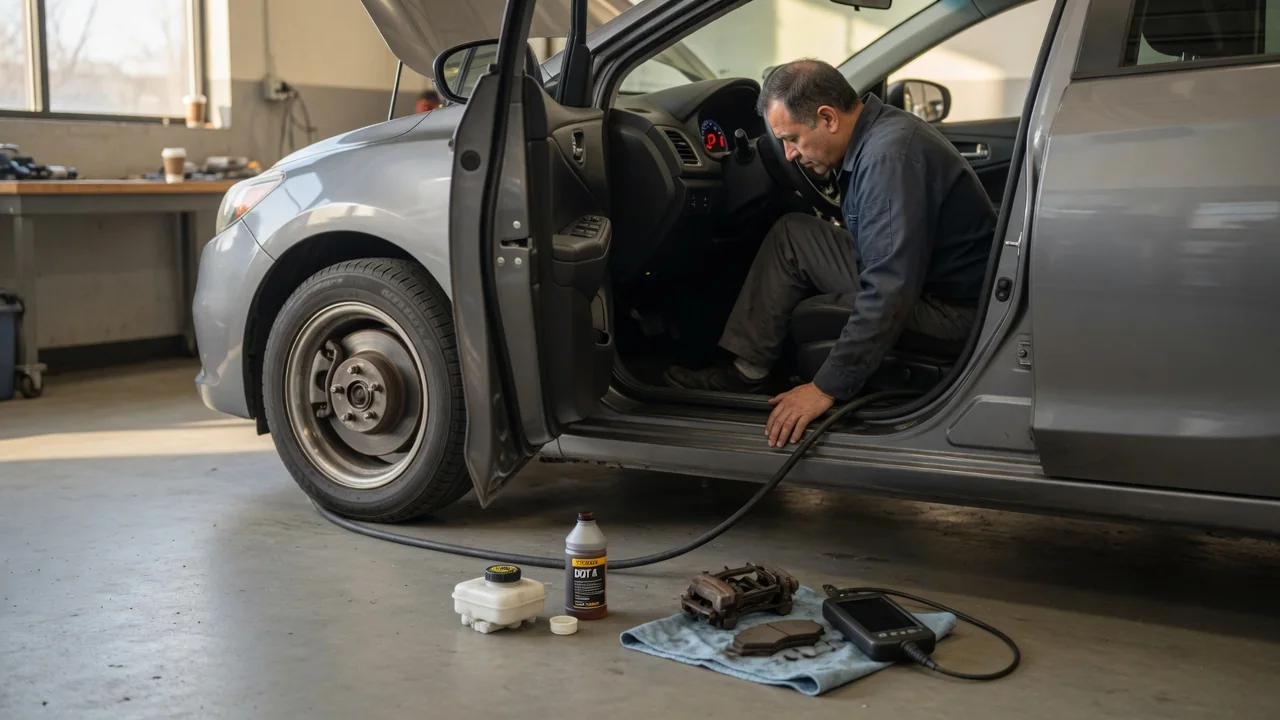
A single brake warning light on the dashboard can be triggered by several different conditions, which often confuses drivers who expect one lamp to mean one problem. The reason is design: the lamp is a shared alert that collects signals from mechanical switches, fluid sensors and electronic control modules. Understanding these brake warning light inputs explains why the same symbol can point to a parking brake left on, low fluid, or a fault detected by software.
Fluid and parking brake
On most vehicles, the most common reason the red brake warning light stays on is the parking brake. A mechanical lever or foot pedal usually operates a small switch that closes when the brake is applied, telling the instrument cluster to illuminate the lamp. If that switch is misadjusted or damaged, or the lever does not return fully to its rest position, the light can remain on even though the driver believes the parking brake is released. Vehicles with an electronic parking brake typically report its status through a dedicated control module instead of a simple switch, and depending on the design, the system may use its own symbol or share the main brake warning lamp.
The second classic input is the brake fluid level sensor, usually a float switch mounted in the master cylinder reservoir. When the fluid drops below a set point, the switch triggers the warning. Low fluid can come from a leak anywhere in the hydraulic system, but it can also result from normal pad wear. As friction material wears down, the caliper pistons sit farther out and hold more fluid, so the reservoir level falls gradually even with no leak. This is why topping up the reservoir can make the light go out while hiding the real reason it came on.
Many older vehicles with split hydraulic circuits also used a pressure differential switch. If one circuit lost pressure relative to the other, a piston inside the switch shifted and completed the warning lamp circuit. Because this switch, the fluid level sensor and the parking brake switch were often wired to the same lamp, any one of them could turn it on. That shared wiring is the original reason a single brake light has always had several possible causes.
Electronic faults
In many modern vehicles, the instrument cluster does not read every brake sensor directly. Instead, it receives messages over the vehicle data network from modules such as the anti-lock brake system controller, the body control module or the electronic parking brake module. Each of these can request the brake warning lamp, so the number of possible inputs grows with the amount of electronics in the braking system. A common example is electronic brakeforce distribution, a function of the ABS module that manages front-to-rear brake balance. If the module detects a fault that disables this function, it may light the red brake lamp in addition to the amber ABS lamp, because rear brake balance is no longer being actively controlled.
Other electronic triggers depend on the design. Some vehicles illuminate the brake warning when system voltage is too low for the modules to operate reliably, when communication between a module and the cluster is lost, or when a wheel speed sensor problem affects functions beyond ABS. Some vehicles also connect brake pad wear sensors to a warning, though they often use a separate symbol. Which faults activate which lamp varies by manufacturer and model, so the owner's manual and service information are the reliable references for a specific vehicle. The general principle, however, is consistent: the lamp is an output shared by several monitoring systems.
Diagnosis
Diagnosis works by eliminating inputs from the simplest to the most complex. First, confirm the parking brake is fully released, and note whether the light changes when the lever, pedal or switch is operated. Next, check the fluid level against the reservoir markings with the vehicle parked on level ground. If the level is low, the useful question is why: look for wetness at the wheels, brake lines, hoses and master cylinder, and check pad thickness, since worn pads can explain a gradual drop. Simply adding fluid without this inspection skips the most important step.
If the parking brake and fluid level are both normal, the cause is more likely electrical or electronic. A scan tool that can communicate with the ABS and chassis modules is usually needed, because basic code readers are often limited to engine and emissions-related codes. Stored trouble codes in the ABS or parking brake module can point to a specific sensor, circuit or function. It also helps to note which other lamps are on at the same time, such as ABS or stability control, and whether the light appears constantly, intermittently, or only under certain conditions like turning or hard braking. Testing switches, wiring and connectors should then follow the procedures in the service information for that vehicle.
Practical implications and limits
Because the same lamp can represent a minor issue or a serious one, the light alone does not reveal how urgent the problem is. The safest approach is to treat a red brake warning as significant until the cause is known. If it comes on while driving together with a change in pedal feel, longer stopping distances or a pedal that sinks, the vehicle should be stopped in a safe place rather than driven further. If it appears with a firm, normal pedal and a clear explanation, such as a partly applied parking brake, the risk is different, but the cause should still be confirmed.
The warning system also has blind spots. A fluid level switch measures quantity, not condition, so it cannot detect moisture-contaminated fluid or air in the lines. Vehicles without pad wear sensors will not warn about worn pads until fluid level or braking performance changes. Clearing codes without repairing the fault usually brings the light back. Some repairs, such as bleeding brakes on systems with ABS units or servicing electronic parking brakes, may require specific procedures or scan tool functions. A dark warning lamp is reassuring, but it is not a substitute for routine brake inspection.