Why Are Wheel-Well Liners Flexible? Impact, Fit, and Damage Explained
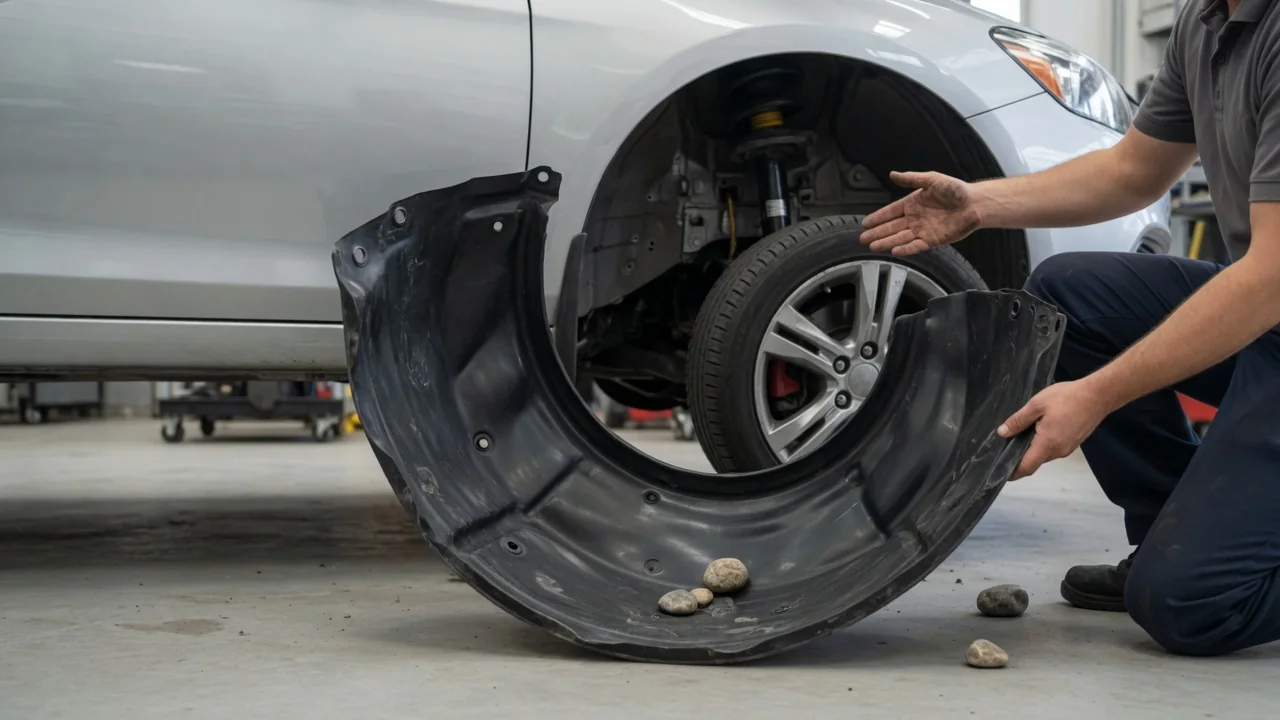
Wheel-well liners, also called fender liners or inner fender splash shields, sit between the tire and the body structure. They take a steady beating from water, grit, gravel, and slush. Most are made from flexible polymers rather than rigid plastic or metal, and that choice is deliberate. Flexibility helps the liner survive impacts, fit into a tightly curved space, and fail gradually instead of suddenly. This article explains each of those reasons and what they mean for owners.
Impact resistance
The inside of a wheel arch is one of the harshest locations on a vehicle. A rotating tire picks up stones, sand, road salt, and chunks of ice and throws them outward at speed, directly into the liner. A rigid, brittle panel would concentrate that energy at the point of impact and tend to crack or shatter. A flexible liner deflects locally instead, which spreads the load over a wider area, and then springs back to its original shape. This ability to absorb energy through elastic deformation is the core reason car wheel liner material tends toward tough, ductile thermoplastics such as polypropylene and polyethylene. Some vehicles use nonwoven fiber mats instead.
Flexibility also matters when the tire itself reaches the liner. At full suspension compression, at full steering lock, or when snow and ice pack into the arch, the tire or the buildup can press against the liner. A compliant liner can give way and recover rather than crack, and a soft surface is less likely to cut or abrade the tire during brief contact. The liner is not designed for constant rubbing, but tolerating occasional contact is part of why it is not made from a stiff material. Many of these polymers stay reasonably tough across a wide temperature range, which matters for a part that sees both summer heat and winter cold. Very low temperatures can still reduce flexibility in some plastics.
Fit
Wheel arches are complex three-dimensional shapes. The liner has to follow the inner fender, clear suspension and steering components, and meet the bumper cover and rocker area. Liners are typically thin molded or formed shells, and their flexibility lets them conform to the surrounding body even when the panels they attach to vary slightly from one vehicle to the next. A flexible liner does not need perfect alignment at every mounting point, because its fasteners can draw it into position until it settles against the structure. This tolerance for small variations helps manufacturers achieve a consistent fit across production. It also helps a replacement part fit a vehicle that has aged or been repaired.
Installation is another reason. A liner is often larger than the opening it must pass through once the wheel and nearby parts are in place, so technicians commonly bend or roll it slightly to maneuver it into the arch. It is then held by push-pin clips, screws, or plastic rivets along the fender lip, the bumper cover, and inner mounting points. A flexible part can line up with these fastener locations without putting excessive stress on the holes. Flexibility also lets the liner accommodate thermal expansion and contraction, as well as body movement over rough roads, without cracking at its mounting points.
Damage
Flexibility changes how a liner fails, but it does not prevent damage. The most common problems tend to start at the fasteners. Repeated flexing, vibration, and the weight of mud or snow can elongate mounting holes or tear the material around them, and missing or broken clips allow sections to sag. A loose liner can catch airflow at speed or contact the tire, which produces flapping, scraping, or rubbing noises. Because the material bends rather than snaps, these problems usually develop gradually. They are often visible well before the liner comes off entirely.
Other damage comes from abrasion and heat. Persistent tire contact can wear through the material or leave grooves, and it often results from incorrect fitment, oversized tires, or a sagging liner. Plastic liners can distort if they sit close to a hot component such as an exhaust section. Fiber-based liners can hold water and debris, which makes them heavier and can contribute to sagging. Curb strikes, deep snow, and road debris can also tear or puncture a liner. Over time, aging and sun exposure near the arch opening may make some plastics less flexible, which raises the chance that they crack instead of bending.
Practical implications and limits
For owners, the main takeaway is that a liner's flexibility is a functional feature, not a sign of cheap construction. A liner that gives under hand pressure is normally behaving as designed. What deserves attention is how it is held in place. During tire rotations, seasonal tire changes, or cleaning, check that the clips are present, the edges are secure, and the liner is not resting against the tire. Replacing lost fasteners with the correct type is usually a simple fix, and it keeps a small gap from turning into a torn panel.
There are limits to what flexibility can compensate for. A liner can absorb occasional contact, but it cannot tolerate continuous rubbing from wheels or tires that sit outside the vehicle's intended dimensions, or from lowered suspension that reduces clearance. Trimming or forcing a liner to clear larger tires may create new rubbing points. It can also open paths for water and debris to reach the areas the liner was meant to protect, such as wiring, sensors, and body seams. Severely torn, holed, or heat-damaged liners are generally better replaced than patched, because repairs may not restore the original shape and fit.
Finally, design details vary widely between vehicles. Material type, thickness, and fastener layout all differ, and so does whether the liner also serves aerodynamic or sound-reduction roles. Some vehicles have only partial liners, or none in certain wheel positions. The general principles in this article explain why flexible materials are common. For part numbers, fastener types, and removal and installation procedures, the vehicle's own service information remains the right reference.