Why Are Some Car Switches Shaped Differently?
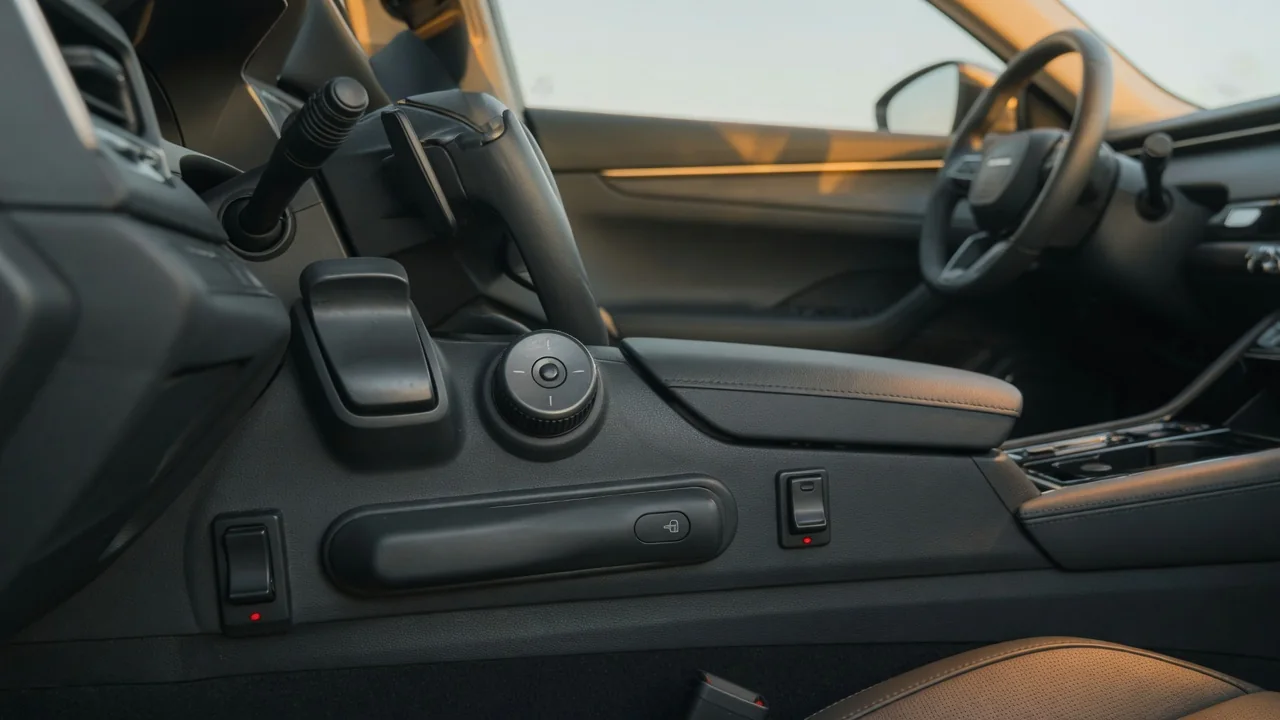
Run your fingers along a door panel or center console without looking, and you will notice that the switches are not all alike. Some are tall rockers, some sit in recesses, some have ridges or raised edges, and a few are shaped like the part they control. These differences are rarely just styling. Car switch tactile design exists mainly so a driver can find and operate a control by feel while keeping their eyes on the road.
Touch recognition
Interior designers rely on long-established human factors principles when they give controls different forms. A control can be coded by shape, size, texture, location, and the way it moves. When the eyes are busy with traffic, the fingertips become the main sensor. They can quickly tell a round knob from a square button, or a convex cap from a concave one. Distinct shapes reduce the chance of pressing the switch next to the one you meant to use. A familiar example is the power seat control molded to look like a seat in profile. The driver moves the part shaped like the cushion or the backrest in the direction they want the seat to go. The shape explains the function, so the driver doesn't need to read a label.
Texture and mechanical feel add a second layer of information. Knurled or ribbed edges on rotary knobs make them easier to grip and easy to tell apart from smooth push buttons. A small raised ridge or bump can mark a reference button, so the rest of a row can be found relative to it. Detents, the small notches felt while turning a dial, tell the driver how many steps they have moved without looking at a display. Rockers that spring back to center behave differently from switches that latch in place, and that difference signals whether a function is momentary or stays on. A clear click or travel stop after pressing confirms that the input registered. Flat touch-sensitive panels offer few of these cues. That is one reason they can demand more visual attention, unless the system adds vibration or another form of feedback.
Control placement
Shape works together with location. Controls are usually grouped by function, so drivers build a mental map: lighting near the steering wheel, climate in the center, windows and mirrors on the door. Within each group, distinct shapes separate functions that sit side by side. On a door armrest, for instance, the window switches, mirror adjuster, and lock button usually have different forms, so a hand resting there can tell them apart. Steering column stalks follow the same logic. Their rotating collars and end buttons are shaped and textured differently, so each function can be found by feel while the hands stay near the wheel.
Placement also determines how hard a switch should be to trigger by accident. Switches located where knees, elbows, or bags might brush against them are often recessed, surrounded by a raised guard, or designed to be pulled up rather than pushed down. Window switches that must be lifted to close the glass are a common example, because leaning on a switch is unlikely to produce a pulling motion. Functions that should not be changed casually may be smaller, guarded, or placed away from the most frequently used controls. The hazard warning switch, by contrast, usually gets a prominent central position and a distinctive marking. It may need to be found quickly, sometimes by a passenger.
Driver use
How often a control is used, and how urgently, strongly influences its form. Controls used many times on every trip, such as volume, temperature, or fan speed, tend to get large, easy-to-find shapes in reachable positions. Rarely used controls can be smaller or tucked away, because the driver will usually look before using them anyway. Over time, repeated use builds muscle memory, and the driver stops looking at familiar switches. Shape supports that habit: the finger reaches toward a remembered spot, and the feel of the control confirms it is the right one before any input is made.
Real driving conditions are rarely ideal. At night, glare and dim backlighting can make labels hard to read. In cold weather, gloves blunt the sense of touch. Larger controls with pronounced edges and firm detents are then easier to operate than small flush buttons. On rough roads, vibration makes precise finger placement harder, and controls with a clear target area and a defined travel stop are more forgiving. In each case, the tactile shape keeps working even when the visual cues do not.
Most drivers use a combination of sight and touch: a brief glance to locate the general area, then the fingertips to find and confirm the exact control. Distinct shapes help shorten that glance or remove the need for it entirely. That is the core reason some car switches are shaped differently from their neighbors.
Practical implications and limits
For most switch types there is no single universal shape standard, so conventions differ between manufacturers, markets, and even generations of the same model line. A movement that feels automatic in one vehicle can produce the wrong result in another. This matters when moving to a rental, a borrowed car, or a newly purchased vehicle. Spending a few minutes while parked feeling each control without looking helps build the new mental map before you need it in traffic. The owner's manual remains the reliable reference for what a specific switch does and how it works, because similar shapes do not always mean the same function across vehicles.
Tactile coding also has limits. When a cabin contains too many distinct forms, the differences become harder to remember, and the benefit shrinks. Worn surfaces can lose their texture, and aftermarket covers, phone mounts, or other accessories can block switches or hide their edges. Capacitive buttons and touchscreens trade physical form for flexibility. Some provide haptic feedback, but a vibration does not convey location the way a raised edge does. When replacing a damaged switch, a part designed for that vehicle helps preserve the intended shape, action, and fit, so the controls still behave the way the driver has learned to expect.