Why Are Some Car Seals Flocked? Friction, Glass Movement and Cleaning
If you look closely at the channel your side window slides in, you will often see a fuzzy, velvet-like surface instead of bare rubber. That texture is flocking: a layer of short fibers bonded to the seal. Flocked automotive window seals exist because they solve a specific problem. Glass has to slide freely against a seal that must also press firmly enough to keep out water, wind, and noise.
Low friction: why fibers work better than bare rubber against glass
Seal rubbers such as EPDM are chosen for flexibility, weather resistance, and the ability to spring back after being compressed. Those same qualities make bare rubber grip smooth glass. Rubber sliding on glass tends to drag, and it can stick and release in small jumps, which produces squeaks, chatter, and uneven movement. Flocking changes the contact surface. Short fibers, commonly nylon or polyester, are set into an adhesive layer on the rubber, often with an electrostatic process that makes the fibers stand upright. The glass then rides on the fiber tips rather than on the rubber itself, which reduces the real contact area and lowers friction.
The important point is that flocking separates two jobs. The rubber body and its lips still provide the clamping force that seals against the glass. The flock only provides the sliding interface. Without it, designers would have to choose between a seal that presses firmly but drags, or one that slides easily but seals poorly. Flocking is not the only answer to this trade-off. Some seals use a low-friction slip coating instead, and the choice depends on the design of the seal and where it sits on the vehicle.
Glass movement: what flocking does as the window travels
Flocking is most common on the parts that the glass moves through. The glass run channel is the U-shaped seal in the door frame that guides the front and rear edges of the window and receives the top edge when it closes. The beltline seals, sometimes called window sweeps, sit along the bottom of the window opening on the inside and outside of the glass. Every time the window goes up or down, the glass slides through all of them. In a power window system, the regulator and motor must overcome that drag on every cycle. Lower and more consistent friction helps the window travel smoothly at a steady speed and reduces the load on the mechanism.
Consistency matters as much as the friction level itself. Many power windows with anti-pinch features judge whether something is in the way from changes in how the motor behaves. When seal drag rises sharply in one spot, such a system can interpret it as an obstruction and stop or reverse the window, although the exact logic is vehicle-specific. Flocking also cushions the glass. The soft fiber layer helps keep the window centered in its channel, damps rattles when the window is partly open or the road is rough, and keeps the glass edge away from harder parts of the frame. In cold weather, a flocked surface may be less prone to bonding with the glass than bare rubber, but it does not prevent ice from forming.
Cleaning: how flocked seals wipe the glass and what they collect
The beltline seals do more than guide the glass. As the window lowers, the outer sweep wipes water and loose dirt off the outside surface, limiting how much enters the door cavity. Door cavities are designed with drains because some water always gets past, but the sweep keeps the amount manageable. The inner sweep does a similar job on the cabin side, wiping off condensation and light film. Flock suits this role because it can contact the glass along its full length without grabbing it.
The same fibers that make wiping possible also trap grit. Sand, road dust, and fine debris can work into the flock and stay there. As the window moves, those embedded particles are dragged across the glass and can leave fine scratches that run in the direction of travel. Dirt packed into the fibers also mats them down, so the seal gradually loses the low-friction behavior it was designed to provide.
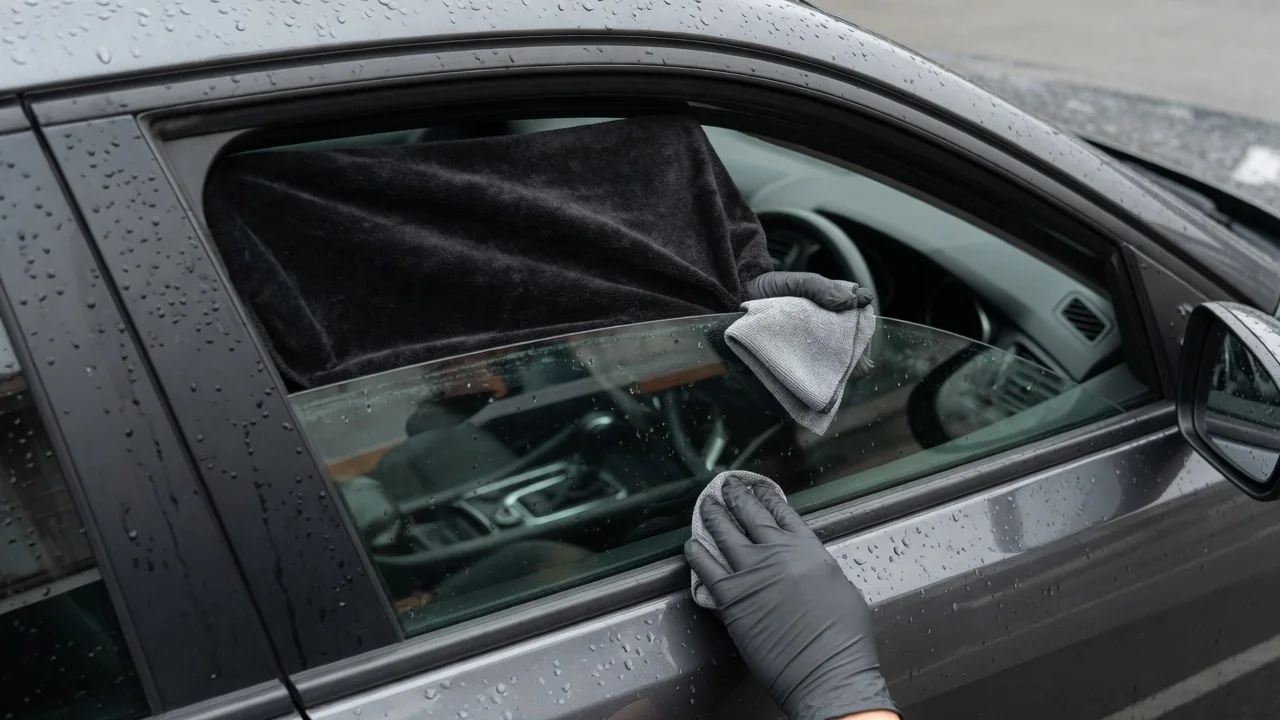
Cleaning flocked seals is therefore about removing loose dirt without damaging the fibers or the adhesive that holds them. A vacuum or soft brush lifts debris from the channel, and mild soapy water followed by a rinse handles most residue. Strong solvents can attack the adhesive or the rubber underneath, and greasy dressings tend to mat the fibers and attract more dirt. If a lubricant seems necessary, use only a product recommended for the vehicle or the seal, often a silicone-based type, and apply it sparingly.
Practical implications and limits
Flocking is a wear surface, not a permanent one. Over years of use, fibers abrade, flatten, and can detach in patches, usually first where the glass contacts the seal hardest, such as the upper corners of the run channel and along the beltline. Typical signs include a window that moves more slowly than it used to, squeaks or chatter during travel, rattling at partial opening, exposed rubber visible through the fiber layer, and new scratches on the glass.
Worn flock generally cannot be restored at home in a durable way, so the usual fix is replacing the affected channel or beltline seal with one that matches the original profile. However, a slow or noisy window is not automatically a seal problem. A tired motor, a binding regulator, misaligned glass, or dry guide components can cause similar symptoms, so it is worth checking these before replacing seals. The service manual for the specific vehicle is the right reference for removal steps, alignment, and any approved cleaning or lubricating products.
It also helps to know where flocking is not expected. Seals that only compress when a door, hood, or trunk closes do not have glass sliding across them, so they are typically plain or coated rubber. Flocking appears where something moves against the seal. Whether a particular vehicle uses flock, a slip coating, or another material on a given seal depends on its design, so general rules describe the mechanism rather than guaranteeing what any individual car has.