Why Are Some Brake Rotors Vented?
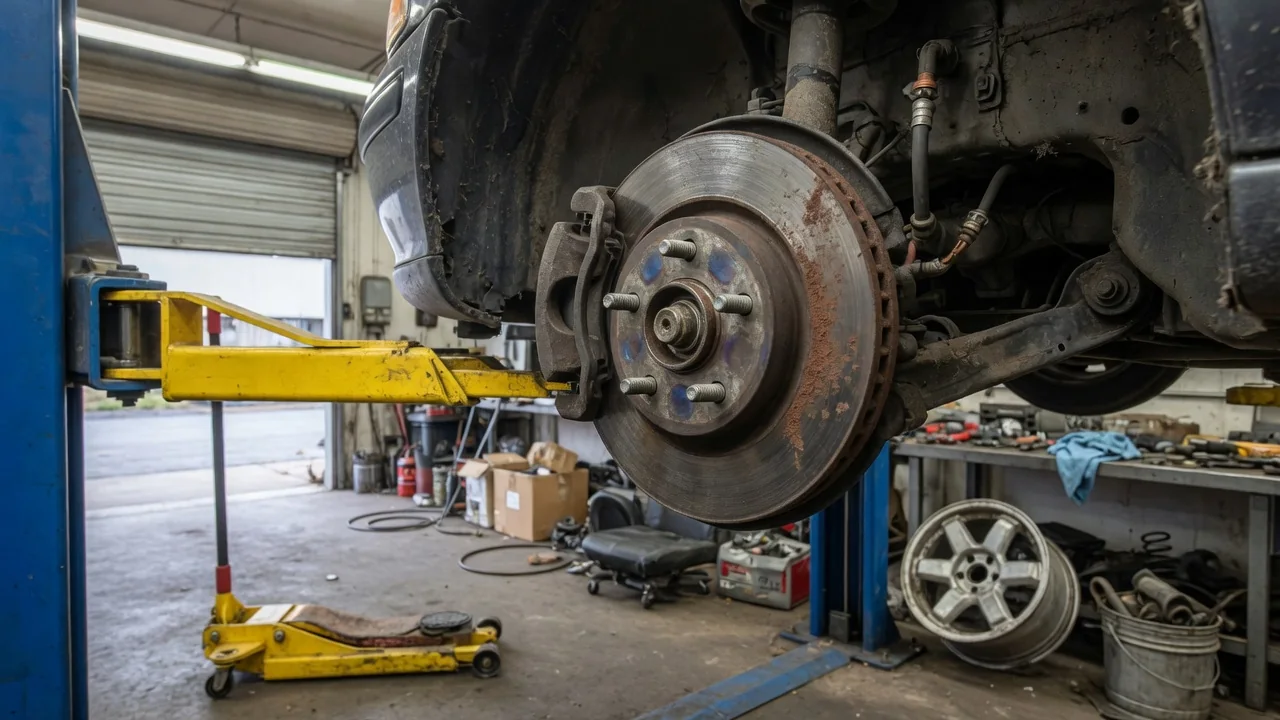
Drivers who look through a wheel often ask why are some brake rotors vented while others are a single solid plate. The answer comes down to heat. Braking converts a moving vehicle's energy into heat at the rotor, and a vented design gives that heat a faster way out through internal airflow between two friction faces.
Vane design
A vented rotor is built from two friction plates separated by a ring of internal ribs called vanes. As the wheel turns, the rotor acts like a centrifugal fan: air enters near the hub, travels outward through the channels between the vanes, and exits at the outer edge. That moving air carries heat away from the inner surfaces of both plates, giving the rotor far more cooling area than the two outer faces alone could ever provide.
Vane shape varies by manufacturer and application. Straight radial vanes are common because the same casting fits either side of the vehicle. Curved or directional vanes pump air more effectively but must be installed on the correct side to work as intended. Some designs use pillars or staggered posts instead of continuous ribs. Looking at the rotor's outer edge, you can usually see the gap and the vane pattern, though the exact layout depends on the specific vehicle and rotor supplier.
Heat path
Heat begins at the contact patch where the pads clamp the friction faces. From there it soaks into the cast iron, spreading through the plate thickness and into the vanes. The rotor works as a temporary heat store during a stop, then sheds that energy afterward through convection to passing air, radiation from the hot surfaces, and some conduction into the hub and wheel. Vented construction strengthens the convection part of that path considerably.
The difference shows up during repeated stops. A single hard stop is mostly absorbed by the rotor's mass, so solid and vented designs behave similarly. On a long downhill grade or in heavy stop-and-go traffic, however, heat arrives faster than a solid plate can release it. The internal channels let a vented rotor recover between applications, which helps keep pad and fluid temperatures in a range where friction stays consistent and pedal feel remains firm.
Application limits
Not every axle needs ventilation. Front brakes do most of the work because weight shifts forward under deceleration, so vented rotors are typical there. Rear brakes on lighter cars often handle a smaller share of the load, and a solid rotor can be thinner, lighter, and less expensive to produce while still coping with the heat involved. Heavier vehicles, trucks that tow, and performance models commonly use vented rotors at both ends.
A vented rotor also has trade-offs. It is thicker, so it requires a wider caliper and enough room inside the wheel. It adds rotating and unsprung mass compared with a thin solid disc. Airflow through the vanes depends on wheel design, splash shields, and ducting, so the same rotor may cool differently on different vehicles. Solid and vented rotors are not interchangeable on a given caliper, which is why replacement parts should always match the original specification.
Everyday Use and Observations
In ordinary driving, the venting does its job without any sign you would notice. What you can observe is the rotor itself: viewed from the edge through the wheel spokes, a vented rotor looks like two plates with a visible gap, while a solid one is a single slab. On many vehicles the front rotors show this gap and the rears do not, though the arrangement varies with the model, trim level, and brake package fitted.
The vanes can also collect debris over time. Road grit, rust scale, and brake dust may build up in the channels, particularly in regions where roads are salted, and heavy corrosion can restrict airflow or weaken the ribs. A burning smell after a mountain descent, a pedal that grows soft during sustained braking, or a vibration that appears only when the brakes are hot all suggest the system has been working near its thermal capacity.
Limits and Next Steps
Ventilation raises the heat a rotor can shed, but it does not make a brake system immune to overheating. Sustained heavy use can still overwhelm it, and driving technique matters: selecting a lower gear on long descents lets engine braking carry part of the load. Worn rotors hold less heat because they have less mass, and each rotor has a minimum thickness specified by its manufacturer, below which it should be replaced rather than kept in service.
If symptoms such as pulsation, fade, noise, or uneven pad wear appear, a qualified technician can measure the rotors, check the vanes for blockage or cracking, and confirm that calipers are releasing fully, since a dragging brake generates heat constantly. When replacement is due, choosing rotors that match the vehicle's original type, diameter, and vane direction preserves the cooling the brake system was designed around. The owner's documentation or a parts lookup by vehicle identification confirms the correct fitment.