Why Are EV Charge Ports Sometimes Heated? Ice, Connector Fit, and Energy Use
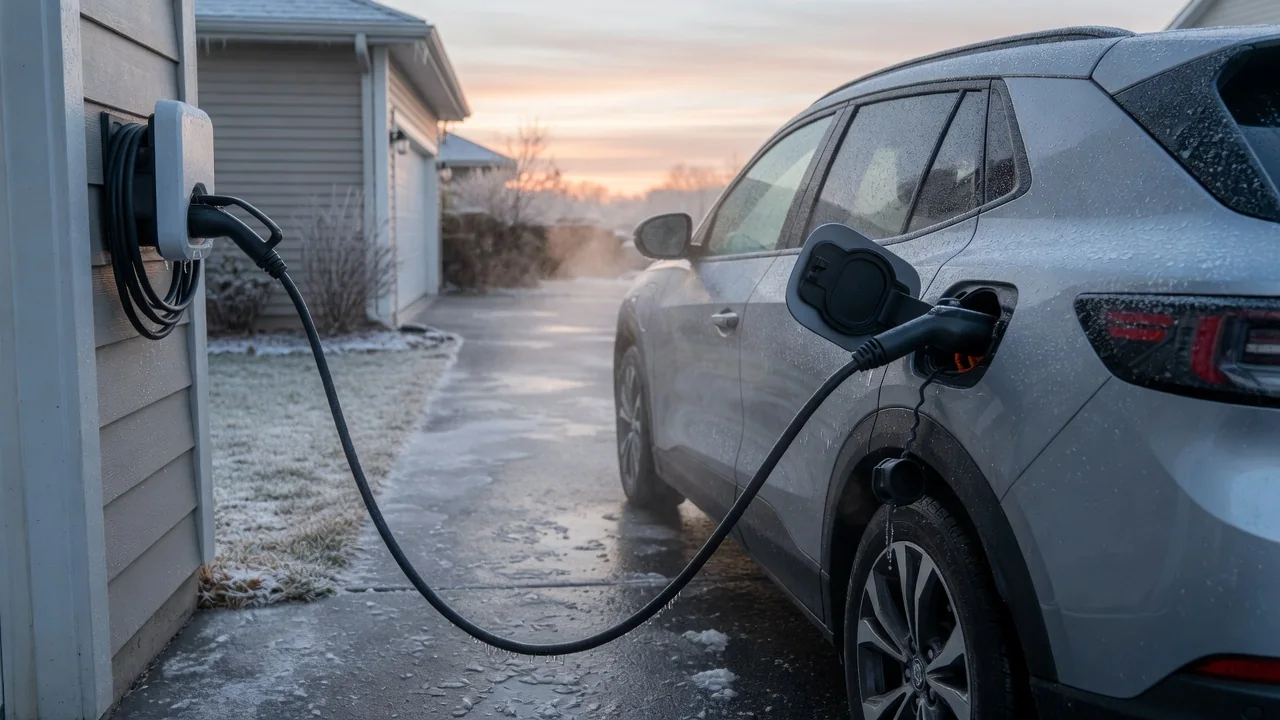
A heated EV charge port can seem like an odd feature, since charging already pushes a lot of electrical energy through the inlet. The heater does a narrower job. It keeps ice from blocking the port door, the locking mechanism, and the connector itself in freezing weather. This article explains why some EV charge ports are heated, how ice affects the way a charging plug seats and locks, and how much energy the feature uses. Whether a particular vehicle has a port heater depends on its design.
Ice management: keeping the port door and latch working
The charge port usually sits behind a small door set into a body panel. Water from rain, melting snow, car washes, and road spray can collect in the seams, hinge, and latch around that door. Freezing rain or a freeze-thaw cycle can then glaze the door shut. Many port doors open with a small electric actuator, and that actuator may not have enough force to break through ice. Behind the door, the inlet has recesses around the contact pins and often a locking pin or latch. Moisture that reaches these areas can freeze too.
A heated EV charge port uses a small electric heating element near the door, the latch, or the inlet housing. It warms the surrounding area enough to loosen or melt the ice. The goal is not to make the port warm to the touch. It only needs to break the bond between ice and the plastic or metal parts so they can move. How the heater is activated varies by design. Some systems run it automatically when they sense low temperatures. Others link it to cabin preconditioning, a defrost function, or a request to open the port. The owner's manual describes how a specific vehicle handles it.
An EV cannot easily rely on waste heat to do this job. A combustion engine sheds a lot of heat into the vehicle's structure, but an electric drivetrain produces far less spare heat, and little of it reaches a body panel near the charge port. The car is also often parked outside for hours before charging. Long periods without use are exactly when ice has time to form.
Connector fit: why a clean, unfrozen inlet matters
Charging connectors are built to tight tolerances. The pins have to slide fully into their sockets, the housing has to seat squarely, and the latch has to engage. Even a thin layer of ice in the inlet recess or around the pins can stop the plug from going in all the way, or let it go in at a slight angle. Charging standards use signaling contacts so the vehicle and charger can confirm a proper connection before significant current flows. If the plug is not fully seated, the session may not start, or it may stop shortly after beginning.
Locking is the second concern. Many vehicles lock the plug into the inlet electrically during charging, especially during DC fast charging, so it cannot be pulled out under load. The lock is typically a small pin driven by an actuator. If ice blocks that pin, it may fail to extend, and the vehicle may then refuse to begin charging. If it fails to retract at the end of a session, the cable can stay stuck in the car. Warming the inlet area helps the actuator move freely in both directions. Cold also stiffens rubber seals and plastic parts, which can make inserting the plug feel harder, and modest warming eases that as well.
Full engagement also matters electrically. Current passes through the contact surfaces between plug and inlet. If those surfaces only partly meet, contact area shrinks and resistance at the connection can rise, which produces more local heat. Vehicles and chargers commonly watch connector temperature and will reduce current or end the session if it climbs too high. A port that stays free of ice helps the connector seat as designed, so charging is not limited by a poor connection.
Energy use: how much power a port heater needs
A port heater is a small resistive element sized to warm a small area, not the whole vehicle. Its draw is modest next to cabin heating and battery conditioning, which are the main cold-weather energy consumers in an EV. It only has to warm a small amount of plastic and metal around the port, so it generally needs to run only for a limited time to do its job.
Control logic keeps that use in check. Designers generally limit the heater to conditions where ice is likely, such as low outside temperatures or a moment when the driver is about to charge. They often switch it off once the area reaches a target temperature or after a set period. Running it continuously would waste energy for no benefit. When the vehicle is plugged in, the energy can come from the grid. When it is parked and unplugged, any heating draws from the traction battery, which is one reason systems tend to avoid running the heater unless it is actually needed.
The design trade-off is simple. A small, brief energy cost is weighed against the inconvenience of being unable to open the port, insert the plug, or remove it after a session. In cold climates, a frozen port can mean a missed charging opportunity, which matters more to most drivers than the minor energy the heater consumes.
Practical implications and limits
Port heaters are not universal. Many EVs have no dedicated heater and rely instead on door shape, seals, and drainage paths to keep water out. Whether a vehicle has one, and how it is triggered, is a model-specific detail that belongs in the owner's manual. Do not assume a vehicle has the feature because another EV does.
Where a heater exists, it is meant for thin ice, not heavy buildup or packed snow. Brushing snow away from the door first gives it a better chance, and it may still need some time to work. The heater does not warm the charging cable's handle at the station, which can collect its own ice. Avoid prying the door open, forcing the plug, or pouring hot water over the port. Water can run into the electrical contacts and refreeze, making the problem worse. If the manual describes a manual release for the port door or plug lock, that is the intended fallback.
Warmth from charging itself is a separate matter. A port that feels warm after fast charging is heated by current flowing through the contacts, not by a heater, and that warmth is monitored by the vehicle's protective systems. Discoloration, deformed plastic, a burning smell, or repeated charging faults point to a problem that a heater cannot solve, and the inlet should be inspected by a qualified technician.