Why Are Battery Terminals Made From Heavy Metal?
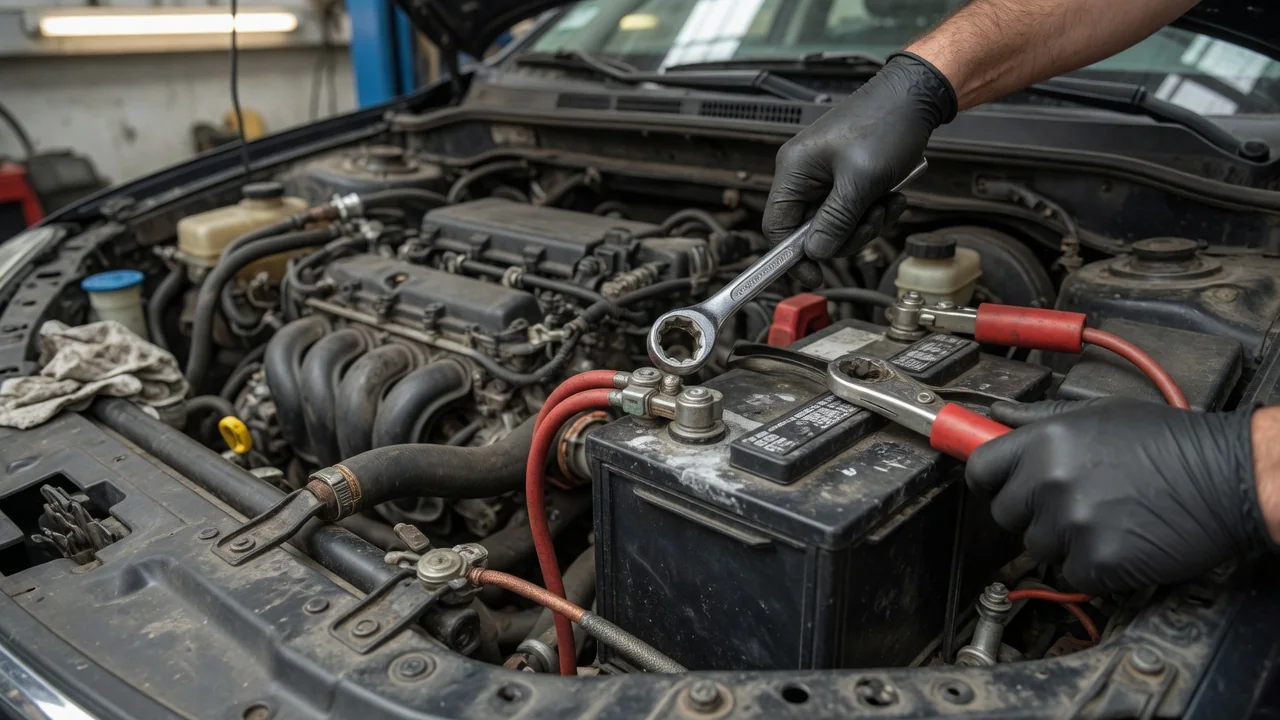
Most car battery terminals are made from lead or a lead alloy, a dense heavy metal, and the choice is not arbitrary. The posts are part of the battery's internal chemistry, they must carry a large surge of current when the engine cranks, and they have to survive acid vapor, heat, and vibration. The current path, the way corrosion forms, and the right way to clean terminals together explain why lead remains the standard car battery terminal material.
Current path: why the posts are lead
A conventional lead-acid battery, whether flooded or AGM, stores energy in lead plates. The positive plates carry lead dioxide, the negative plates carry spongy lead, and both sit on lead-alloy grids in sulfuric acid electrolyte. Inside the case, lead straps join the plates in each cell, lead connectors link the cells in series, and the final connector rises through the lid as the terminal post. Because the post belongs to the same family of metal as the grids and straps, the internal current path is one continuous lead structure. Joining dissimilar metals inside an acid environment would set up galvanic reactions at exactly the point where the battery can least tolerate them. Lead also holds up to sulfuric acid well enough to last for years. It is easy to cast, and its relatively low melting point suits the processes used to fuse internal connections during manufacturing.
Lead is a much poorer conductor than copper, so terminals make up for it with bulk. Posts are thick and tapered so that a clamp can grip a large contact area and keep resistance low while the starter motor draws its heavy current. The taper is deliberate. As the clamp is tightened, it wedges onto the post, and the soft lead deforms slightly to fill microscopic gaps, forming a tight metal-to-metal joint. Outside the battery, the current path runs through the clamp into the cable, which is usually copper. Clamps may be lead alloy, brass, or plated copper, depending on the design. The joint between clamp and post is the most vulnerable link in the circuit. Any resistance there becomes heat and voltage drop at the moment electrical demand is highest.
Corrosion: what builds up on terminals
Lead-acid batteries release small amounts of hydrogen and oxygen, especially during charging, and that gas can carry a fine acid mist with it. Excessive charging voltage increases this gassing. When the vapor escapes around a post seal or vent and reaches the terminal, it reacts with the metals there and produces the familiar crusty buildup. Whitish or grayish deposits typically contain lead sulfate and related compounds. Blue or green deposits usually mean the copper of the cable or clamp is being attacked. Electrolyte seeping from a cracked case or post seal, or from an overfilled serviceable battery, makes the problem worse. Engine bay heat speeds up the reactions, and moisture and road salt add to them.
The mix of metals at the connection also encourages corrosion. When lead posts, brass or copper clamps, and steel bolts sit together in the presence of an electrolyte, galvanic action attacks the less noble metal. The resulting deposits conduct poorly, and because they are porous they hold moisture and acid against the metal, so the damage keeps spreading. Buildup that creeps between the clamp and the post raises contact resistance even when it looks minor from outside. Typical symptoms are slow cranking, lights that dim sharply during starting, a battery that seems weak despite being charged, or a terminal that feels warm after a start attempt. Corrosion can also wick along the copper strands under the cable insulation, where it cannot be seen but still restricts current.
Cleaning: restoring a good connection
Wear eye protection and chemical-resistant gloves before you start, because the deposits contain acid residue and lead compounds. With the ignition off, disconnect the negative cable first and the positive cable second. Removing the ground side first reduces the chance of a short if a tool touches the body. Some vehicles lose stored settings when the battery is disconnected, and some need specific procedures afterward, so check the owner's manual for the vehicle before you begin.
A mixture of baking soda and water neutralizes acid residue and fizzes when it contacts acidic deposits. Apply it to the posts and clamps and scrub with a stiff brush. A terminal cleaning tool, with its internal and external wire brushes, restores bright metal on the post and inside the clamp. Keep the solution out of vents and cell caps, because it can contaminate the electrolyte. Rinse sparingly with clean water, wipe away the residue, and let everything dry completely. Clamps that are badly eaten away, or cables with green corrosion spreading under the insulation, are usually better replaced than cleaned.
Reconnect the positive cable first and the negative cable last. Tighten each clamp until it will not rotate on the post by hand, following the manufacturer's specification where one is given. Avoid excessive force, because soft lead can deform and the clamp may stop seating properly. Once the connections are tight, cover the outside of each joint with a thin film of dielectric grease, petroleum jelly, or a terminal protectant to keep out moisture and acid vapor. Inhibitor-treated felt washers fitted under the clamps are another common option. Wash your hands thoroughly when you finish.
Practical implications and limits
The properties that make lead suitable for terminals also dictate how to handle them. Because lead is soft, posts can be worn down or distorted by repeated clamp removal, by prying clamps off with a screwdriver, or by hammering them on. A clamp puller and a terminal spreader prevent that damage. Because lead is toxic, old batteries belong at a recycling point or a retailer that accepts them, not in household waste. Their lead is routinely recovered and reused. Replacement clamps come in several materials and designs. Whichever you choose should match the post type, such as top post or side post, and the cable size, and should never be improvised from unsuitable hardware.
Cleaning has clear limits. It restores the connection, but it cannot revive a battery with sulfated plates, a failed cell, or lost capacity, and it does not repair a cable corroded internally. If heavy corrosion returns soon after a thorough cleaning, look for leakage from a damaged seal or case, an overfilled cell, or a charging system that is overcharging. Those conditions call for proper diagnosis, either with a voltmeter or a professional battery and charging test. Battery locations, charging strategies, and service procedures vary between vehicles, so specific steps should come from the vehicle's documentation rather than general rules. With periodic inspection, lead terminals remain a dependable, low-cost way to connect the battery to the rest of the car.