Why a Car Alarm Keeps Going Off and How to Stop It
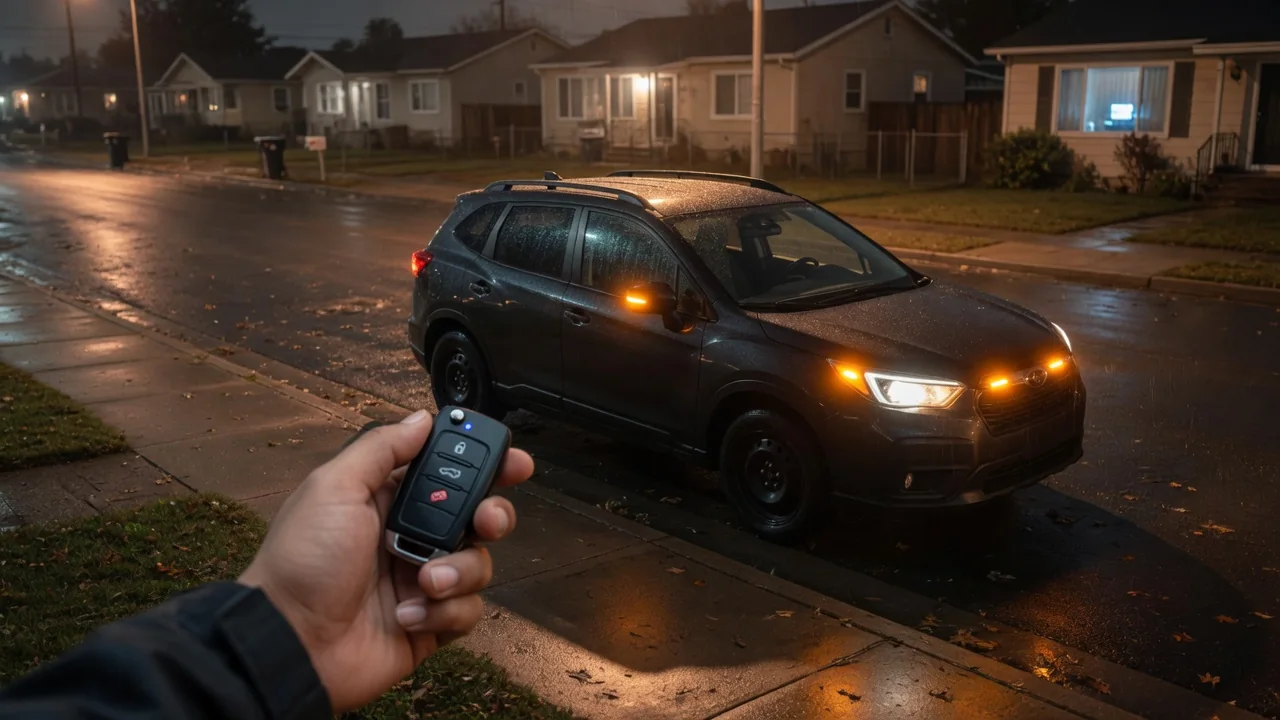
A car alarm going off randomly is more than an annoyance; it usually means the security system is receiving a signal it interprets as a threat. Whether it happens at night, while parked and locked, or after a jump start, the causes tend to be traceable. This guide explains why a car alarm keeps going off, how to stop it safely, and when to get help.
What It Means When Your Car Alarm Keeps Going Off
A single unexplained alarm can come from a bump, a gust, or an accidental press of the panic button. An alarm that keeps going off by itself, several times a day or several nights in a row, is different: a pattern of repeated false alarms usually points to a fault rather than repeated break-in attempts. Factory and aftermarket alarms watch switches on the doors, hood, and trunk, may add shock or motion sensors, and listen for the key fob signal. Any of those inputs changing while the car is armed can sound the horn or siren.
Before assuming a fault, walk around the vehicle and check whether anything was actually disturbed: a door not fully shut, marks near the locks, a window left cracked, or items moved inside. If nothing looks wrong, start a simple log. Note the time, the weather, where the car was parked, and whether the doors were locked each time the alarm sounds. An alarm that goes off every five or fifteen minutes suggests a different cause than one triggered only on windy nights, and that record makes diagnosis much quicker for you or a technician.
Common Reasons a Car Alarm Goes Off for No Apparent Reason
A weak key fob battery or a button stuck under a worn rubber pad can send stray lock or panic signals, so the panic alarm sounds for no reason while the fob sits in a pocket or bag. Latch switches are another suspect. A hood latch sensor coated in road grime, a misaligned door ajar switch, or a failing trunk switch can briefly report that something opened. To the anti-theft system, that flicker looks the same as a real intrusion, even when the car is locked and untouched.
Shock sensor sensitivity set too high lets wind, heavy rain, passing trucks, a pet left inside, or someone brushing the bumper trigger the alarm; a motion sensor can also react to a ferry's movement. Electrical supply matters too. A weak 12-volt battery or battery terminal corrosion can cause voltage drops that some systems read as tampering, which is also why an alarm may sound when connecting a battery or during a jump start. Damaged wiring or a poorly spliced aftermarket alarm system can produce similar false alarm behavior, so no single cause should be assumed.
Why a Car Alarm Goes Off at Night
Many owners ask why the alarm goes off randomly at night when the car behaves all day. Cooler temperatures reduce the output of an already weak battery, and dew or condensation can creep into corroded connectors and moisture-sensitive switches. A small parasitic battery drain that goes unnoticed during the day may pull voltage low enough by the middle of the night to set off some systems. Cold weather tends to expose marginal batteries, while heat can affect cabin sensors and aging components, so seasonal patterns are worth noting.
Quiet streets after dark also bring their own triggers. Cats climbing onto a warm hood, rodents under the car, gusty wind rocking the body, and heavy vehicles rumbling past can all excite an oversensitive sensor. Compare your log against these conditions. If the alarm sounds only on damp or cold nights, look toward the battery and connections; if it happens only in one parking spot near a busy road, the environment is more likely to blame. Parking elsewhere for a few nights is an easy, harmless test.
How to Stop Your Car Alarm From Going Off Safely
To stop a car alarm that is sounding, press unlock on the fob, or press the panic button again if that is what started it. If the fob does nothing, unlock the driver door with the physical key and start the car the normal way, which disarms most systems. The alarm reset procedure differs between vehicles, so check the owner's manual for the exact steps and for whether sensor sensitivity or interior monitoring can be adjusted or temporarily switched off, which helps on a ferry or with a pet inside.
Simple checks come next: replace the key fob battery, close every door, the hood, and the trunk firmly, and look for obvious corrosion on the battery terminals. Avoid cutting wires, pulling fuses at random, or removing alarm parts to disable the system; those shortcuts can affect the immobilizer and other electronics, leave the car unprotected, or cause a no-start. If the false alarms continue after the basics, or the car won't start while the alarm sounds, book a dealer, an auto electrician, or the alarm installer for proper diagnosis.
Honda Pilot, Civic and Accord Alarms That Keep Going Off
Owners of a Honda Pilot, Civic, Accord, CR-V, or Fit often search for a brand-specific reason, but the same general causes apply: fob battery, latch switches, battery health, and sensor sensitivity. That holds for other makes as well, whether Toyota, Hyundai, Kia, Ford, Nissan, Subaru, Mazda, Jeep, Volkswagen, Audi, BMW, Mercedes-Benz, Volvo, or Tesla. What changes between models and years is how the system arms, what it monitors, and how it resets, so generic steps found elsewhere may not match your vehicle.
Confirm the alarm behavior and reset procedure for your exact model year in the owner's manual or with a Honda dealer. It is also reasonable to ask the dealer to check your VIN for any open service campaigns or technical bulletins; there may be none, but the lookup is quick. Finally, work out whether the alarm is the factory alarm or an add-on unit. A dealer can test factory equipment with the manufacturer's diagnostic tools, while an aftermarket system is usually better handled by the installer or an auto electrician familiar with it.
Car Alarm Going Off While You're Driving
An alarm going off while driving is unusual, because the system should be disarmed once the car is started with a recognized key. When it happens, or when the alarm sounds when starting the car, possible explanations include a fob or ignition that is not communicating properly with the immobilizer, a faulty latch switch, or a wider electrical fault. First make sure the noise really is the anti-theft alarm; a seat belt reminder or door ajar chime is a separate warning with its own, usually simpler, explanation.
Pull over somewhere safe when you can, then try the fob's unlock button, or switch the car off and restart it with the key. Never reach under the dash, handle wiring, or dig through menus while the vehicle is moving. If the horn alarm returns on later trips, arrange professional electrical diagnosis. Symptoms alone cannot reliably identify the cause, and any stored fault codes are evidence to interpret alongside testing, not proof that a particular part has failed.
What to Do When a Neighbor's Car Alarm Keeps Going Off
When a neighbor's car alarm keeps going off, the polite first step is to tell the owner. They may be asleep on the other side of the building, away from home, or unaware that it happens every night. A knock on the door or a courteous note often solves it, especially if you can mention the times it sounded. Never touch, tamper with, or try to disable someone else's vehicle, however tempting it is at three in the morning; that can create legal trouble and cause damage.
If the owner cannot be reached and the alarm has been going off all night, who to call depends on where you live. The non-emergency police line or local code enforcement is usually the right contact, and in an apartment complex, property management can often identify the owner. Rules on reporting a car alarm as a noise complaint vary widely: cities such as New York have their own reporting channels, and in the UK the local council typically handles noise nuisance. Check what applies in your neighborhood before assuming a specific rule.