Which Transmission Fluid Does Your Ford F-150, Escape, Explorer or Focus Use?
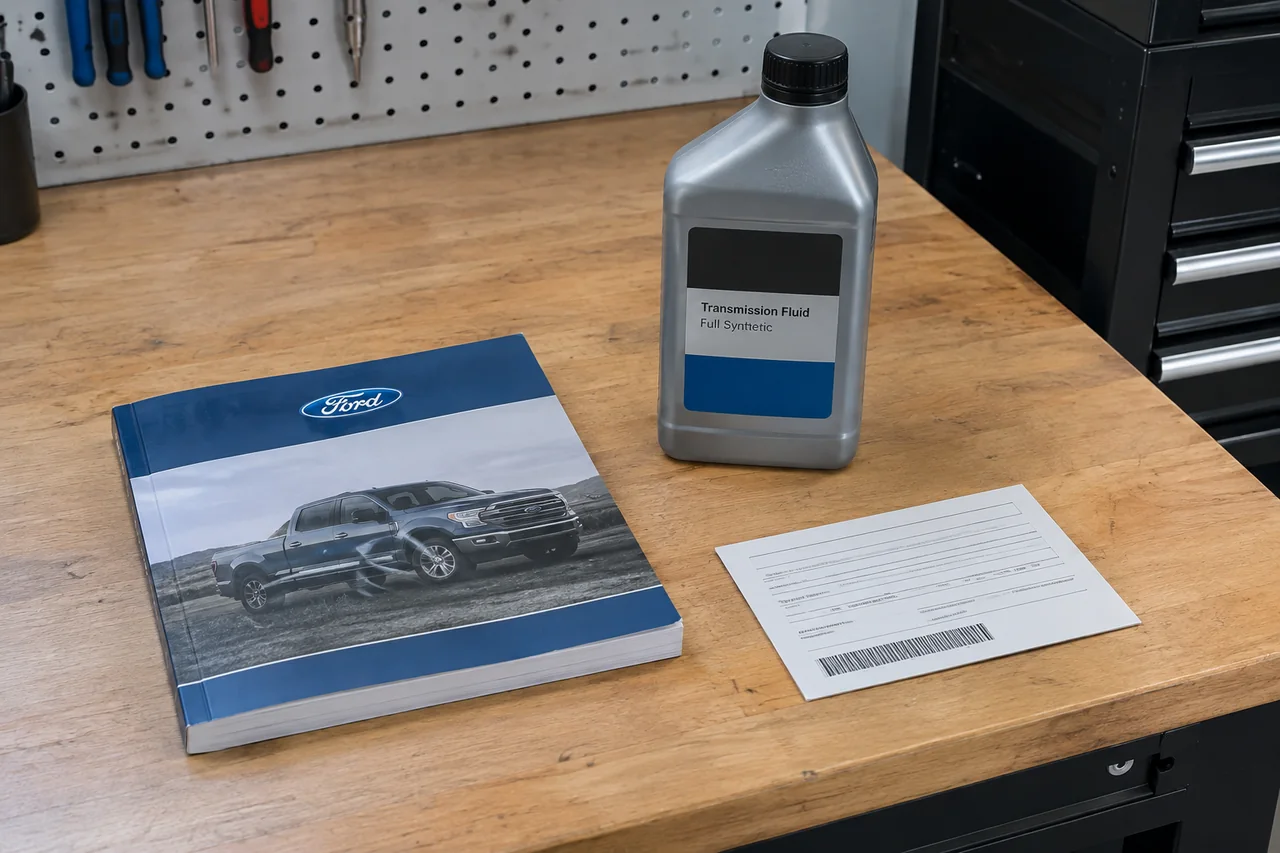
Choosing transmission fluid for a Ford starts with the transmission, not the badge on the tailgate. You might need Ford F-150 transmission fluid, or the right fluid for an Escape, Explorer or Focus. Either way, the answer comes from the model year, the transmission installed in the vehicle, and the fluid specification Ford lists for that transmission. This guide shows how to find that specification and how to confirm that a bottle actually matches it.
Identify Your Ford's Transmission Before Choosing Fluid
A Ford model name covers years of production, several markets and often more than one transmission. Two F-150s or two Escapes built a few years apart can use transmissions with different internal designs, clutch materials and valve bodies, and those differences decide which fluid is required. Before buying transmission fluid for any Ford, find out the model year, the market the vehicle was built for and the transmission actually installed. A replacement transmission, an engine swap or an imported vehicle can each break the assumption that one model name means one fluid.
The owner's manual is your first reference. Its capacities and specifications table usually lists fluids by transmission, and the transmission identification information on the vehicle or in its paperwork tells you which entry applies. If the manual is missing or the transmission's history is unclear, a Ford dealer or qualified service provider can look up the original build by VIN (vehicle identification number). Look for the exact MERCON designation or other specification listed. A familiar brand name, or the generic words automatic transmission fluid on a bottle, does not prove the fluid is suitable.
Find the Transmission Fluid Specification for Your F-150
To find the right transmission fluid for a Ford F-150, start with the owner's manual for the truck's exact model year, because the F-150 has been offered with several automatic transmissions across its generations. Go to the fluids section and choose the entry that matches the installed transmission, not simply the first line that mentions the truck. If entries are grouped by engine or drivetrain, read each qualifier carefully. Engine size and number of gears can narrow the options, but they are only clues. They do not replace confirming the transmission and the specification listed for it.
Markings you can see easily can help confirm the right entry. Some trucks have a dipstick with fluid information printed on it, and some transmissions carry a label near the fill point. If either is visible without removing anything, compare it with the manual. Never open a plug just to read a label. Also treat choosing the fluid and working out the amount as separate questions. The total service fill capacity in the manual does not tell you how much a partial drain, a fluid exchange or a small top-up actually needs.
Confirm the Fluid Required by Your Escape
The right transmission fluid for a Ford Escape depends on which Escape you own. First identify the model year and powertrain, including whether it is a gasoline, hybrid or plug-in hybrid version. Then determine which transmission is fitted. Hybrid and plug-in models come with terms like hybrid transaxle or continuously variable operation. Those terms describe how power reaches the wheels, not which lubricant the transmission uses. Use them as a signal to find the specific entry in the documentation, not as a fluid specification in their own right.
Once you know the powertrain, read the exact manual entry for transmission fluid and note any conditions tied to drivetrain or model year. Compare it with any identification label you can see without removing covers or plugs. Get confirmation from a Ford dealer or qualified service provider before buying fluid for the Escape in any of these cases: the manual lists more than one transmission and you cannot tell which is installed, the service records are missing, or the transmission may have been replaced. Guessing between entries is how the wrong fluid ends up in the vehicle.
Locate the Correct Fluid Entry for Your Explorer
Choosing the right transmission fluid for a Ford Explorer starts with the model year and installed transmission, which together point to the right entry in the owner's manual. Four-wheel-drive and all-wheel-drive versions complicate the table. The maintenance documentation may also list a transfer case or power transfer unit and front and rear axles, and each can need its own lubricant. These entries often sit close together and use similar wording. Before recording anything, confirm that the line you are reading refers to the transmission itself.
Write down the full specification exactly as printed, including any suffix, letter or number after the main designation. A shortened name can point to a different fluid. Use that note to check bottle labels and product documentation accurately. Many modern transmissions have no conventional dipstick. If your Explorer has none, that does not tell you which fluid it uses, and it is not a reason to open a fill plug and look inside. Checking these sealed units depends on the correct service procedure and is best left to a qualified technician.
Identify Your Focus Transmission and Its Fluid Requirement
Ford Focus transmission fluid is easy to get wrong because the Focus has been sold across many years and markets with manual, conventional automatic and dual-clutch automatic transmissions. Find the model year, market and transmission type before choosing any fluid. The documentation may have separate entries for a manual transmission and an automatic, and automatic entries can differ by design. Confirm which transmission is installed, using the VIN or dealer records if needed. Do not assume that a car with only two pedals has a conventional automatic.
A dual-clutch label does not by itself tell you the lubricant or whether the clutches run dry or in fluid. Designs vary, so the manual entry and the transmission identification settle the question. Keep choosing fluid separate from diagnosing problems, too. Shudder when pulling away, slipping or poor engagement can come from clutch wear, control software, mechanical faults or fluid condition. A stored fault code is evidence to interpret, not proof that a part has failed. Do not assume a fluid change will fix any of these symptoms without a proper diagnosis.
Check the Bottle Specification and Resolve Uncertainty Safely
When you shop for Ford transmission fluid, match the full required specification against both the bottle's label and its product data sheet. Read suitability claims carefully. A statement that a fluid suits certain applications may cover only some transmissions, and it may be a recommendation rather than a formal approval. If a newer specification is said to replace the one in your manual, confirm through Ford documentation or a dealer that the replacement applies to your exact transmission before you use it.
Color, smell and an unknown earlier fill cannot reliably tell you what fluid the transmission needs, so don't add anything until you're sure it's compatible. Safe checks include looking for fresh spots under the parked vehicle and watching for transmission or powertrain warnings on the dashboard. Leaks, harsh or delayed shifts, slipping, or a suspicion that the wrong fluid was used all call for a professional inspection. Level checks often depend on fluid temperature, and reaching a fill plug requires the correct service procedure and proper lifting equipment. Leave those steps to a qualified technician.