Which Side of a Battery Is Positive?
The Short Answer
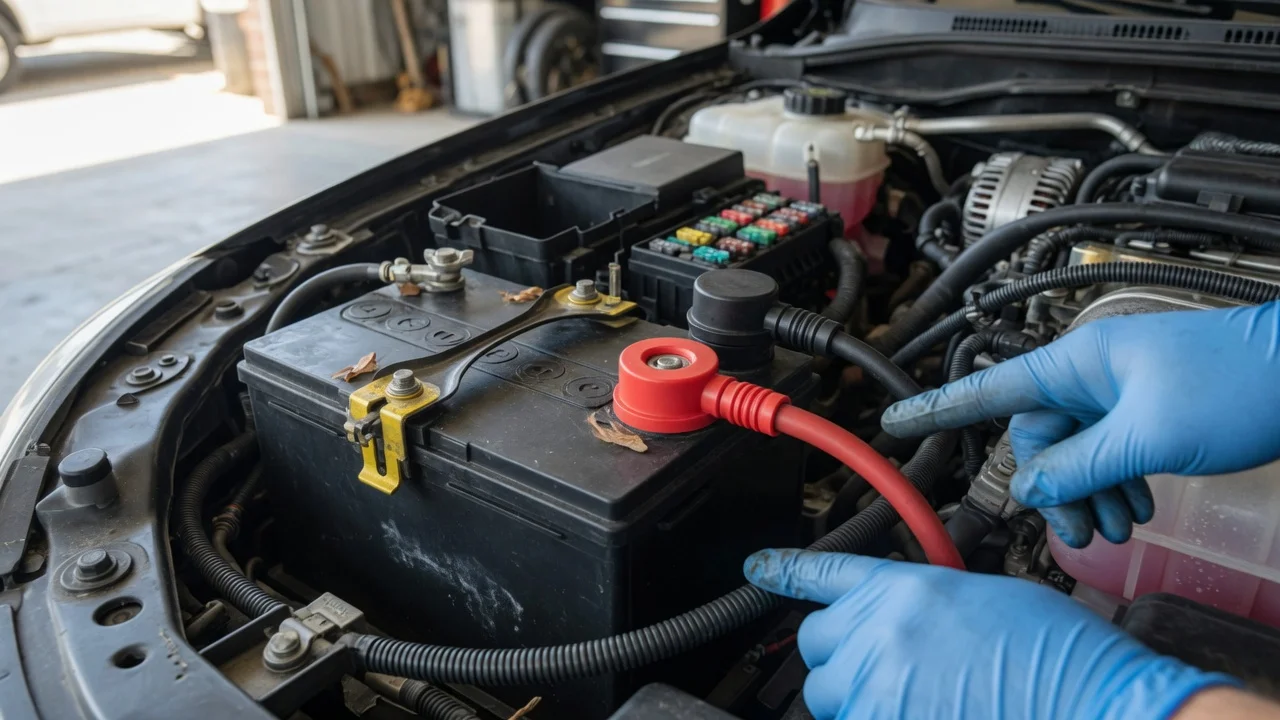
No single side of a car battery is always positive. The positive terminal can sit on the left or the right depending on the battery's case layout and the vehicle it was made for. Identify it by its markings, not its position. The positive terminal is marked with a plus sign (+) and often the letters POS. The negative terminal is marked with a minus sign (−) and often NEG.
How to Identify the Positive Terminal
Plus sign: look for a "+" stamped or molded into the battery case next to the post, or on the post itself. Label: many batteries print "POS" beside the positive terminal and "NEG" beside the negative one. Color: the positive terminal usually has a red cover or a red cable, and the negative side is usually black. Color is a helpful clue but not a guarantee, because cables and covers can be replaced or missing. Post size: on common top-post batteries, the positive post is typically slightly larger in diameter than the negative post. This is useful when the markings are worn or covered in corrosion.
Why the Side Varies
Batteries come in standardized group sizes, and some sizes exist in mirrored versions with the terminals swapped from one end to the other. Automakers choose a layout that suits the cable routing in a given engine bay. That means the positive terminal's position differs between vehicles, and sometimes between a vehicle and a replacement battery of the wrong configuration. Confirm the exact layout and group size for a specific model year, engine and market from its owner's manual or a battery fitment guide. This article does not cover model-specific layouts.
Qualifications That Change Where You Look
Side-post batteries: some vehicles use batteries with threaded terminals on the side of the case instead of posts on top. The same plus and minus markings apply. Relocated batteries: in some vehicles the battery is in the trunk, under a seat or beneath the floor. These vehicles may provide a remote positive jump-start terminal under the hood, usually marked with a plus sign or a red cover. The owner's manual identifies its location. Hybrids and electric vehicles: these normally still have a conventional 12-volt auxiliary battery, identified the same way. The separate high-voltage traction battery is not meant for owner servicing and should not be confused with the 12-volt battery.
If the Markings Are Unreadable
Clean the top of the battery carefully and look again, because markings are often hidden under dirt or corrosion. If they are still unclear, a digital multimeter set to DC volts can confirm polarity. Touch the red probe to one terminal and the black probe to the other. A positive reading means the red probe is on the positive terminal. A negative reading means the probes are reversed. If the readings or markings remain uncertain, check the owner's manual or have the battery inspected before connecting cables or a charger, because reversed polarity can damage vehicle electronics.