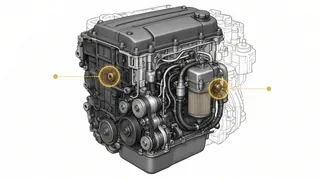
Where Is the Oil Pressure Sensor Located
When a dashboard warning suggests lubrication system trouble, locating the oil pressure sensor helps you separate a simple electrical fault from a serious mechanical issue. The sensor, also called a pressure switch or sending unit, monitors the force of oil moving through the engine and reports it to a gauge or warning light. Its position varies by engine family, but a few common mounting locations cover most vehicles. Recognizing those spots and nearby components allows a faster, safer diagnosis without guessing.
Essential answer
On most engines, the oil pressure sensor sits along a main oil gallery, threaded into a boss that sees pressurized lubricant after the pump. The classic position is near the oil filter housing, where the oil leaves the filter under pressure. Other vehicles place the sender on the cylinder head at the end of the gallery, often at the rear for front-wheel-drive transverse engines. Direct answer searches typically lead to these two regions first.
The exact spot depends on engine packaging and whether the system runs a variable-displacement oil pump or a basic fixed-pressure circuit. A warning light sender may be lower and smaller, while a gauge sensor can be a larger metal-bodied switch. If the sensor is hidden under intake plumbing, a heat shield, or near the firewall, the visible wire and single-terminal connector become useful landmarks before any disassembly.
Identification and location
Look for a compact cylindrical or hex-bodied component with one, two, or three electrical terminals. It may have a single blade-style connector, especially on older designs, or a molded plastic clip with a weather seal on newer applications. Typically it threads into the block or head with a tapered pipe thread, so it will have wrench flats or a deep socket drive. Do not confuse it with a coolant temperature sensor, camshaft solenoid, or knock sensor mounted in the same general area.
Following the oil filter or the external oil cooler lines often leads to the pressure port. On some engines, a small remote manifold shares one galley with both the gauge sender and a switch, which changes the identification exercise. If the factory service data for the specific vehicle shows two ports, the sensor that wires to the instrument cluster is the one to inspect. A secure connector, no visible oil pooling around the threads, and correct wire color can confirm the find.