When Should You Replace a Timing Belt? Intervals and Lifespan
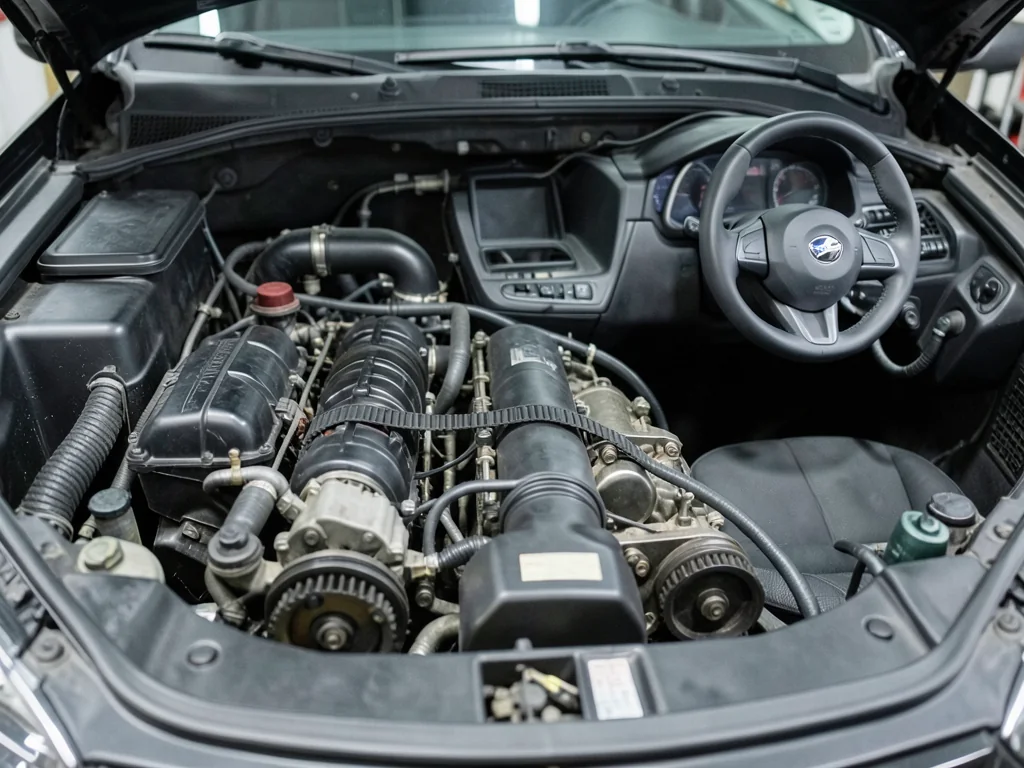
A timing belt rarely announces that it is worn out, so replacing it on time is one of the most important preventive maintenance decisions an owner makes. The right moment depends on your specific engine, the belt's age, how the car is driven, and when the belt was last changed. This guide explains how to find that point and plan the job.
Why timing belt replacement runs on a schedule, not on symptoms
The timing belt links the crankshaft to the camshafts so the valves open and close in step with the pistons. It is a toothed, reinforced rubber belt hidden behind a cover, and it usually gives little or no warning before it fails. A belt can run smoothly one day and snap the next. For that reason, replacement is preventive work. The belt is changed at a set point no matter how it looks or sounds.
How much is at stake depends on engine design. In an interference engine, the valves and pistons use some of the same space at different moments. If the belt breaks and the camshafts stop turning, the pistons can hit open valves, bending valves or damaging pistons. That turns routine maintenance into a major repair. Even on engines without that risk, a broken belt stops the car immediately. The reliable answer to when is your exact engine's manufacturer schedule.
Typical mileage intervals and why they differ between engines
There is no single standard interval. Manufacturers set a figure for each engine, and those figures vary widely between models and even between engine options within one model. Belt material plays a role, since newer compounds are engineered to handle heat and wear differently. Engine layout, tensioner type, and whether the belt also drives the water pump or oil pump all affect the load it carries. That load shapes how long the maker expects the belt to last.
Some schedules also list a shorter severe-service interval. Frequent short trips, extreme heat, dusty roads, or heavy towing may qualify, depending on how the manufacturer defines severe use. Instead of relying on a memorized number, check the maintenance schedule in your owner's manual and see which set of conditions fits your driving. The interval counts from the last documented replacement, not from the vehicle's build date. If the belt has already been replaced, the count starts over from that service.
How long a timing belt lasts: age limits matter as much as miles
Many maintenance schedules list both a mileage figure and a time limit for the belt and tell you to replace it at whichever comes first. The time limit exists because rubber ages even when the car is parked. Over the years the compound can harden, lose flexibility, and crack along the teeth or backing. A low-mileage car that sits unused for long stretches can reach its age limit well before the odometer suggests. At that point the belt should be treated as due.
Belts can also wear out before the schedule says they should. Repeated heat cycles stress the material. Oil or coolant contamination breaks down the rubber and can make teeth slip or separate. A weak tensioner lets the belt flap or run at the wrong tension. Looking at the belt tells you little. The reinforcing cords inside can be damaged with no visible sign on the surface. A belt that looks clean but is past its age or mileage limit may not have any life left.
How to find the exact replacement point for your car
Start with the owner's manual or the separate maintenance booklet. The timing belt usually appears in the scheduled service table, sometimes with a footnote that applies only to certain engines or markets. Read those notes carefully. The same model may be sold with several engines that have different intervals, and some of those engines may use a chain. Match the schedule to your engine using the engine code or the VIN, which a dealer service desk can look up for you.
Next, find out when the belt was last changed. Service invoices are the best evidence. Some shops also put a sticker under the hood or on the timing cover showing the date and mileage of the replacement. Once you have that information, work out the next due point by both time and distance. On a used car with no records and no sticker, it's safer to assume the belt is due. A wrong guess on an interference engine can be very expensive.
Situations that justify replacing the belt earlier than scheduled
Some warning signs justify doing the job early. A ticking or slapping sound from the timing cover area, oil or coolant seeping near the front of the engine, a rough idle, or stored misfire codes all deserve attention. A leaking camshaft or crankshaft seal is especially important because the oil can reach the belt and soften the rubber. If a leaking seal has contaminated the belt, the belt is generally replaced along with the seal, regardless of mileage.
Your situation can also be a reason to move the job forward. Buying a used car with no service history, bringing a vehicle out of long storage, or owning an older car with no record of a belt change all qualify. These signs have limits, though. Noises, leaks, and misfire codes can come from many other sources, and a fault code needs interpreting; it does not prove the belt has failed. Have a qualified technician inspect the car before drawing conclusions.
Timing belt or timing chain: confirm which your engine uses
Before you plan a belt change, confirm that your engine actually has a belt. Many engines use a timing chain instead. A chain runs inside the engine, is lubricated by engine oil, and is not normally given a fixed replacement interval. The owner's manual is the quickest way to check, because belt engines typically list a scheduled replacement and chain engines do not. If the manual is unclear, the engine code or a call to a dealer or shop with your VIN will answer the question.
A chain can still wear out. Chains can stretch, and their guides and tensioners wear, especially when oil changes are skipped. The difference is that a chain is replaced based on its condition, not on a calendar or odometer reading. Signs such as rattling at startup, or related fault codes, need to be confirmed by an inspection. Don't assume based on the brand or model name alone. Engine versions within one model line can differ, with one using a belt and another a chain.
Planning the job: what is usually replaced alongside the belt
A timing belt usually shares space with a tensioner, one or more idler pulleys, and on many engines the water pump. These parts sit behind the same covers, so reaching them takes much of the same disassembly as the belt itself. Because most of the labor overlaps, it makes sense to replace them at the same time. If an old pulley bearing or pump fails soon after a new belt goes in, the engine has to be taken apart again, and a seized pulley can damage the new belt.
For that reason, many shops recommend a complete timing belt kit with the belt, tensioner, and idlers, often adding a water pump and new seals where appropriate. Ask the shop which parts they plan to replace and why, and confirm that each one fits your specific engine. When the job is done, make sure the invoice clearly records the date and mileage, and ask for an under-hood sticker as well. That record lets you or a future owner track when the next replacement is due.