When an Ignition Coil Can Be Serviced and When It Needs Replacement
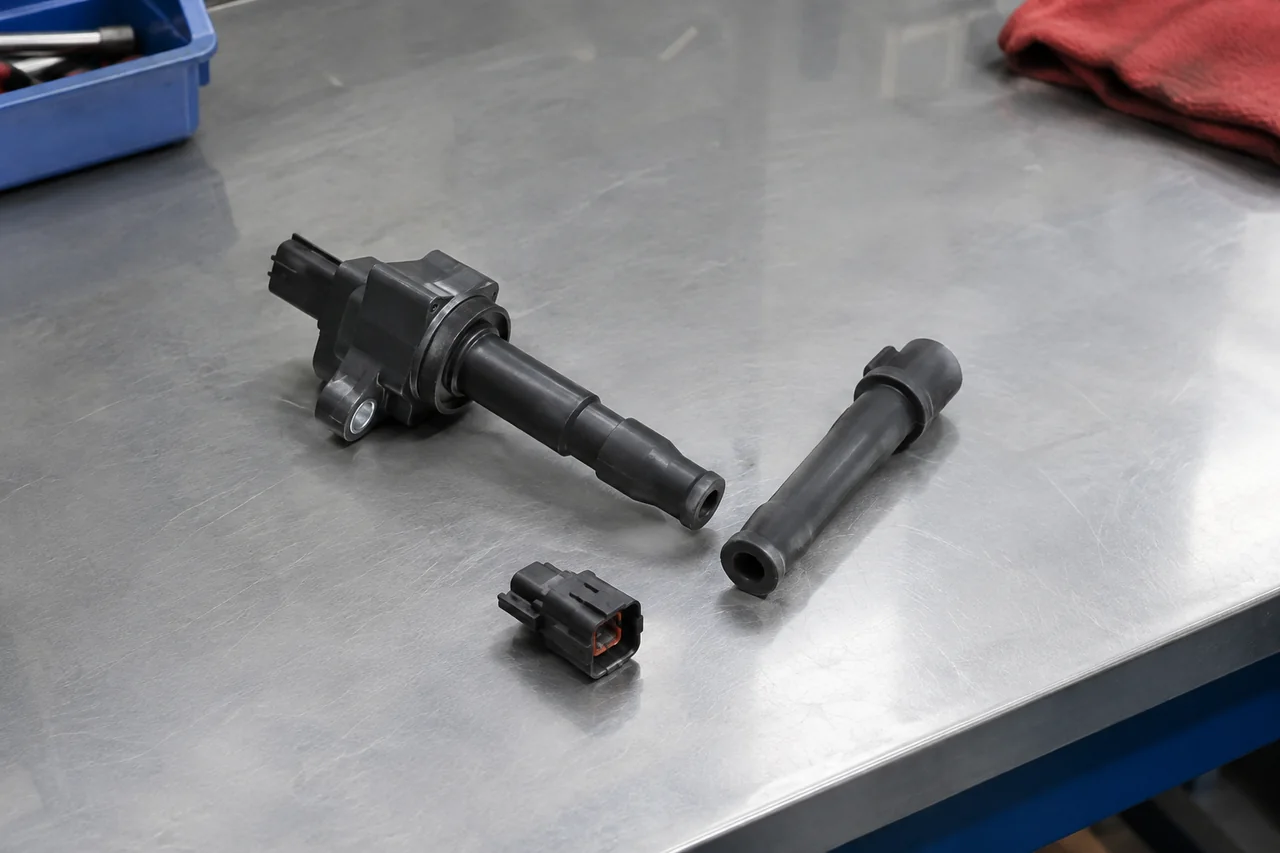
People searching how to repair an ignition coil usually have a misfire and hope for a cheap fix. Sometimes there is one, but it applies to the parts around the coil, such as the spark plug boot, the coil connector or the wiring harness. The sealed internal windings are a different matter. Knowing where that line falls saves money and helps prevent the same failure from coming back.
What Ignition Coil Repair Can Realistically Address
Most modern coil-on-plug and coil-pack designs seal their primary and secondary windings in potting compound inside a closed housing. That construction stands up to heat and vibration, but it also means the core of the coil is not built to be opened, cleaned or rewound in normal service. Realistic ignition coil repair therefore focuses on the accessible parts that link the coil to the engine and spark plug. Even that is only possible when the vehicle's design allows those parts to be serviced separately.
Before repairing an ignition coil at all, you need to know which component actually failed. An engine misfire can come from a worn spark plug, a leaking injector, a vacuum leak, low compression or a damaged harness just as easily as from the coil. Fixing or swapping a coil because of a rough idle alone often wastes money. A limited repair is only worthwhile when diagnosis points to a specific boot, terminal or connector.
Symptoms That Need Diagnosis Before Any Repair
Rough running, hesitation under acceleration, hard starting, poor fuel economy and a check-engine light are common with ignition faults, but none of them is unique to the ignition system. Fuel delivery problems, sensor faults and mechanical wear can feel the same from the driver's seat. A cylinder-specific misfire code means the engine computer detected unstable combustion in that cylinder. It does not say why, so the coil is still a suspect rather than a conclusion.
How severe the symptoms are matters as much as what they are. A steady check-engine light with mild roughness usually leaves time to arrange a diagnosis. A flashing light or heavy shaking means the misfire is bad enough that unburned fuel can overheat and damage the catalytic converter. In that case, pull over where it is safe, shut the engine off and arrange assistance or a tow. Driving on can turn an ignition problem into a much costlier exhaust repair.
Boots, Springs, and Connectors May Allow Limited Service
Some coils use a separate rubber or silicone spark plug boot and a contact spring that can be replaced without touching the coil body. Whether those parts are available, and whether fitting them makes sense, depends on the exact vehicle and coil design, so confirm the part numbers rather than assuming them. Likewise, a cracked connector latch, a corroded or spread terminal, or chafed harness wiring may need connector or harness repair while the coil itself stays in service.
Carbon tracking makes things harder. When high voltage arcs across a boot or housing, it leaves a conductive trail that can keep arcing to the spark plug well even after a new boot is fitted. That means the boot, the coil body and the spark plug insulator all need inspection. Connector and terminal repairs also require the correct pigtails or terminals and secure, sealed connections. If the harness is damaged, professional service is the safer choice, because a poor splice can create new intermittent faults.
Safe Observations Before Booking Service
Some useful observations need no tools. With the engine off, the key removed and the engine cool, look for cracks in visible coil housings, connectors that sit loose or have broken locks, and oil or moisture around accessible coils and plug wells. Note when the symptoms appear, such as on cold starts, in rain, under highway load or at idle. Record any stored diagnostic codes as well. These details help a technician, but none of them proves that a coil has failed.
Ignition systems produce very high voltage, so some checks are best left alone. Do not touch coils or wiring with the engine running, unplug live coils to find the weak cylinder, or try open-air spark tests. These can cause shocks and burns and can damage engine electronics. Leave coils buried under intake manifolds or covers to a qualified technician. The same goes for any diagnosis that needs disassembly, oscilloscope work or electrical measurement, which requires the right equipment and service information for that engine.
Internal Damage Usually Requires Coil Replacement
When testing confirms a failed winding, internal insulation failure, or a cracked or burned coil body, replacing that assembly is generally the only dependable fix. Glue, electrical tape, silicone and spray-on coatings may appear to seal a crack, but they do not reliably restore the insulation needed to contain ignition voltage, and heat and moisture soon break them down. Opening a sealed coil or trying to rewind it is outside routine automotive service and usually leaves the part less reliable than before.
Diagnosis is not always straightforward. Some coils fail only when hot, under heavy load or in humid weather, then work normally during a cool visit to the shop. A clean appearance or a single resistance reading within range does not rule out a breakdown that only shows up at operating voltage. A technician may need to monitor misfire counts, compare cylinders or recreate the conditions that trigger the fault before condemning a coil. This avoids replacing a good part while the real cause stays hidden.
Address Contributing Faults and Confirm the Result
A new coil or boot will not last if whatever damaged the original is still present. Oil in a spark plug well often points to a leaking valve cover or tube seal. Water may be getting in through a failed seal or poor drainage. The source must be fixed along with the ignition component. Spark plug condition and correct plug specification also matter, because worn or wrongly gapped plugs make the coil produce more voltage. Related wiring should also be checked when it is implicated.
Replacement parts must match the exact application. How much gets replaced, whether one coil or several, should follow test results and the applicable service information rather than habit. The repair is finished only when the original symptoms are gone and misfire activity or related codes stay away under the driving conditions that caused the problem. Clearing codes alone proves nothing, because the engine computer may simply need time to detect the same fault again.