Wheel Bearing Replacement Cost: What Drives the Price
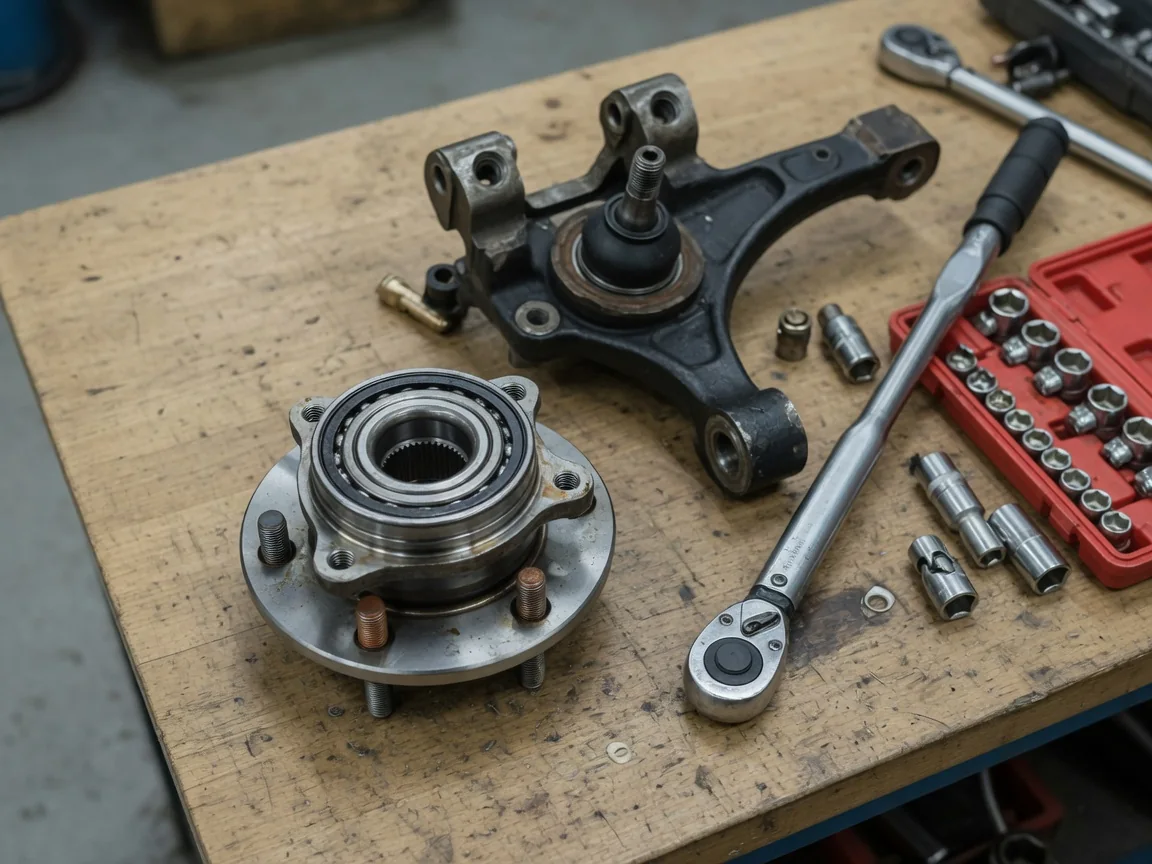
A worn wheel bearing rarely fails all at once, but the bill to fix it can vary more than most drivers expect. The final number depends on how the bearing is built into your vehicle, which corner of the car it sits in, how much labor the design demands and what extras ride along on the quote. Understanding those factors makes any estimate easier to judge.
Why Wheel Bearing Replacement Cost Varies So Much
Every wheel bearing bill is built from the same pieces: the part itself, the labor hours a shop assigns to the job, the hourly shop rate and any extras such as seals, hardware or an alignment. Because each of those numbers moves independently, two quotes for the same repair can look very different. A shop in a high-cost metro area charging for three hours will land far from an independent garage in a smaller town billing ninety minutes.
Vehicle class matters too. A heavy-duty truck or performance car often uses a larger, more expensive hub than a compact sedan, and drivetrain layout decides how much must come apart. Before any of that counts, though, the diagnosis must be right, since a growl from a cupped tire or a worn CV joint can sound similar. Bearings are replaced per wheel, but some shops suggest doing both sides of an axle for even wear, which roughly doubles that portion of the bill.
Hub Assembly vs Pressed Bearing: The Biggest Cost Split
The most important cost split is design. A bolt-on hub assembly arrives as a complete unit with the bearing, hub and flange already joined, so the technician unbolts the old one and fits the new one. The part costs more, but labor is usually shorter. A pressed bearing is a cheaper part, yet it must be forced out of the steering knuckle and a new one pressed in, which takes a hydraulic press, adapters and more time.
Pressed jobs often mean removing the knuckle from the vehicle, and that step can uncover worn seals, damaged snap rings or a seized hub that needs replacing too. On the other side, some hub assemblies integrate the ABS wheel speed sensor or tone ring, raising the part price while eliminating a separate sensor job. Because the two designs are priced differently, confirm which one your vehicle uses before comparing quotes, or you may be comparing unlike repairs.
Front Wheel Bearing Replacement Cost Factors
On front-wheel-drive and many all-wheel-drive vehicles, the front bearing sits around the CV axle shaft. Reaching it means removing the brake caliper and rotor, loosening the large axle nut and often separating a ball joint or tie rod end so the knuckle can move or come off. Each disconnected joint adds labor, and it also explains why front jobs usually take longer than equivalent work at a non-driven wheel.
Once steering or suspension joints have been separated, many shops recommend an alignment check, so expect it as a common line item. Rust is the other wild card. A hub fused to the knuckle by corrosion can turn a routine job into a long fight, which is why some shops quote a range rather than a fixed price. Front hubs frequently carry the wheel speed sensor, and a brittle sensor that breaks during removal adds both a part and time.
Rear Wheel Bearing Cost and What Makes It Different
Rear bearings follow a different pattern. On a front-wheel-drive car, the rear wheels are not driven, so the hub often bolts to the axle beam or knuckle with fairly easy access, making it one of the simpler bearing jobs. All-wheel-drive vehicles add a rear axle shaft to the process, and trucks with solid rear axles may require pulling the axle shaft from the housing, which brings in gear oil, seals and more labor.
Some older or lighter designs place the bearing inside a brake drum or press it into the axle housing, changing both the part price and labor time. Rear work may also disturb brake components, parking brake hardware or the axle shaft itself, so a clear quote should list what gets removed. Check whether your vehicle uses a serviceable tapered bearing or a sealed unit, because that determines whether adjustment and repacking is possible or full replacement is required.
Repair vs Replace: What 'Fixing' a Wheel Bearing Really Means
When drivers ask about fixing a bearing, the honest answer for most modern vehicles is replacement. Sealed bearings and hub units are lubricated for life and cannot be repacked or adjusted, so a repair means installing a new bearing or hub. Common warning signs include a growl or hum that rises with speed and changes when the car leans into a turn, noticeable play at the wheel, or an ABS warning light, but each is a clue rather than proof.
With the vehicle safely supported on jack stands, rocking the wheel at top and bottom can reveal play, yet that is an observation only. Load testing, runout measurement and chassis-ear listening belong at a shop, especially when noise comes and goes or the wheel feels tight. Delaying repair has its own cost, since a failing bearing generates heat that can damage the hub, knuckle or sensor, turning a single-part job into a larger and more expensive one.
DIY Savings and Hidden Costs of Doing It Yourself
The labor savings of doing the job yourself are real, but they depend heavily on design. A bolt-on hub assembly is the more realistic home project, since it mostly involves removing brakes and unbolting the old unit. A pressed bearing usually needs a hydraulic press or a rented bearing tool kit, and without them the job stalls halfway. First-timers should also budget for a torque wrench that reaches axle nut values, large sockets, penetrating oil and possibly a hub puller.
Hidden costs appear when something breaks. A seized sensor can snap, a seal can tear, and prying on a stubborn hub can damage the knuckle, erasing the savings quickly. Correct axle nut torque and proper bearing seating are safety-critical, because an improperly installed bearing can fail early or loosen. If you are unsure of torque specifications or the condition of related parts, have a professional complete or verify the final assembly.
How to Read and Compare a Wheel Bearing Quote
A useful quote breaks the total into part cost, labor hours, the hourly shop rate and any extras such as an alignment, sensor, seals or axle nut. That breakdown lets you compare shops fairly and spot padding. Price alone can mislead, since a well-made hub assembly that costs more up front may be cheaper over time than a bargain unit that fails early and requires paying for the labor twice.
Ask whether the part is new, remanufactured or aftermarket, and how the warranty handles labor if the replacement fails. If the first quote bundles vague items or seems out of line, a second opinion is reasonable. Before approving work, ask how the shop confirmed the diagnosis, whether through a road test, wheel play check or chassis microphones, so you know the money is going toward the part that actually needs replacing.