What Was an Overdrive Gear in Older Cars?
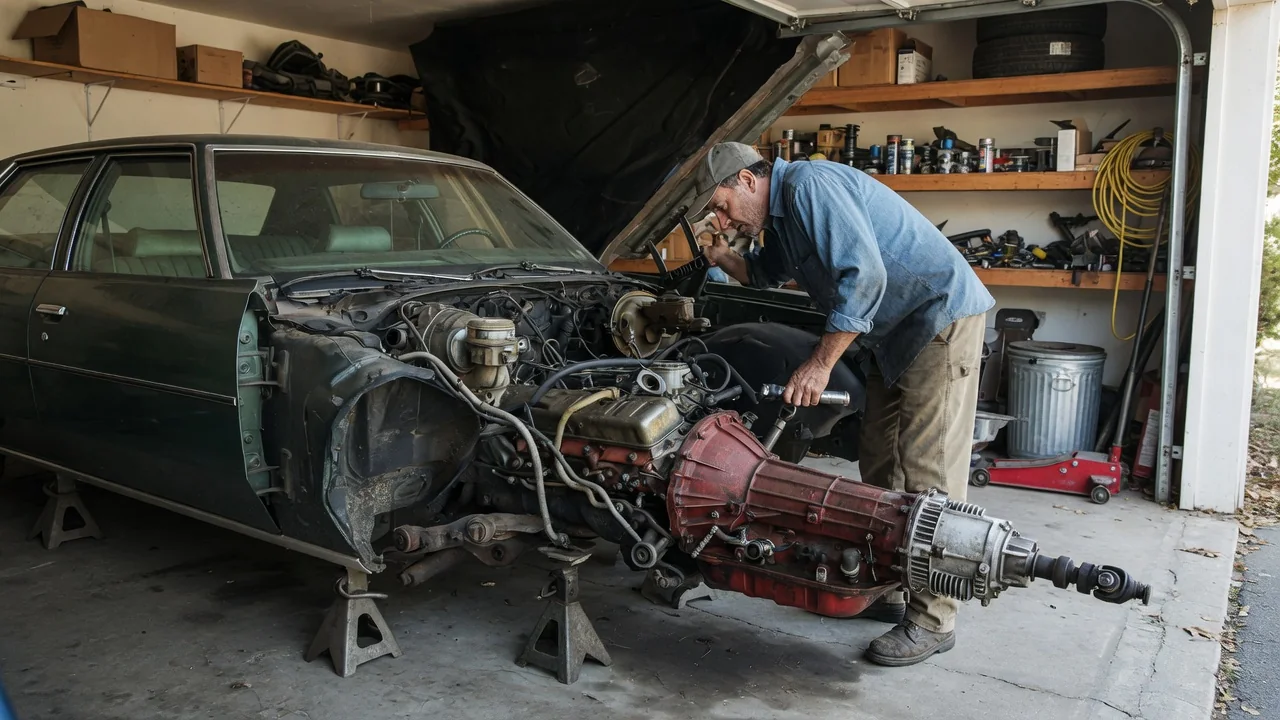
Anyone asking what was an overdrive gear in older cars is really asking about a simple idea: a ratio that lets the transmission output shaft turn faster than the engine. Before five- and six-speed transmissions became common, many cars reached this ratio through a separate add-on unit or a special top gear, lowering engine speed on the open road and making long trips calmer.
Cruising ratio
In most older gearboxes, top gear was direct drive, meaning the engine and the transmission output shaft turned at the same speed, a one-to-one ratio. Overdrive goes one step further, with the output shaft turning faster than the crankshaft, so the ratio number falls below one. The engine therefore makes fewer revolutions for every mile covered. At a steady highway speed, that means lower rpm, less mechanical noise, reduced fuel consumption and less wear on pistons, bearings and valve gear.
The term itself describes that relationship: the driveshaft is being driven over engine speed. On many classic cars the ratio came from a compact planetary gearset bolted behind the main gearbox, while others built it into the transmission as an extra-tall top gear. How much engine speed dropped depended on the unit and the axle ratio chosen by the manufacturer, so two cars of similar age could cruise at noticeably different rpm. A tachometer, where fitted, shows the drop clearly when overdrive engages.
Controls
Older overdrive systems were usually something the driver selected rather than a gear reached by moving the main lever. Depending on the car, the control could be a pull handle under the dashboard, a stalk on the steering column, a toggle on the dash or a small switch set into the gear knob. Mechanical designs often used a cable to lock the unit in or out, while electrically controlled versions relied on a solenoid to engage the overdrive once conditions were right.
Some arrangements added a degree of automation. A governor might allow engagement only above a certain road speed, and briefly lifting off the accelerator completed the shift. Pressing the pedal to the floor could trigger a kickdown switch that returned the car to direct drive for passing. Other cars restricted overdrive to the upper gears through inhibitor switches on the gearbox. Because these layouts differed between makers and even model years, the owner's handbook for the specific vehicle remains the reliable guide to its controls.
Modern gearboxes
The separate overdrive unit faded as manufacturers began building the tall ratio directly into the transmission. A typical modern manual has one or more upper gears with ratios below one-to-one, and the driver simply shifts into them like any other gear. Automatic transmissions followed the same path, adding overdrive ratios along with a lockup torque converter to cut slippage at cruising speed. The idea survived intact; only the packaging changed, from an auxiliary box to a set of gears inside the main case.
Terminology lingered for a while. Many automatics carried an overdrive-off button on the shifter, often with a warning light on the instrument panel, letting the driver hold the transmission out of its tallest gear when towing or descending hills. Newer vehicles with many forward ratios, or continuously variable transmissions, may have several overdriven ratios and no dedicated button at all, using tow-haul modes or manual shift gates instead. Whether a particular vehicle labels the function depends on its maker and its era.
Everyday Use and Observations
On the road, an engaged overdrive is easy to notice. Engine note drops, the tachometer needle falls and the car feels more relaxed at a steady speed, almost like gaining an extra gear. In older cars with a gear-knob switch, drivers sometimes used it as a quick split between ratios, flicking in and out without touching the clutch on some designs. The trade-off is reduced torque at the wheels, so acceleration in overdrive feels lazier and throttle response is softer than in direct drive.
That is why drivers traditionally dropped out of overdrive for climbing grades, overtaking, pulling a trailer or driving in town, then re-engaged it once speed settled on level ground. Some older freewheeling designs also reduced engine braking while engaged, which mattered on long descents and encouraged locking the unit out in hilly country. How strongly these traits show up varies with engine size, vehicle weight and axle gearing, so a light sports car and a heavy sedan respond quite differently to the same control.
Limits and Next Steps
An overdrive is a cruising aid, not a performance upgrade. Using it at low speed or under heavy load can lug the engine, making it labor below its comfortable rev range, and may cause the unit to slip or hunt in and out. Classic auxiliary units also depend on clean oil at the correct level, sound electrical connections and a healthy solenoid or hydraulic circuit. A unit that will not engage, disengages slowly or drops out unexpectedly is showing a symptom, not identifying a failed part.
For a classic car, the sensible next step is confirming which type of overdrive is fitted and checking the factory literature for its operating rules and lubricant requirements. Slow engagement or odd noises deserve inspection by a specialist familiar with that unit, since wiring, switches, oil condition and internal clutches can all produce similar behavior. On later electronically controlled vehicles, a flashing overdrive light or stored fault code is evidence to interpret through proper diagnosis, and its meaning should be verified for the specific make and model.