What to Tell Roadside Assistance About a Car Problem
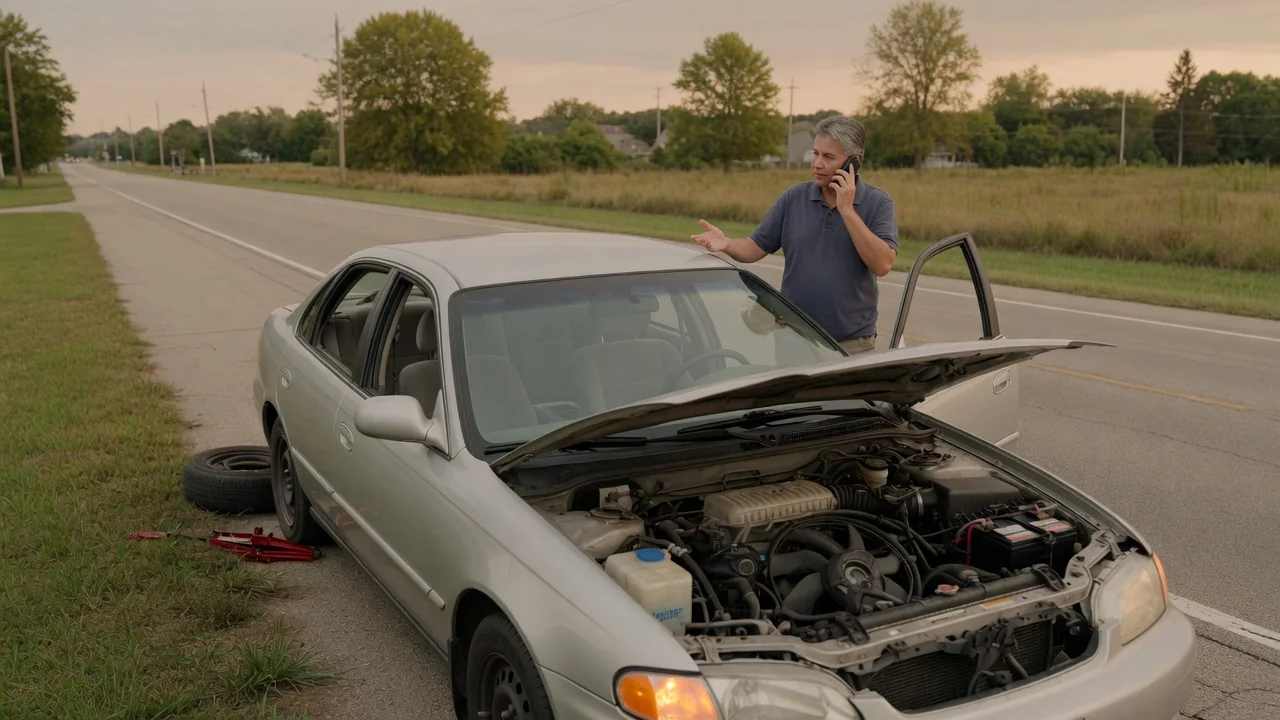
A breakdown call goes faster when the dispatcher hears the right facts in the right order. Knowing what to tell roadside assistance about a car problem means having three things ready: where the vehicle is and whether it is safe, exactly what the vehicle is, and what it did before it stopped. Those details decide which truck and equipment arrive.
Safe location
Start with where you are and whether the car is out of traffic. A dispatcher needs the road name, direction of travel, and the nearest exit, mile marker, or cross street, because a provider approaching from the wrong side of a divided highway can lose a lot of time. A phone's map app can show coordinates or a dropped pin if signs are scarce. Mention landmarks a driver can spot from the cab, such as an overpass, a gas station, or a parking garage level and row number.
Say plainly how exposed the vehicle is. A car on a narrow shoulder with traffic passing close, stopped in a live lane, or sitting just past a blind curve is a different priority from one parked in a driveway. Tell them whether the hazard lights work, whether everyone is out of the vehicle and behind a barrier, and whether there is smoke, leaking fluid, or a fuel smell. Also note access limits like low garage clearance, soft ground, or a steep slope, since they affect which truck can reach you.
Vehicle ID
Give the year, make, model, and color first, then the license plate, so the driver can pick out the vehicle quickly. Many providers also ask for the vehicle identification number, which is typically visible through the lower corner of the windshield on the driver's side and printed on a label in the driver's door opening, as well as on registration and insurance documents. If you cannot reach the car safely to read it, say so; the plate and description are often enough to get help moving.
Details beyond the badge change how the car must be handled. Tell the dispatcher whether it is front-, rear-, or all-wheel drive, since many all-wheel-drive vehicles need a flatbed rather than a lift that leaves two wheels on the road. Mention if it is a hybrid or electric vehicle, sits low, wears oversized tires, or has a trailer attached. Say whether it carries a full spare, a compact spare, or only a sealant kit, and whether the locking wheel nut key is aboard. Equipment varies by trim and model year, so check rather than assume.
Specific symptoms
Describe what the car does, not what you think has failed. "The engine cranks normally but will not fire" points a technician in a different direction than "I hear rapid clicking" or "nothing happens and the dash is dark." The first hints at fuel or ignition, the others at low battery voltage or a poor connection, though none of those is a diagnosis. With a flat tire, say which wheel, whether the tire is shredded or just low, and whether the rim looks damaged.
Report warning lights by color and shape if you do not know their names: a red thermometer symbol, a red oil can, a battery icon, or an amber engine outline, and whether each is steady or flashing. Add what your senses picked up, such as steam from under the hood, a burning smell, grinding when braking, or a puddle and its color. If a scan tool showed a fault code, pass it along as a clue; it narrows the search but does not prove a part has failed, and some codes are manufacturer-specific.
Everyday Use and Observations
How the car behaved in the days before the breakdown is often as useful as the final moment. Mention slow cranking on cold mornings, headlights that dimmed at idle, a temperature needle that crept up in traffic, a tire that needed air every week, or a vibration that grew at highway speed. Recent work matters too: a new battery, a tire rotation, an oil change, or a refuel just before the trouble started all give the technician a place to begin.
Explain the circumstances as well. Did the engine quit suddenly at speed, or did power fade gradually? Did the trouble appear after hitting a pothole, driving through deep water, or sitting unused for weeks? Tell them whether the car can still shift into neutral, whether the steering unlocks, and whether the parking brake releases, because a vehicle that will not roll needs different loading gear. Push-button start systems, electronic parking brakes, and electronic shifters behave differently with a dead battery, so describe what yours actually does.
Limits and Next Steps
Roadside service is built for a defined set of jobs: a jump-start, a tire change or inflation, a lockout, fuel delivery, a short winch-out, or a tow. Anything deeper generally happens at a repair shop with proper diagnostic equipment. Ask what your plan or membership covers, including tow distance and whether passengers can ride along, since terms differ between providers. Have a destination in mind, such as your regular shop or a dealer, and say whether it will be open when the truck arrives.
Before hanging up, confirm the estimated arrival time, a callback number, and how the driver will identify themselves. Tell the dispatcher how many people are with you and whether anyone needs extra help, such as children, pets, or mobility equipment. Keep your phone charged and stay well clear of traffic while waiting. Resist the urge to restart an engine that overheated or lost oil pressure, and do not attempt repairs on a shoulder. If conditions worsen or anyone is in danger, call emergency services rather than waiting for the tow.