What to Remove From a Car Before Seasonal Storage
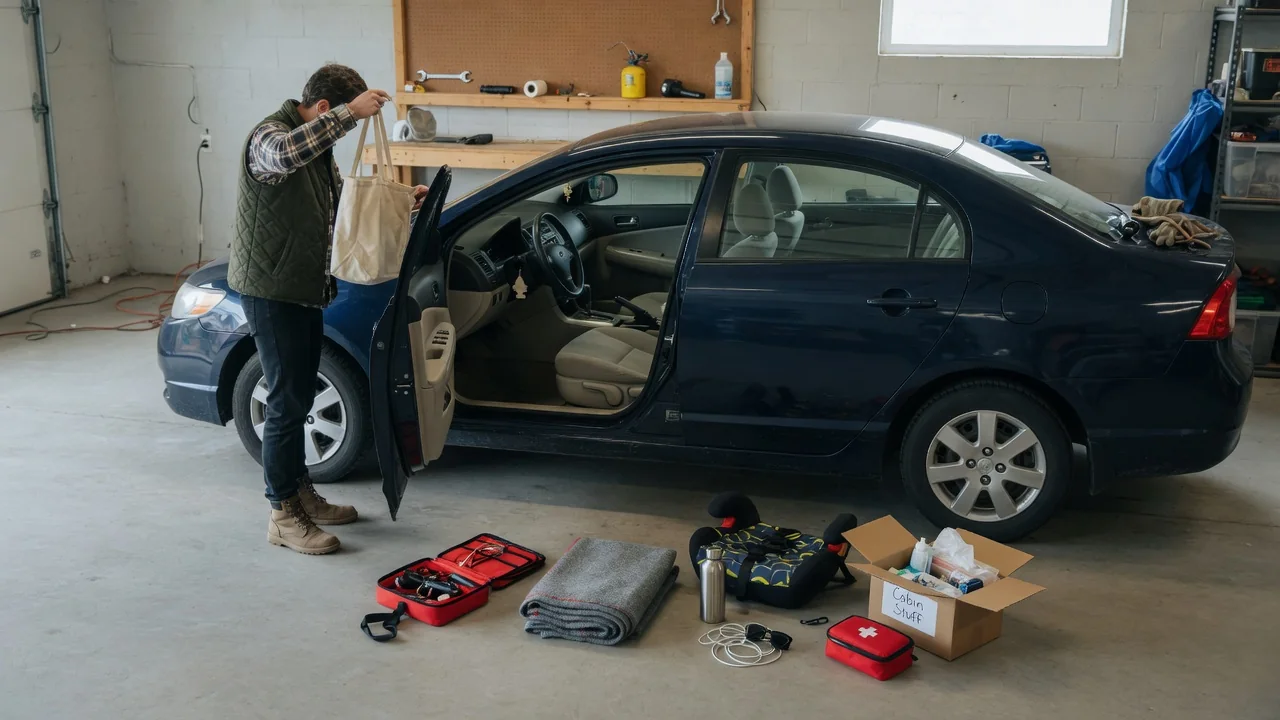
Preparing a car to sit for a season involves more than the engine, tires, and battery. What stays inside the cabin and trunk can spoil, leak, attract pests, or tempt thieves while nobody is checking on the vehicle. This guide covers what to remove from a car before seasonal storage, grouped into food and liquids, valuables, and perishables, so the interior is in the same condition when you return as when you parked it.
Food and Liquids
Food is the most important category to clear out because of what it attracts. A parked car offers shelter, and the smell of crumbs, wrappers, snack bags, or pet food can draw rodents and insects inside. Once they are there, they may chew upholstery, carpet, and wiring insulation or build nests in sheltered spaces. How likely this is depends on the location and how the car is stored, but leftover food raises the risk everywhere. Check the obvious spots and the hidden ones: under and between seats, seat-back and door pockets, the center console, cup holders, the glove box, child seats, and the spare tire well or storage bins in the trunk.
Liquids cause a different set of problems. Bottled water, soda, coffee cups, energy drinks, hand sanitizer, sunscreen, and aerosol cans are all exposed to the temperature swings inside a closed vehicle. In freezing weather, water-based liquids expand and can split their containers. In heat, sealed and pressurized containers can build pressure and leak or burst. Sugary spills stain fabric and attract pests, and leaks of any kind can soak into carpet padding where they are hard to dry. Loose containers of washer fluid, motor oil, or coolant carried in the trunk can also tip or seep over a long period, so take spare bottles out. This applies to loose containers only; the fluids inside the vehicle's own systems should be handled according to the owner's manual and general storage preparation.
Removing the items is only half the job. Vacuum the floors, seats, and trunk, and wipe sticky residue from cup holders and console surfaces. Small crumbs and dried spills still carry odors that pests can find.
Valuables
A car in seasonal storage is visited rarely, so a break-in or theft can go unnoticed for weeks or months. Anything worth stealing should leave the vehicle, including cash, jewelry, phones, tablets, laptops, chargers, dash cameras, portable speakers, sunglasses, tools, and sports equipment. Even items of modest value can make a car a target if they are visible through the windows. Things with sentimental value deserve the same treatment, since they cannot be replaced if they are lost or damaged.
Pay attention to items that grant access to something else. A garage door opener or spare key left in a car can give a thief entry to your home or the vehicle itself. Personal papers such as mail, receipts, and anything with your address or identity details are also better stored at home. Vehicle documents are a separate question: requirements about registration and insurance papers vary by location, so decide what should stay with the car based on local rules and your own needs, rather than leaving every document in the glove box by default.
Electronics are worth removing for another reason. Devices and power banks with lithium-ion batteries are generally meant to be kept within a temperature range set by their manufacturers, and a closed car can exceed it in either direction over a season. Taking them out protects both the devices and the interior.
Perishables
Perishables go beyond food. Medications can degrade when stored outside the conditions listed on their labels, so take them out rather than leaving them in a console or bag. Cosmetics, lip balm, crayons, and candles can melt in warm weather and stain surfaces. Fresh flowers or plants will decay, and wet wipes and similar products tend to dry out or spoil. If you keep a first aid or emergency kit in the car, this is a sensible time to check it for expired items and decide whether it should stay or be stored indoors.
Moisture is the hidden perishable in many cars. Damp gym clothes, towels, umbrellas, rain jackets, and wet floor mats can trap humidity inside a closed cabin, which encourages mildew and musty odors, especially in humid climates or under a cover that limits airflow. Remove soft items that are not needed in the car, dry any mats before putting them back, and make sure the carpet underneath is dry. Strong scented products such as air fresheners can also be worth removing, since their scent can build up and linger in a sealed interior over months.
Practical Implications and Limits
How thorough you need to be depends on where the car will sit. A secure, climate-controlled garage reduces some risks, while an outdoor space, a carport, or a shared storage facility increases exposure to temperature swings, moisture, pests, and theft. Storage facilities often have their own rules about what may be kept inside a stored vehicle, so read the agreement before you load anything. It is also worth checking your insurance policy, because coverage for personal belongings left in a car may differ from coverage for the vehicle itself.
Emptying the interior has limits. It does not replace the rest of seasonal car storage preparation, such as caring for the battery, tires, fuel, and exterior, and it cannot fully prevent pests if the storage location itself is attractive to them. Some items are meant to stay, such as the spare tire, jack, and any equipment you need when you retrieve the car. Storage compartments and their locations differ between vehicles, so the owner's manual is the best guide to where hidden bins and under-floor spaces are.
A simple routine helps: work through the cabin and trunk with a written checklist, clean as you go, and take a few photos of the interior once it is empty. When the season ends, look for droppings, chewed material, stains, moisture, or unusual smells before driving, so any problem is found early and handled before it spreads.