What to Look for in a Car Trunk Organizer
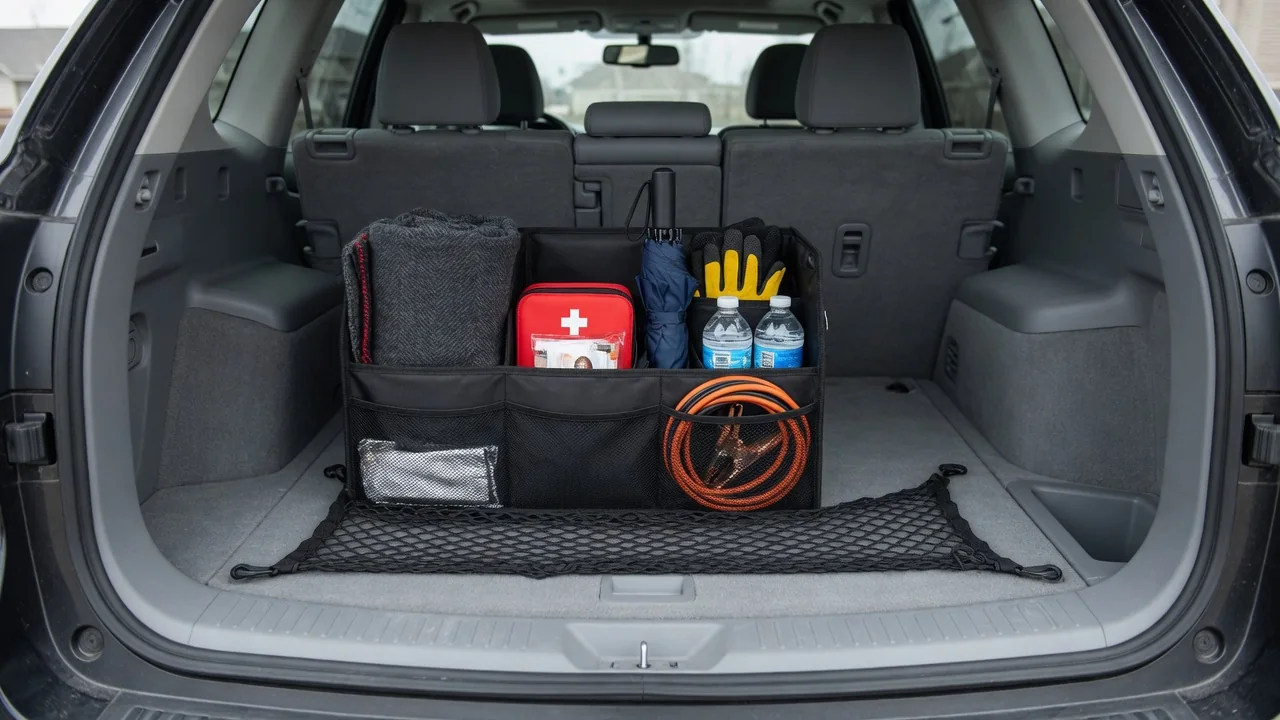
Knowing what to look for in a car trunk organizer comes down to two questions: will it fit the cargo area you actually have, and will it stay put when the vehicle brakes, turns, or accelerates? Size, anchoring, materials, and access all matter more than pocket count. The sections below explain how to judge each feature against your own vehicle and typical loads.
Measure usable space
Start with the floor of the cargo area rather than the published cargo volume, because volume figures include space an organizer cannot use. Measure the flat width between the wheel housings, which usually intrude well inside the widest point of the trunk, and the depth from the rear seatback to the latch sill. In a sedan, also check the height beneath the trunk lid hinges and the parcel shelf, since gooseneck-style hinges can swing down into the space when the lid closes.
Hatchbacks, wagons, and SUVs raise different questions. A sloping rear window or a retractable cargo cover limits how tall an organizer can stand near the tailgate, and a floor that sits above the bumper sill may leave a lip to lift over. Note where the spare tire or tire repair kit cover, floor-mounted tie-down rings, and any underfloor storage lids sit, because a rigid organizer parked over them blocks access. Layouts vary widely between vehicles, so measure your own cargo area rather than relying on a body-style generalization.
Attachment options
An organizer that slides is a nuisance in normal driving and a hazard in hard braking, so the way it attaches deserves as much attention as its size. Common approaches include adjustable straps with hooks that clip to the vehicle's cargo tie-down rings, hook-and-loop strips on the base that grip carpeted floors, and rubberized non-slip feet or panels. Each depends on what the trunk offers: hook-and-loop does little on a plastic or rubber cargo liner, while straps are useless without anchor points within reach.
Look in your cargo area for metal or plastic tie-down loops, typically near the corners of the floor or low on the side trim, and consult the owner's manual for their location and any stated load limits. Some vehicles have rail systems or bag hooks instead, and some have very few anchors at all. Straps that adjust in length and attach at two or more points resist both sliding and tipping better than a single tether. Organizers that loop around rear seat head restraint posts suit open cargo areas where the seatback is accessible.
Cleaning and access
Trunks collect grit, road salt, spilled groceries, and leaking fluid bottles, so material choice affects how long an organizer stays usable. Wipe-clean surfaces and a water-resistant base keep a spill from soaking through to the carpet, where moisture can linger and cause odors. Removable dividers and a base panel that lifts out make it possible to shake out debris. Stitched fabric with exposed cardboard stiffeners tends to soften if it gets wet, whereas plastic or coated reinforcement panels hold their shape better.
Access matters in two directions: reaching what is inside the organizer, and reaching what the vehicle keeps beneath it. If the spare tire, jack, tire inflator kit, or a battery sits under the cargo floor, you need to be able to lift the organizer out quickly at the roadside, which favors sturdy handles and a manageable loaded weight. Collapsible designs that fold flat help when you need the whole floor for luggage or want to fold the rear seats. Lids keep contents out of sight but add height, so recheck clearance.
Everyday Use and Observations
The first few drives tell you a lot. Listen for thumps or rattles from the rear on turns and stops, which suggest either the organizer is moving or loose items are shifting inside it. After a trip, look at whether it has crept away from where you placed it, whether straps have gone slack, and whether the walls are bowing outward under load. Adjustable dividers let you close up gaps so bottles and tools stay upright instead of rolling around a half-empty compartment.
Placement affects daily convenience. Heavy items such as fluid containers or tool kits ride best low and close to the rear seatback, where they have less room to build momentum, while lighter items you reach for often can sit near the opening. Check that the organizer does not press on trunk lid struts, wiring along the hinge arms, or the emergency trunk release, and that a power liftgate closes without contacting it. In vehicles with fold-down seats or a pass-through, confirm the organizer does not stop the seatbacks from latching fully.
Limits and Next Steps
A trunk organizer is a tidiness aid, not a certified cargo restraint. Fabric walls and light straps keep groceries and emergency supplies in order, but they should not be trusted to hold heavy, dense objects in a collision, particularly in hatchbacks and SUVs where the cargo area is open to the cabin. Heavy loads belong secured directly to the vehicle's tie-down points with appropriately rated straps or behind a cargo barrier, following the guidance in the owner's manual. Also keep in mind the vehicle's overall payload limit, which everything in the trunk counts against.
A sensible next step is to write down your measurements, sketch where the anchor points and underfloor access panels sit, and list what you actually carry each week. Compare those notes with an organizer's stated dimensions in both its open and folded states, and with its attachment hardware. If your vehicle has unusual features, such as a split-level floor, a cargo-area battery, or third-row seats that fold into the floor, the owner's manual or a dealership parts counter can clarify what must remain accessible before you commit to a particular layout.