What to Keep Accessible If a Car Breaks Down
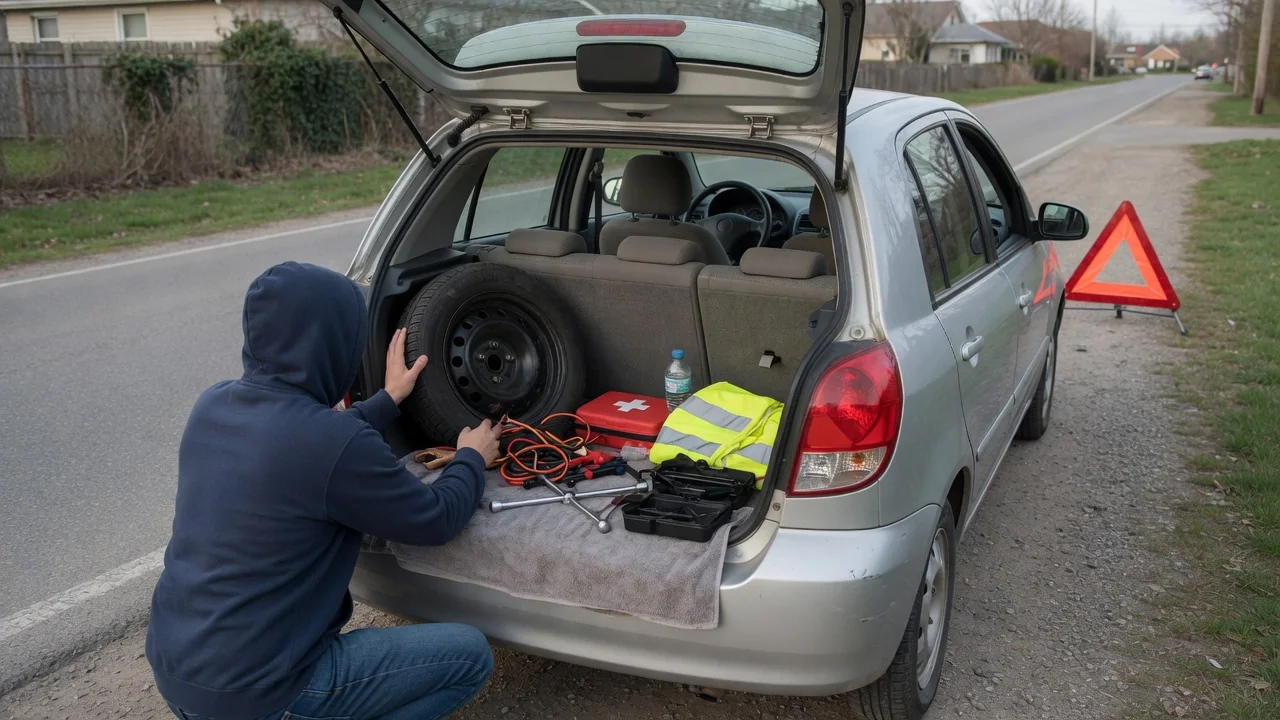
A roadside stop rarely happens in a convenient place, and the items that help most are useless if they sit under luggage in the trunk. Deciding what to keep accessible if a car breaks down means sorting gear by how quickly it must be reached from the driver's seat. The cabin, not the cargo area, should hold the things needed in the first few minutes.
Phone power
A phone is the link to roadside assistance, a tow operator, and family, so its charge deserves a place within arm's reach. A charging cable stored in the center console or door pocket is far more useful than one zipped into a bag behind the rear seats. Keep in mind that a breakdown can involve the electrical system itself; if the battery is drained or the alternator has stopped charging, the car's USB ports and 12-volt outlet may deliver nothing at all.
That is why a charged portable power bank belongs in the glovebox or console rather than relying on the vehicle alone. Check it periodically, because these packs lose charge slowly while sitting, and extreme cabin heat or cold can reduce what they deliver. Vehicles differ in where outlets are located and whether they stay live with the ignition off, so it is worth testing yours on an ordinary day. A cable that matches your current phone's connector matters just as much as the power source.
Visibility items
Being seen is the first safety concern once a vehicle stops near moving traffic. Hazard flashers help, but they depend on battery power and can be hard to judge in fog, rain, or at the crest of a hill. A reflective vest kept under the front seat or in a door pocket can be put on before stepping out, which is the point: an item stored in the trunk requires walking around the car, unprotected, to retrieve it.
A flashlight or headlamp in the glovebox serves both for being noticed and for looking under the hood or reading a tire sidewall after dark. Warning triangles or LED flares are bulkier, and where they fit varies; some vehicles have a dedicated holder in the tailgate or under the cargo floor, while others leave it to the owner. If they must ride in back, place them on top of other cargo near the opening rather than beneath it, and confirm the flashlight batteries still work.
Vehicle documents
Paperwork becomes surprisingly important when a tow truck arrives or a dispatcher starts asking questions. Registration, proof of insurance, and any roadside assistance membership details are typically requested early, and searching for them in the dark adds stress. A slim folder in the glovebox keeps them together. Many insurers and assistance programs also offer digital cards, yet a paper copy still works when the phone is dead or there is no signal.
The owner's manual deserves the same accessible spot, because it shows details that differ from one vehicle to another: where the tow hook threads in, how the jacking points are marked, what a particular warning light means, and where the spare tire or inflator kit is stored. Some newer vehicles provide the manual only through the infotainment screen or an app, which may not be available with a dead battery. It also helps to write down the vehicle identification number, tire size, and emergency contact numbers on a card.
Everyday Use and Observations
Ordinary driving reveals whether an arrangement actually works. Sit in the driver's seat with the belt fastened and notice which items can be reached without getting out; that is roughly the situation on a narrow shoulder with traffic passing the driver's door. Notice too how the cargo area changes over a week. Groceries, sports gear, strollers, and suitcases tend to pile on top of whatever was loaded first, which is usually the emergency kit that went in when the car was new.
Body style shapes the options. A sedan's trunk is sealed off from the cabin, so anything inside it requires a walk to the rear, while a hatchback or SUV may allow reaching over the seatback. Pickup owners often rely on under-seat or behind-seat storage because the bed is exposed. Loose items should be secured in pockets, nets, or a small pouch so they do not slide under pedals or become projectiles in a hard stop. Seasonal additions, such as gloves, a blanket, or drinking water, follow the same reasoning.
Limits and Next Steps
Accessible supplies make waiting safer and communication easier, but they do not diagnose or repair the fault. A warning light or stored fault code points toward a system worth investigating; it does not prove that a specific component has failed, and the meaning of many codes depends on the manufacturer. Roadside fixes also carry real risk near traffic. If the vehicle cannot be moved well clear of the travel lane, calling for professional help is generally wiser than working beside passing cars.
A sensible next step is a short review of the cabin kit a few times a year, such as when the seasons change or before a long trip. Recharge the power bank, replace expired insurance cards, test the flashlight, and confirm the vest has not migrated to the garage. Look up the spare tire or sealant kit location in the manual before it is needed, since equipment varies widely and some vehicles carry no spare at all. Anything unclear about your particular model is best confirmed with the manual or a qualified technician.