What to Inspect on a Trailer Tire Before Departure
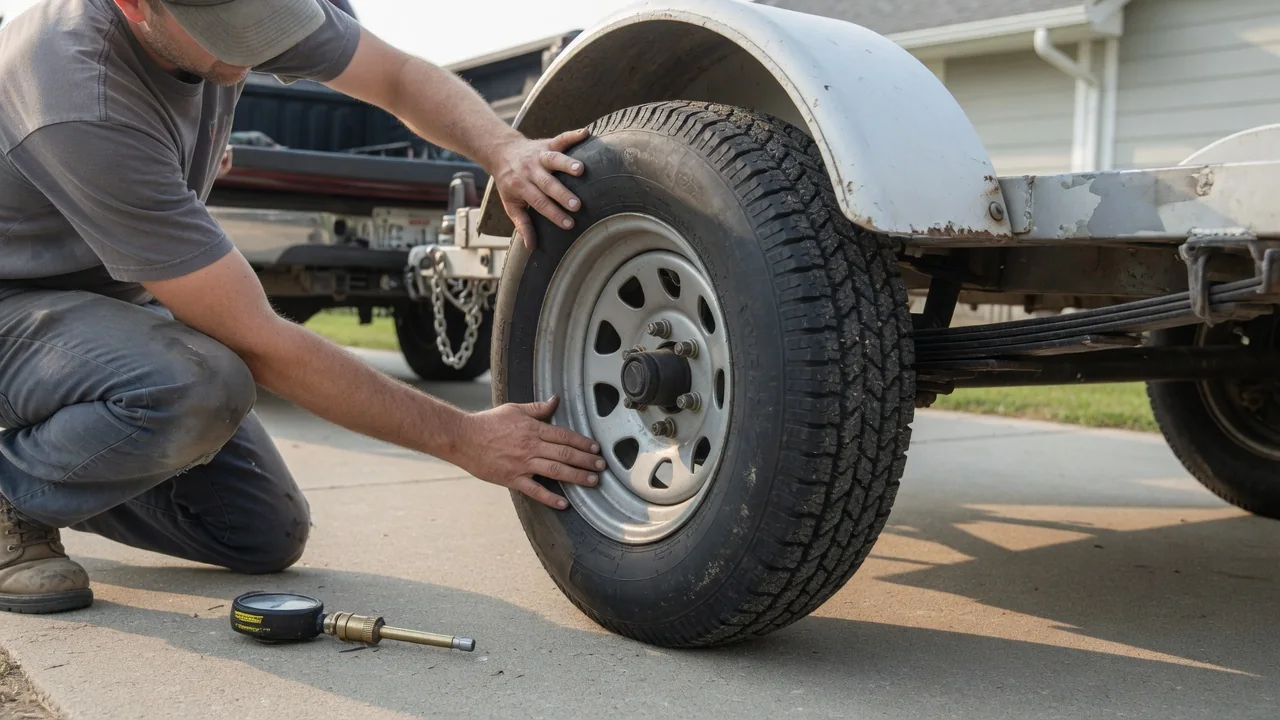
Knowing what to inspect on a trailer tire before departure comes down to three things: inflation pressure, physical condition and the load information printed on the tire and the trailer itself. Trailer tires often sit idle for weeks, carry heavy loads on stiff sidewalls and give the driver little feedback from the tow vehicle's seat, so a deliberate walk-around matters more here than on a car.
Pressure
Check pressure with a gauge while the tires are cold, meaning before the trailer has been towed or left sitting in direct sun for hours. The target figure comes from the trailer's tire and loading placard or the owner's documentation, often found on the frame near the front left side or inside a cabinet door on campers. Many trailer tires are designed to carry their rated load only at the pressure molded on the sidewall, so the placard and sidewall should be read together rather than guessed.
An underinflated trailer tire flexes more with every rotation, building heat in the sidewall, and heat is what breaks down the internal structure over a long highway run. Because a trailer tire can look nearly normal while significantly low, especially on a tandem axle where the neighboring tire props it up, a visual glance is not a substitute for a gauge. Check the valve stem too: a cracked rubber stem or missing cap invites a slow leak, and details such as metal stems vary by wheel.
Damage
Walk around each tire and look at the full sidewall, including the inner face that is hidden under the fender. Fine cracks in the rubber, often called weather checking, are common on trailers stored outdoors, because sunlight and ozone age the compound long before the tread wears out. A bulge or blister suggests internal cord damage and is a reason not to tow on that tire. Cuts, embedded nails or screws, and scuffing from curb strikes all deserve a closer look.
Tread tells its own story. Wear concentrated on one shoulder can point toward a bent axle, misalignment or a consistently overloaded side, while wear in the center or on both edges often reflects long-term pressure habits. Flat spots may follow a locked brake or long storage in one position. Age matters as well: the date code molded into the sidewall shows the week and year of manufacture, and a tire with deep tread can still be too old to trust, so follow the tire maker's guidance on replacement.
Spare tire
The spare is the tire most likely to be forgotten, and it tends to lose pressure quietly while mounted on the tongue, rear bumper or under the frame. Gauge it at the same time as the others and inflate it to the pressure the placard or sidewall calls for. A spare exposed to sun on one side often cracks there first, so look all the way around it and remove any cover, since covers can hide both weathering and a soft tire.
Confirm that the spare actually matches the trailer. Its size, load range and bolt pattern should suit the axle it may end up on, which is not guaranteed when a trailer was bought used or the running tires were upgraded. Equally important is whether you can use it: check that the mount hardware is not seized, that a lug wrench fits the trailer's nuts, and that the jack you carry can lift a loaded trailer safely at the point the manufacturer specifies.
Everyday Use and Observations
The load label ties everything together. Each tire carries a maximum load figure and a load range marking on its sidewall, and the trailer's placard lists the gross vehicle weight rating and axle ratings. The combined capacity of the tires should comfortably meet the weight the axles really carry, which changes with water tanks, cargo, a boat's fuel or how gear is distributed. A public scale gives a real number when guesswork is not good enough, particularly after adding equipment.
Regular towing teaches useful habits. At fuel stops, a careful hand held near each tire and hub can reveal one running noticeably hotter than the others, hinting at low pressure, a dragging brake or a bearing issue. Glance at lug nuts for rust streaks or shiny marks that suggest movement, and have them tightened to the specified torque if in doubt. Tow vehicles and trailers equipped with tire pressure monitoring add a helpful layer, though sensor coverage for trailer wheels depends on the equipment fitted.
Limits and Next Steps
A driveway inspection has limits. It cannot reveal belt separation that has not yet reached the surface, damage on the inside of the casing from an earlier run at low pressure, or a wheel bearing that is beginning to fail. A tire that repeatedly loses air between trips needs to be dismounted and examined by a tire shop rather than simply topped off, because the cause may be a puncture, a corroded rim bead seat or a leaking valve.
When something looks doubtful, the sensible next step is to delay departure rather than hope the tire holds. Replace tires showing bulges, exposed cords or deep cracking, and choose replacements whose size, type and load capacity match the trailer placard; tires built for trailer service are marked differently from passenger tires, and the correct choice depends on the specific trailer. If the placard is missing or illegible, the trailer manufacturer or a qualified dealer can confirm the original specification before you tow.