What to Inspect After Driving Through Deep Puddles
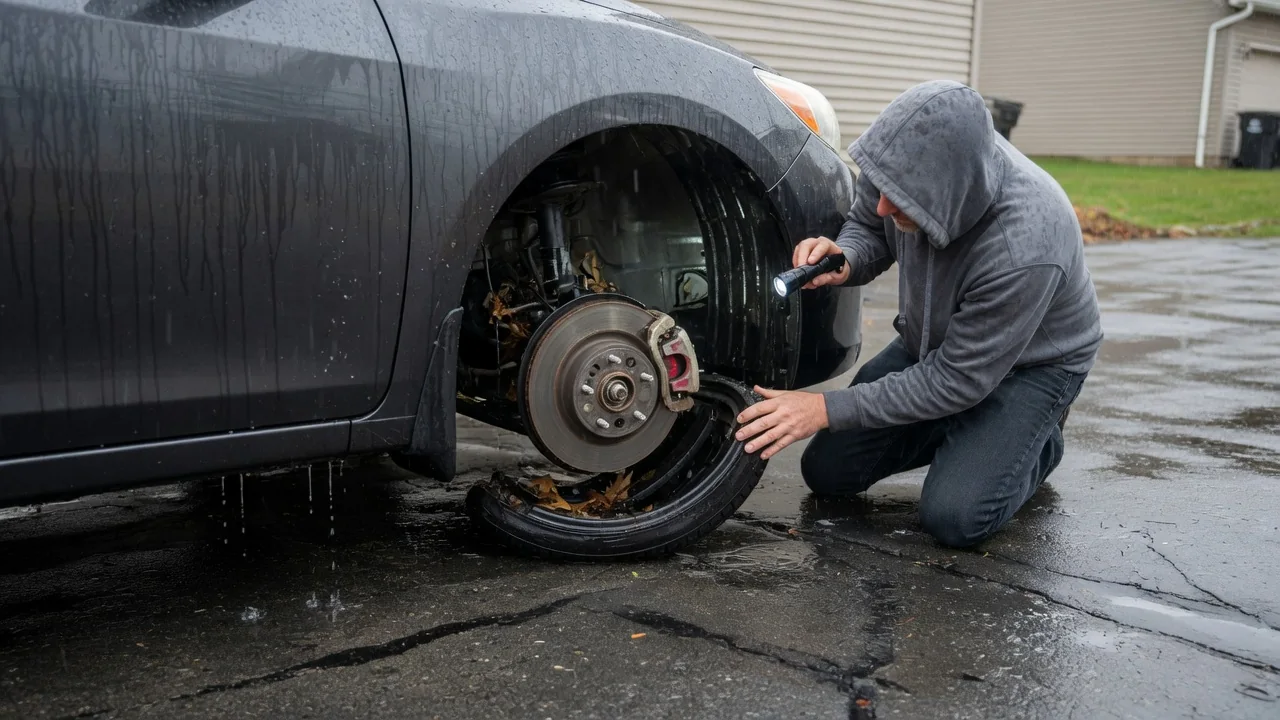
Knowing what to inspect after driving through deep puddles helps you separate a harmless splash from water that reached places it should not. The most useful clues appear within the first few minutes and miles: how the brake pedal responds, whether warning lights appear, and whether the cabin stays dry. A short, methodical check can catch trouble before it grows.
Braking feel
Brakes are the first system to notice because water reaches them directly. A film of water between the pads and rotors reduces friction for a moment, so the pedal may feel normal while the car slows less than expected. On vehicles with rear drum brakes, water can linger inside the drum longer than it does on an exposed disc. Once clear of the water and with no traffic close behind, a few gentle brake applications at low speed generate heat and help dry the friction surfaces.
Pay attention to how the feel changes over the next mile. Brief weakness that fades after a few light stops is typical of wet friction material. A pull to one side, a pedal that stays soft or sinks, grinding, or a pulsation that was not there before deserves closer attention, since grit carried in by the water can lodge between pad and rotor. A light scraping after the car sits overnight often comes from surface rust on the rotors and usually clears within several stops.
Electrical and cabin symptoms
Water that reaches wiring connectors, sensors or control modules can produce symptoms right away or days later as moisture works into terminals. Watch the instrument cluster for an anti-lock brake, traction control, charging or engine warning light, since wheel speed sensors and their wiring sit low at each corner. Flickering lamps, a parking sensor that sounds without reason, or power windows and locks behaving erratically also point toward moisture. A stored fault code helps narrow the search, but it indicates a circuit to examine rather than proving that a specific part has failed.
Inside the cabin, press a hand firmly into the carpet in the front and rear footwells, because padding beneath can hold water while the surface feels dry. Fogged windows that take unusually long to clear, a damp or musty smell, and sloshing sounds from the doors or sills suggest water got in or that drains are blocked. Where water enters varies by vehicle, with door seals, floor grommets and the fresh air intake being common paths, so the wet area is a useful clue to the source.
Follow-up inspection
Once the car is parked on level ground and has cooled, a walk-around can reveal physical damage. Look under the front and rear for a plastic undertray or wheel arch liner hanging down, since the force of water can tear fasteners loose. Check that the license plate, front bumper trim and fog lamp surrounds are still secure. Condensation inside headlamp or tail lamp housings shows water passed a seal. Debris such as grass or plastic bags may be caught around suspension parts or the exhaust.
Under the hood, the air filter housing is worth a look if the water was deep enough to reach the bumper. A damp or water-stained filter element means water traveled up the intake path, and the engine should not be run until a technician has assessed it. Fluids tell a story as well: engine oil that looks milky or a level that has risen may indicate contamination. Differentials and transmissions breathe through vents, so on vehicles where those vents sit low, having the fluid condition checked is sensible after a deep crossing.
Everyday Use and Observations
Many effects of water intrusion show up during ordinary driving rather than in the driveway. Listen over the following days for a new squeal at startup, which can mean a wet or slipping accessory belt, and for a low hum or growl that rises with road speed, which can point to a wheel bearing whose grease has been contaminated. Steering that feels heavier, a vibration through the wheel, or a clicking sound in tight turns are also worth noting, along with when each one occurs.
How the engine runs is another everyday indicator. A stumble, hesitation or rough idle shortly after the puddle may reflect moisture around ignition components or a sensor connector, and it sometimes clears as heat dries things out. Symptoms that return on damp mornings suggest moisture remains trapped. Hybrid and electric vehicles seal their high-voltage components, yet any warning message after a deep crossing should be taken seriously. Ground clearance and intake location differ widely between a low sedan and a tall truck, so the same puddle carries very different risk.
Limits and Next Steps
A visual check has clear limits. It cannot confirm whether water entered a sealed connector, a wheel bearing, a differential or a transmission, and corrosion can take weeks to produce a symptom. If the engine stalled in the water, do not try to restart it, because water drawn into the cylinders cannot be compressed and cranking can bend internal parts. Having the vehicle towed and inspected is the safer route. The same caution applies when the water rose above the door sills or the floor became soaked.
For lesser exposure, the practical next step depends on what was observed. Brakes that recover quickly, a dry cabin and no warning lights generally mean routine monitoring is enough. Persistent warning lights, damp carpet, cloudy fluid or new noises justify a professional inspection, and mentioning the water depth and how the car behaved afterward helps the technician focus. Wet carpet and padding should be dried promptly to limit odor, mold and corrosion of wiring under the floor. The owner's manual may state a maximum wading depth for the specific vehicle.