What to Do When a Planned Fuel Stop Is Closed
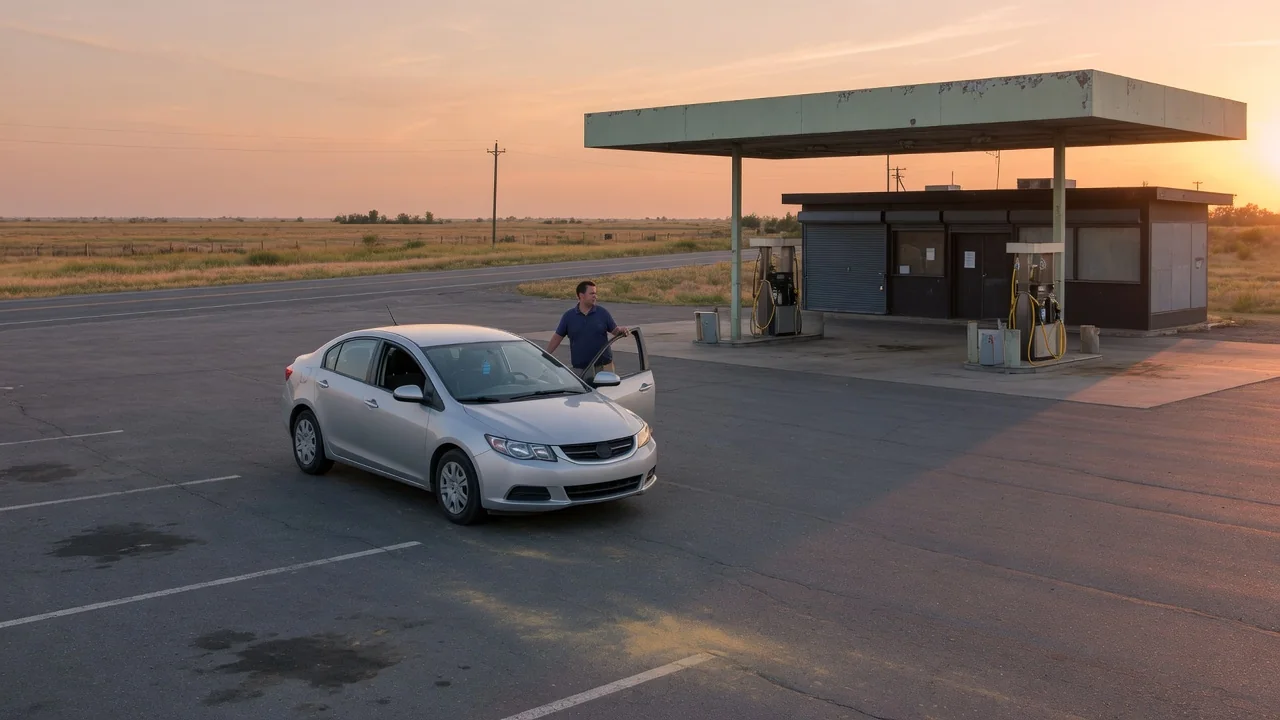
Pulling up to a planned fuel stop only to find dark pumps and a locked door is a common road-trip setback, especially on rural stretches or late at night. A closed gas station on a road trip is rarely an emergency if you respond in the right order. Work out how far you can realistically drive, find the nearest reliable alternative, and keep a safety margin until the tank is full again.
Remaining range
Start by establishing what you actually have left, not what the needle suggests at a glance. Most modern vehicles show a distance-to-empty figure, but it is an estimate calculated from recent fuel consumption. If the last hour was steady highway cruising, the number may be reasonable. If the next stretch includes climbs, stop-and-go traffic or higher speeds, real range can fall short of the display. Fuel gauges are also not always linear, and on many vehicles the needle can move at different rates across different parts of the scale. The low-fuel warning light tells you the vehicle has entered its reserve zone. How much fuel remains at that point varies by model and is described in the owner's manual where the manufacturer provides it.
Cross-check the estimate with simple arithmetic. If you know the approximate tank capacity and your typical fuel economy for similar driving, compare that with the trip odometer reading since the last fill-up. When the two methods disagree, trust the more conservative result. Treat the final portion of any estimate as unreliable. Fuel pickup design, the slope of the road and fuel sloshing in the tank all affect how much fuel the engine can actually draw.
Once you know your range, you can stretch it modestly through driving style. Aerodynamic drag rises sharply with speed, so slowing down on the highway is usually the most effective adjustment. Smooth acceleration, anticipating stops and avoiding unnecessary idling also help. These changes will not add a dramatic amount of distance, but on a marginal tank they can be the difference between reaching a station and calling for help.
Alternate route
Before driving anywhere, take a moment while parked to search for the next options in every direction, including behind you. Navigation and map apps list nearby stations, but their opening hours are not always current, particularly for small independent stations or after holidays and severe weather. If you have cell service, call ahead to confirm a station is open and has fuel. Truck stops and stations near major interchanges are more likely to operate around the clock than those in small towns, though that is a tendency rather than a guarantee. At the closed station itself, check whether the pumps accept payment cards after hours, since some unattended pumps keep working when the building is closed.
Pick your destination by comparing its distance against your conservative range, rather than continuing forward out of habit. A station a few miles back the way you came may be a smarter choice than a larger town far ahead, even if it costs time. Prefer well-traveled roads, where help is easier to reach if something goes wrong. Avoid shortcuts on remote roads where services are sparse and cell coverage may be weak. Local residents, other drivers or staff at a nearby business can often tell you which stations are open, which can save a wasted detour.
If you cannot confirm a reachable station, it is better to stop in a safe, well-lit location and arrange help than to drive until the engine stalls. Many auto insurance policies, auto club memberships and some vehicle warranties include roadside assistance with fuel delivery, so check your coverage details before relying on it. Running completely dry is worth avoiding. In many vehicles the in-tank fuel pump relies on surrounding fuel for cooling, and diesel engines may need their fuel system bled or primed before they will restart.
Margin
A closed station hurts most when the plan already had no slack. Margin is the reserve distance you deliberately keep between your expected range and the next confirmed fuel source. Think of it in miles rather than in gauge position, because the same needle reading represents different distances depending on the vehicle, the load and the terrain. Many travelers adopt a personal rule, such as refueling whenever the tank reaches a set fraction on remote routes. The right threshold depends on your vehicle and your route.
Size the margin to the conditions. Several factors can reduce range compared with your usual figure: • towing or carrying a heavy load; • roof cargo; • strong headwinds; • long climbs; • hot weather with heavy air conditioning use; • winter driving; Sparse service areas, overnight driving and holiday periods also raise the chance that a station is closed. When several of these factors stack up, increase the margin and refuel earlier, even if it means an extra stop.
After you recover from a closed station, rebuild the margin rather than just aiming for the next pump. Fill up fully when you can and re-check your route for the remaining legs. Identify at least one backup station for each planned stop so that a single closure never leaves you without an option.
Practical implications and limits
Every method here relies on estimates, so the practical goal is to make decisions early, while you still have choices. Your options are widest at the moment you discover the planned stop is closed, and each mile driven without a plan narrows them. A decision made in the first few minutes, while safely parked, is worth more than any fuel-saving technique applied later.
Vehicle-specific behavior sets real limits. Reserve capacity, how the distance-to-empty display recalculates, low-fuel warning thresholds and restart procedures after running out all differ between makes, models and fuel types. The owner's manual is the authority for your car, and general rules of thumb should not override manufacturer guidance.
Carrying spare fuel can add flexibility on very remote routes, but it brings its own constraints. Use only containers approved for the fuel type, secure them outside the passenger compartment where possible, and check local rules, since regulations on transporting fuel vary. Above all, put personal safety ahead of schedule. If you do stop short of fuel, pull completely off the roadway, turn on the hazard lights, and keep yourself and your passengers safely away from traffic while help is arranged.