What to Do After Buying a Used Car: First Steps Checklist
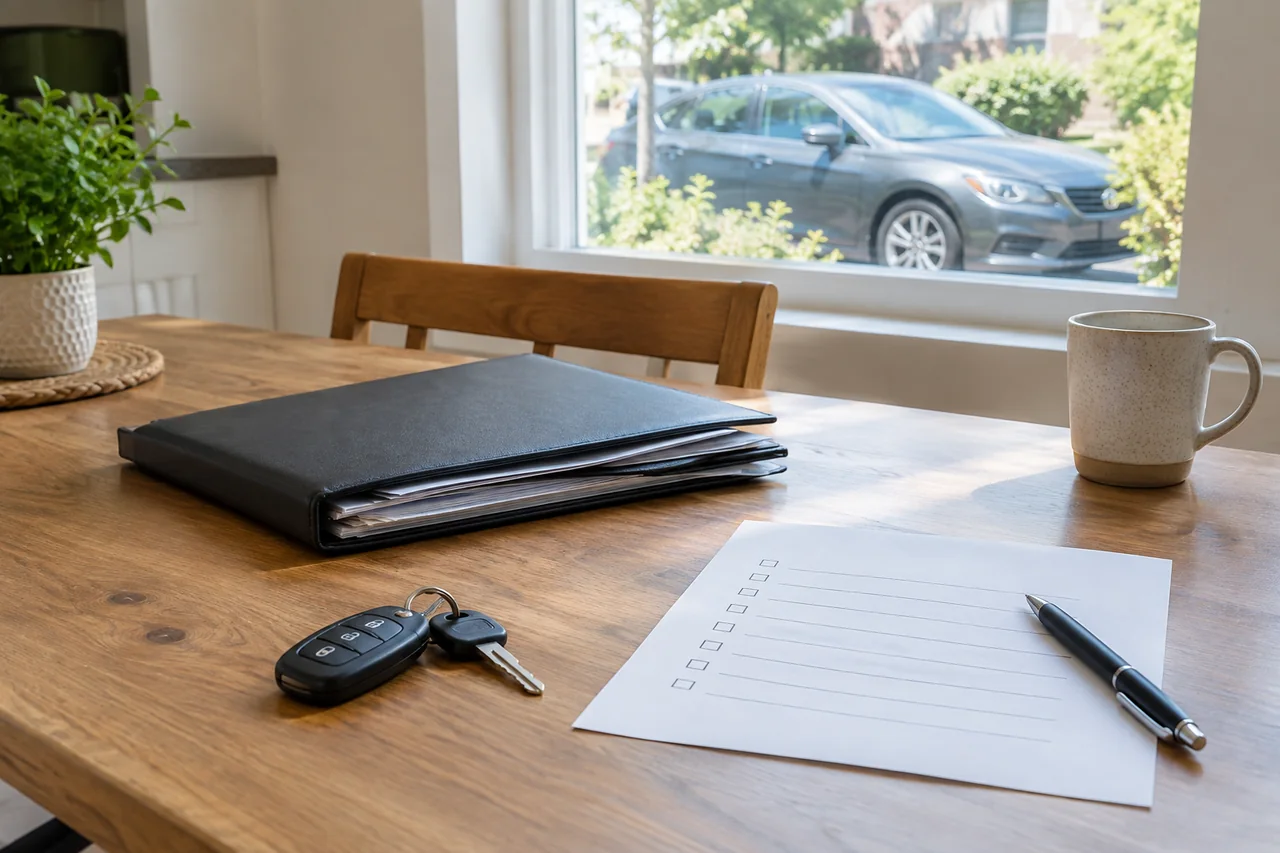
After buying a used car, the first things to do are not cosmetic. Confirm insurance activation, check whether you can drive it legally, gather paperwork for title transfer and registration, finish remaining seller tasks, and set a maintenance baseline from records. Whether the purchase came from a dealer or a private seller, payment does not complete the process. A prioritized checklist keeps the steps after buying a used car in order from the lot to the first service appointment.
Start With Insurance and a Prioritized Checklist
Insurance has to be settled before the car moves, and that is the first thing to do after buying a used car. Confirm that coverage actually applies to this vehicle, then organize a checklist around three windows: what must be finished before driving, what to handle after you arrive home, and what belongs at the first maintenance appointment. Call the insurer, give the VIN from the purchase documents, and ask for the effective date and time of insurance activation. Do not assume an existing policy covers the newly purchased car automatically.
Match the VIN on the insurance confirmation to the VIN on the bill of sale, title paperwork, and any dealer or private-sale contract. A mismatched character can leave the purchased vehicle uninsured even when a policy is active. Ask for proof of coverage you can keep on a phone or in the glove box, because some stops and registration offices expect accessible evidence. Confirm existing-policy coverage in writing with the insurer rather than relying on a rumored grace period. If coverage is not yet in force, delay driving until it is.
Confirm You Can Drive the Car Home Legally and Safely
Can you drive a used car right after buying it? Immediate driving depends on active insurance, legally valid plates or temporary registration, and whether the vehicle looks safe enough to leave under its own power. Payment alone does not establish permission to drive. Plate-transfer rules and temporary permits vary by jurisdiction, so verify the requirements that apply to this trip before you pull away. A dealership may issue temporary tags as part of the sale, while a private purchase may require you to confirm what plates, if any, can legally stay on the car.
Getting the car home still starts with a short walk-around, not a highway test. Look for visible tire damage, working lights, intact mirrors, usable seat belts, fresh leaks, and dashboard warnings. Those observations cannot establish mechanical soundness; they only catch obvious problems that make a departure unwise. If legal driving requirements are unresolved, or the car may be unsafe, arrange professional transport. A licensed mover or tow service can move the vehicle when driving it yourself would leave you uninsured, unplated, or at risk of a breakdown.
Gather Documents for Title Transfer and Registration
Paperwork after buying a used car serves two related jobs: proof of ownership through title transfer, and legal operation through registration. The sale moves possession, but the title still has to be assigned and the vehicle still has to be registered in the new owner's name. What to bring to the DMV after buying a used car commonly includes identification, ownership documents, a purchase agreement or bill of sale, insurance proof, and any applicable odometer statement or lien-release paperwork. Offices can ask for more, so treat this as a starting set.
Registration after buying a used car is not a single national form. Deadlines, taxes, fees, and any inspection or emissions requirement vary, so confirm the rules that apply to this vehicle and this address instead of copying another buyer's process. Before you submit anything, check names, VIN, signatures, sale date, and sale price across every page. Keep copies of what you hand over. If a discrepancy appears, seek correction through the seller or the relevant office rather than hoping a clerk will overlook it. Incomplete or inconsistent documents delay both the title and the plates.
Finish Outstanding Tasks With the Seller
What to do after buying a used car from a dealer includes getting remaining paperwork in writing, and the same follow-through applies at a dealership. Ask which title and registration tasks the dealer handles, what you must still supply, and how to follow up if a document does not arrive. Temporary driving authorization often has an expiration date; note it and follow up before it lapses so you are not left with an unregistered car and expired tags. A verbal promise at the desk is harder to enforce than a dated list of remaining dealer actions.
What to do after buying a used car privately is more of a buyer-managed close. Confirm required seller signatures, ownership documentation, and any applicable lien release before you submit transfer paperwork, because a title with an unreleased lien or a missing assignment will not process. Collect every available key, the owner's manual, maintenance records, warranty documents, and written repair promises, then track anything still outstanding. Spare keys and service history are easy to forget at pickup and costly to reconstruct later.
Establish a Maintenance Baseline From Records and Inspection
Baseline maintenance after the purchase starts with what you actually have: documented service history, current mileage, vehicle age, and the owner's manual. Use those sources to identify likely needs without treating another car's interval as a universal schedule. Check fluid information and any approved observation procedure in the manual. Do not open a hot cooling system, and do not add unspecified fluids just because a reservoir looks low. A fluid's appearance or a seller's assurance cannot confirm maintenance status. Oil that looks dark, or coolant that looks clean, still leaves the last service date unknown.
When condition or history is uncertain, schedule a professional inspection covering tires, brakes, leaks, battery condition, and other systems relevant to this vehicle. Warning lights, overheating, braking concerns, or significant leaks warrant assessment before further driving; a dashboard message is evidence to interpret, not proof a named part has failed. Separate urgent safety concerns from scheduled maintenance and optional improvements so the first appointment has a clear order of work. Mixing a worn tire with a wish-list accessory job delays the items that actually keep the car on the road.
Keep Records and Track Unfinished Follow-Up
A secure folder keeps the purchase from scattering across glove boxes and email. Create one for purchase documents, insurance, title and registration records, inspection findings, and maintenance receipts. Record the purchase mileage and dates of completed service so the next shop is not guessing at history. That log becomes usable maintenance records even if the previous owner handed over little. Keep digital copies as well as paper, because a lost bill of sale is harder to replace under a deadline than it is to duplicate on day one.
Set reminders for confirmed paperwork deadlines, temporary authorization expiration, and maintenance supported by the vehicle's records and the owner's manual. Once the first week ends, confirm that permanent title and registration documents arrived, promised repair work was completed, and unresolved symptoms have a testing appointment. The first things to do after buying a used car get you home; these later checks keep the car legal and documented. An unfinished follow-up, such as a missing lien release or an undiagnosed warning light, remains open until it is resolved.