What to Check When a Car Suddenly Feels Different
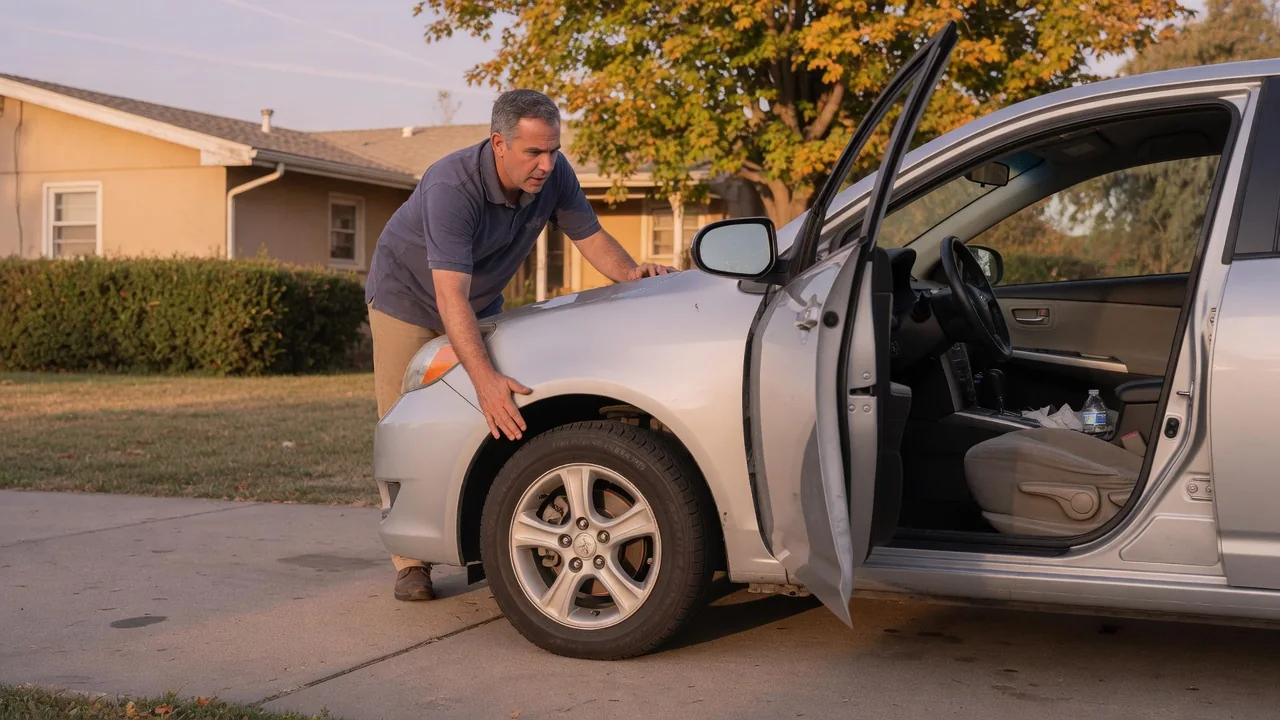
Knowing what to check when a car suddenly feels different starts with staying calm and treating the change as information. A new vibration, a pull to one side, a softer brake pedal, or a loss of power each point toward different systems. The sequence below moves from getting safely off the road to observing, recording, and arranging a proper diagnosis.
Find a safe stop
The first check is not under the hood; it is the road around you. When steering, braking, or power delivery changes abruptly, ease off the accelerator, switch on the hazard lights, and steer smoothly toward a parking lot, a wide shoulder, or a side street. Avoid hard braking unless traffic demands it, because a tire losing pressure or a brake problem can make the car less predictable under sudden inputs. Level, firm ground away from moving traffic gives you room to look the car over.
How urgently you stop depends on what changed. A flashing warning light, a red temperature or oil pressure warning, a brake pedal that sinks, heavy steering, smoke, or a burning smell all justify stopping at the earliest safe place and switching the engine off. A mild vibration or a faint new noise may allow a gentle drive to a nearby exit. Vehicles differ here: hybrids and electric models may show reduced-power messages instead of familiar engine symptoms, so the owner's manual is the reference for what each alert means.
Note warnings and symptoms
Once parked, read the instrument cluster before turning anything off, since some messages clear when the ignition cycles. Note which lights are on, whether they are steady or flashing, and their color; red generally signals a more urgent condition than amber, though symbols and wording vary by manufacturer. Check the temperature gauge, the tire pressure display if the car has one, and any text message on the driver information screen. A phone photo of the dash preserves details that are easy to forget later.
Then describe the feeling itself in plain terms. Does the vibration come through the steering wheel, the seat, or the brake pedal? Does it appear at a certain speed, only while braking, or only under acceleration? A pull to one side might suggest a tire or alignment issue, while hesitation with a rough idle points more toward the engine or fuel delivery. From outside the car, walk around and look for a low or damaged tire, fluid dripping underneath, or anything hanging loose, without reaching near hot or moving parts.
Get diagnosis
Observations narrow the possibilities, but a diagnosis confirms the cause. If a warning light is on, a shop can read stored fault codes with a scan tool, and many drivers own basic readers. A code is evidence to interpret, not proof that a particular part has failed; it identifies a circuit or condition the computer found out of range. Some codes are generic across brands, while others are manufacturer-specific and need to be confirmed against information for that exact vehicle.
A good technician combines codes with your description, a visual inspection, and often a test drive that reproduces the symptom. That is why your notes matter: saying the shudder begins at highway speed and fades when you lift off the accelerator directs testing far better than saying the car feels odd. If the car seems unsafe to drive, with weak brakes, loose steering, overheating, or a flashing engine light, arranging a tow is the cautious choice over driving it to the shop.
Everyday Use and Observations
Sudden changes are easier to recognize when you know how the car normally behaves. Pay casual attention to how the brake pedal feels on the first stop of the day, how the steering returns to center after a turn, how the engine sounds at idle, and how the transmission shifts when cold. That baseline makes a difference stand out early, when a problem is usually smaller. A car that drifts slightly today and pulls firmly next week is telling a story worth catching in its first chapter.
Context also explains many changes that are not faults. A full load of passengers, a roof box, strong crosswinds, grooved pavement, cold weather, or a recent tire change can all alter the ride and steering feel. Fresh fuel from an unfamiliar station or a recent service visit is worth noting too. Ask whether the feeling follows the road surface or stays with the car on different streets. If it disappears on smooth pavement, the road is the likelier cause; if it persists everywhere, the vehicle deserves closer attention.
Limits and Next Steps
Roadside observation has clear limits. You can see a flat tire, read a warning message, or check the oil or coolant level if the manual describes how and the engine has cooled, but you cannot judge worn suspension joints, internal brake condition, or an intermittent sensor fault by looking. Never open a hot cooling system, and do not crawl under a car supported only by a jack. Electric and hybrid vehicles add high-voltage components that should be left to trained technicians.
From there, the next step is matching the response to the severity. Symptoms affecting braking, steering, or engine temperature call for stopping and getting help, while a minor change with no warnings can usually wait for a prompt appointment, provided you drive gently and watch for it worsening. Bring your notes, the dash photo, and any recent service history. If the symptom vanishes, mention it anyway; intermittent problems often leave stored information that helps a technician find the cause before it returns.