What to Check Before Parking a Car for Several Weeks
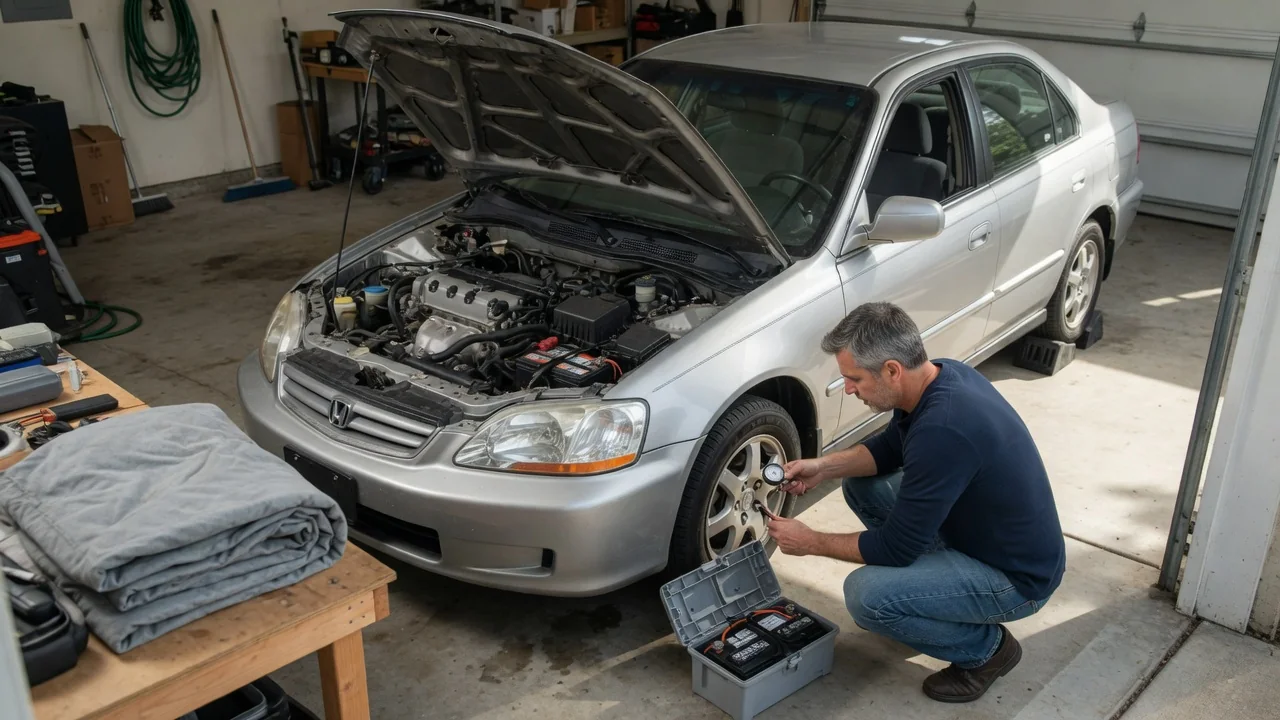
Knowing what to check before parking a car for several weeks can be the difference between a normal restart and a dead battery, misshapen tires, or stale fluids. A few weeks of sitting is not long-term storage, but the vehicle still draws power, loses air pressure, and reacts to its surroundings. A short review of the battery, tires, fluids, and parking location covers most of the risk.
Prepare the vehicle
Start with the battery, because modern vehicles keep drawing a small current for alarms, keyless entry receivers, and control modules even when switched off. A healthy, fully charged battery usually tolerates a few weeks of that drain, while an older or already weak one may not. If the engine has been cranking slowly or the car has mostly made short trips, a longer drive beforehand helps restore charge. A battery maintainer is an option where an outlet is available, provided it suits the battery type listed in the owner's manual.
Tires and fluids deserve the same attention before the car sits. Set tire pressures to the figure on the door jamb placard, since tires lose air gradually and an underinflated tire is more likely to develop a temporary flat spot. Check engine oil, coolant, brake fluid, and washer fluid levels against their marks, and look underneath for fresh drips. A reasonably full fuel tank leaves less room for moisture-laden air. Washing the exterior and removing food and trash from the cabin also discourages paint damage, odors, and rodents.
Storage conditions
Where the car sits matters as much as how it was prepared. A closed, dry garage protects paint, rubber seals, and wiper blades from sun and rain while keeping temperature swings modest, which is easier on the battery. Outdoor parking is workable, but choose a level, firm surface rather than grass or soil, where moisture rising from the ground encourages corrosion on brake rotors and underbody components. Avoid spots under trees, since sap, bird droppings, and fallen leaves can stain paint and clog the drains at the base of the windshield.
The parking brake is a detail that varies by vehicle. On some cars, leaving it applied for weeks in damp conditions can let pads or shoes stick to the rotors or drums, so some owners rely on Park or a gear and wheel chocks on level ground instead. Vehicles with electronic parking brakes may apply them automatically, and the manual explains what is recommended. A breathable, properly fitted cover helps outdoors, whereas a plastic tarp traps moisture against the paint. Closing windows and vents fully keeps damp air and pests out of the interior.
Return-to-service check
Before starting the engine after several weeks, walk around the car. Look at each tire for an obviously low stance, check the ground beneath the engine and transmission for new spots, and glance under the hood for nesting material, chewed wiring, or debris near belts and the air intake. Confirm oil and coolant levels again, since a slow leak that went unnoticed in daily driving becomes obvious after sitting. Measure tire pressures with a gauge rather than judging by eye, and top them up before driving any distance.
When the engine starts, pay attention to how it cranks. Slow, labored turning or flickering dash lights point to a battery that has lost charge and may need recharging and testing rather than immediate replacement. Let the warning lights go through their normal check and confirm they go out. The first few stops may feel or sound rough because a thin layer of surface rust forms on brake rotors; this typically clears with gentle braking. A slight vibration from temporary tire flat spots often fades as the tires warm.
Everyday Use and Observations
How the car was used before parking shapes what to expect afterward. A vehicle driven mostly on short trips rarely gives the alternator time to fully recharge the battery, so it goes into storage at a disadvantage. Cars with aftermarket accessories such as dash cameras, trackers, or alarm systems often have higher standby drain than the factory intended. Noticing habits like these helps explain why two similar vehicles parked for the same period can behave very differently when it comes time to start them again.
Ordinary observations during daily driving are also useful evidence. A tire that regularly needs air has a slow leak that will leave it noticeably low after weeks of sitting, and it is worth repairing first. A faint coolant smell, an oil spot on the driveway, or a brake pedal that feels softer than usual all suggest issues that sitting will not improve. Hybrids and electric vehicles add a high-voltage battery with its own storage guidance, so the recommended state of charge should be confirmed in the manual for that model.
Limits and Next Steps
These checks suit a pause of several weeks, not months. Longer storage raises additional questions, including fuel aging, more persistent tire flat-spotting, and whether the battery should be disconnected, and the right answers depend on the vehicle. Disconnecting a battery can reset learned settings or affect systems on some models, so manufacturer guidance should come first. Starting the engine briefly every few days is also less helpful than it sounds, because short idling may not replace the charge used to crank and leaves condensation in the oil and exhaust.
If the car does not return to normal quickly, treat the symptoms as information rather than a verdict. A battery that fails once after sitting may simply be discharged, and proper testing shows whether it can still hold a charge. A warning light or stored fault code after a low-voltage event is evidence to interpret, not proof that a component has failed. Persistent vibration, a brake that drags or pulls, fluid on the ground, or signs of rodent damage to wiring are good reasons to have a qualified technician inspect the vehicle.