What to Check Before Driving at Night on a Long Trip
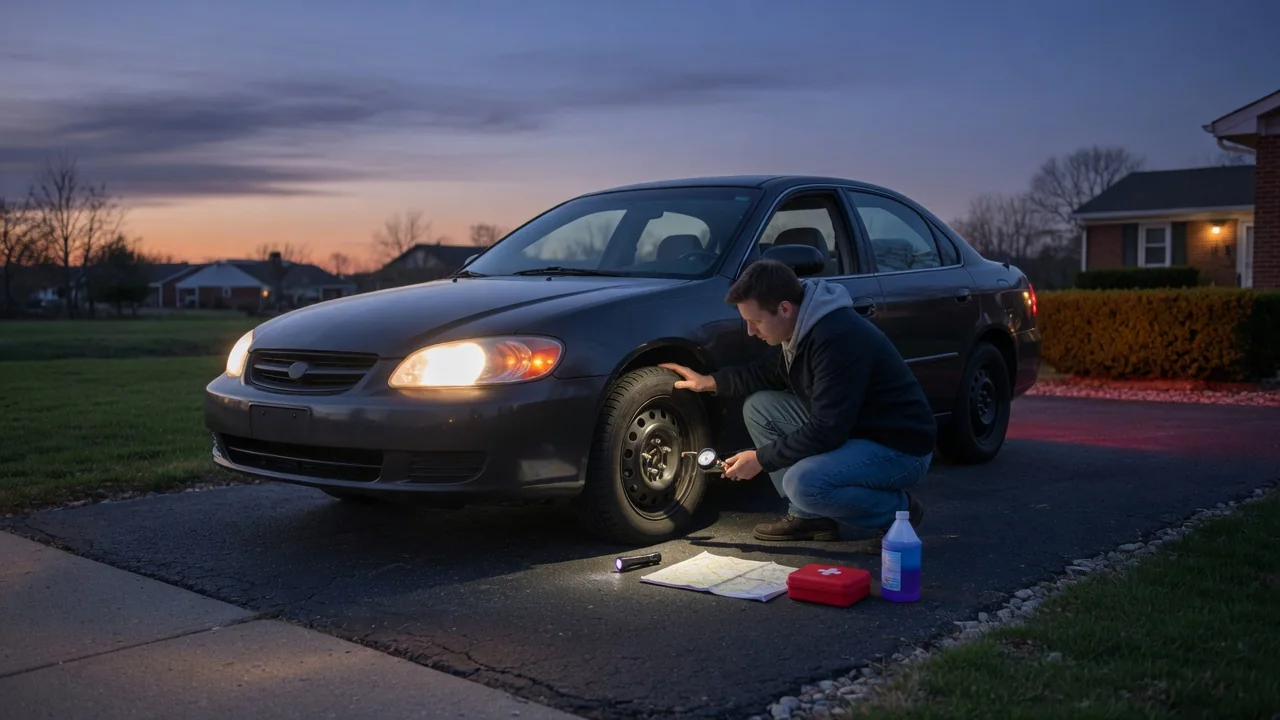
Night driving on a long trip leaves less margin for error. You see less, other drivers see you less clearly, and fatigue builds during the hours when your body expects sleep. A short routine before departure covers the three factors you can control before the sun goes down. This guide explains what to check before driving at night on a long trip, from lights and glass to your own readiness and a realistic plan for where and when to stop.
Lights and glass: what to inspect before dark
Night road trip vehicle checks start with a walk-around at dusk, when you can still see the car clearly and the lamps are easy to judge. Switch on the low beams, high beams, parking lamps, turn signals and hazard lights. Have someone press the brake pedal while you check the rear, including the center brake lamp. Also check the reverse lamps and the license plate light, which are easy to overlook. A failed bulb or LED module on one side makes you harder for others to see and may draw a traffic stop. On many vehicles with sealed LED assemblies, a dead section means replacing a component rather than swapping a bulb. Find that out before the trip, not on the road.
Headlight performance depends on more than the light source. Plastic lenses can haze or yellow with age, which scatters light and shortens the useful beam. Road film, insects and salt residue have the same effect over hours instead of years, so clean the lenses before leaving and again at fuel stops. Aim matters too. Beams pointed too low shorten your view, and beams pointed too high glare oncoming drivers. A heavily loaded trunk or roof box can tilt the nose up and change the effective aim. Some vehicles have a manual leveling control or automatic leveling; the owner's manual explains which applies to yours.
Glass is the other half of night visibility. Clean the windshield inside and out, because the film that builds up on the interior surface turns oncoming headlights into starbursts. Check the wiper blades for streaking or chatter, and top up the washer fluid with a product suited to the temperatures you expect. Look for chips or cracks in the driver's line of sight, since they scatter light. Adjust the mirrors and use the day/night setting or auto-dimming feature if your car has one. Turn the instrument and screen brightness down far enough that it does not wash out your view of the road.
Driver readiness: fatigue, eyes and comfort
The vehicle is only part of the check. Drowsiness is a major risk on long night drives because alertness naturally dips during the hours you would normally be asleep, however familiar the road is. The most effective preparation is enough sleep before departure, plus an afternoon rest or nap before a planned night drive if you can manage one. Be honest about how long you have already been awake, including any workday before the trip. Caffeine can raise alertness for a limited time, but it does not replace sleep, and its effect can wear off abruptly.
Learn the warning signs and treat them as a reason to stop rather than push on. They include repeated yawning, heavy eyelids, drifting within the lane, missing exits or road signs, and being unable to recall the last few miles. Opening a window or turning up the radio may feel like it helps, but neither reliably restores alertness. Also read the labels on any medications you take, including some over-the-counter allergy and cold products, for drowsiness warnings.
Your eyes deserve the same attention as the headlights. If you wear corrective lenses, make sure they are clean and your prescription is current, because darkness exposes small vision errors that daylight hides. Anti-reflective coatings can reduce some glare. Tinted or so-called night-driving lenses reduce the light reaching your eyes and are generally not a substitute for proper vision correction. Set the seat, steering wheel and headrest for a posture you can hold comfortably for hours, and keep the cabin slightly cool rather than warm.
Stop plan: where, when and what to carry
A stop plan lets you make decisions in advance, while you are still alert. Before leaving, map the route and mark break points at regular intervals. A common rule of thumb is to stop roughly every two hours even when you feel fine. Confirm that the fuel stations, rest areas and restaurants you are counting on are open overnight, because some services, especially in rural areas, close in the evening. On remote stretches, refuel before the tank runs low, since the next open station may be farther away than you expect.
Plan a fallback as well. Identify places where you could stop to sleep if fatigue arrives early, such as lodging along the route or well-lit areas where parking is legal. Decide your rule for stopping before the trip, not at 2 a.m. If you are sharing the driving, agree on when to swap and make sure the off-duty driver actually rests. Tell someone your route and expected arrival time, and check in with them at planned stops.
Pack for a breakdown in the dark. Bring a charged phone and a way to charge it in the car, a flashlight or headlamp, a reflective vest, warning triangles or flares where permitted, water, a warm layer and basic tools. Check the spare tire or tire repair kit, and find out where the jack points are. At every stop, walk around the car, wipe the lights and glass, and reassess how alert you feel.
Practical implications and limits
These checks reduce risk but do not remove it. Clean glass and well-aimed headlights extend what you can see, but the beam still reaches only a limited distance. Drive at a speed that lets you stop within the area you can actually see. Wildlife, unlit pedestrians and debris remain harder to detect at night however well prepared the car is. Rest and caffeine improve alertness only temporarily. Once fatigue signs appear, the reliable fix is sleep, and a planned stop costs far less than the alternatives.
Vehicle features vary widely. Automatic high beams, adaptive or curve-following headlights, night-vision displays, lane-keeping systems and driver-attention monitors work differently across manufacturers and trim levels. Each has conditions under which it may not respond as expected. Treat these systems as aids rather than replacements for your own judgment, and use the owner's manual to learn how they behave and how to adjust headlight aim or leveling. Rules on lighting, high-beam use and roadside stopping also differ by state, so check local requirements on long interstate routes. If a check turns up a problem you cannot fix before departure, such as a failed headlamp or a crack in your line of sight, postponing the night portion of the trip is often the safest choice.