What to Check After Hitting a Deep Pothole
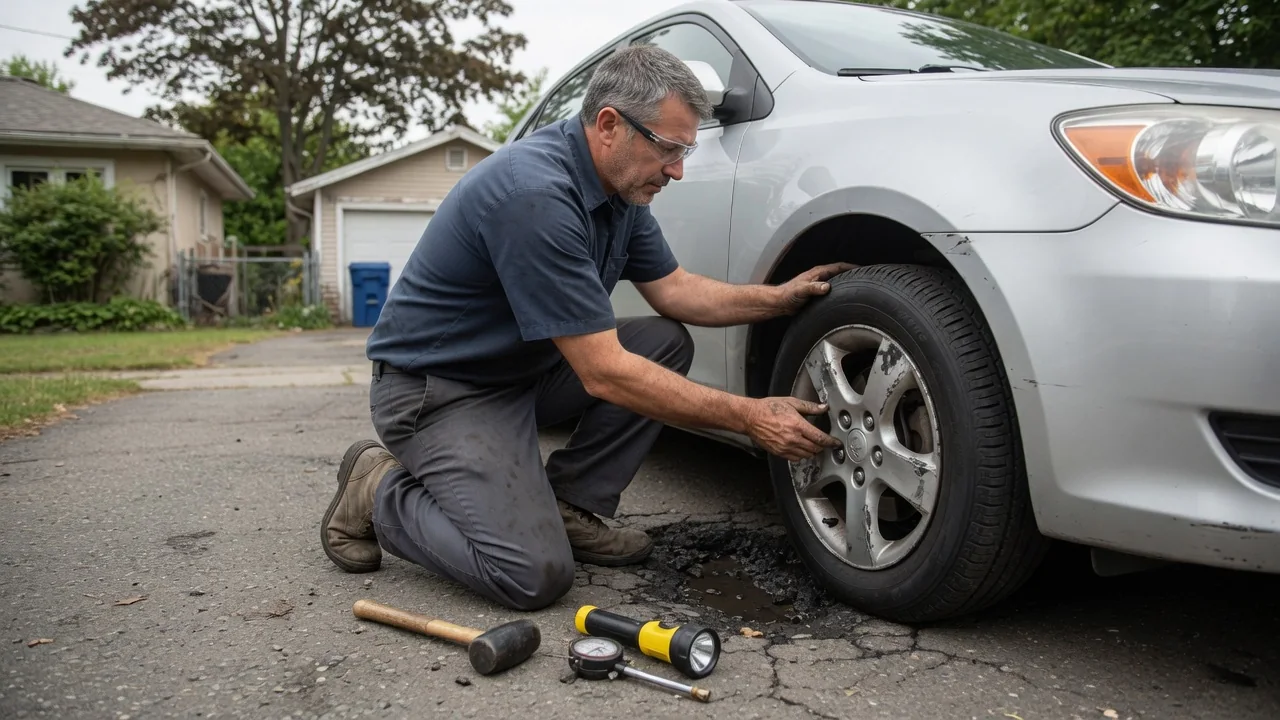
A hard pothole strike can damage a tire, bend a wheel, or shift suspension geometry without leaving anything obvious at first glance. Knowing what to check after hitting a deep pothole helps you separate a harmless jolt from damage that affects safety. The clues usually show up in the sidewall, the rim edge, the steering wheel, and the way the car tracks down the road.
Sidewall and rim
When a tire drops into a deep pothole, the sidewall can be pinched between the pavement edge and the wheel flange. That pinch may break the internal cords even when the rubber surface looks intact. The telltale result is a bulge or bubble on the sidewall, which marks a spot where air pressure is being held by rubber alone. Look over the full circumference of the tire, including the inner side facing the suspension, since damage there is easy to miss from a standing position.
The rim deserves the same slow inspection. A bent lip, a flat spot on the edge, a crack near a spoke, or fresh scraping on the wheel face all suggest the wheel took the load. Aluminum alloy wheels tend to crack or deform in a localized way, while steel wheels more often bend. Low-profile tires leave less cushioning between road and rim, so vehicles with large wheels and short sidewalls are generally more exposed. A slow pressure loss afterward can point to a disturbed bead seal.
Vibration
A new vibration that appears right after the impact is one of the most useful clues. A shake felt mainly through the steering wheel usually points toward the front wheels or tires, while a vibration sensed through the seat or floor more often originates at the rear. Note the speed at which it begins and whether it fades or intensifies as you go faster. A bent wheel, a shifted tire belt, or a lost balance weight can each produce a speed-dependent shimmy.
The character of the vibration helps narrow things down. A steady rhythmic shake that tracks road speed suggests something rotating is no longer round or balanced. A wobble at low speed that feels like the car is rocking side to side may indicate a separated tire belt, which calls for prompt attention. Vibration that appears only under braking points in a different direction than one present during steady cruising. How strongly any of this is felt varies with suspension design, tire size, and how well the cabin is isolated.
Alignment follow-up
Wheel alignment describes the angles at which the tires meet the road, and a sharp impact can push those angles out of specification by bending a component or shifting an adjustment. The classic signs are a steering wheel that sits off-center while driving straight, or a car that drifts steadily to one side on a flat, level road. Check this on a few different roads, because the crown built into many surfaces naturally causes a gentle drift that has nothing to do with damage.
Alignment problems are not always felt right away. A small change in toe may produce no obvious pull yet scrub the tread over the following weeks, leaving feathered edges or wear concentrated on one shoulder. That is why an alignment check is worth considering after a severe hit even when the car feels normal. A shop measurement can also reveal whether an angle is out because of a bent part rather than a simple adjustment, which matters since alignment cannot correct damaged components. Adjustable angles differ between vehicles.
Everyday Use and Observations
The days after the impact are an informal test period. Check tire pressure when the tires are cold and compare it against the figure on the door jamb placard, then recheck over the next several days. A tire that keeps losing air may have a damaged bead, a cracked wheel, or a puncture from debris in the hole. Vehicles with tire pressure monitoring may display a warning, but the system typically reacts only after a meaningful drop, so a gauge gives earlier information.
Pay attention to sounds and steering feel during routine driving. A clunk over bumps, a rattle from one corner, or steering that feels looser or heavier than before can indicate that a suspension or steering part absorbed some of the blow. Notice whether the car settles normally after dips or keeps bouncing, and whether it sits level when parked. Look under the affected corner for fresh fluid, which could suggest a leaking shock or strut. These observations give a technician a far clearer starting point.
Limits and Next Steps
A visual check has real limits. Internal tire damage, hairline wheel cracks, and slightly bent suspension arms can all hide from a driveway inspection, and some problems only emerge with the wheel off the car or spinning on a balancer. A sidewall bulge, a visibly bent or cracked rim, rapid air loss, or a strong wobble are reasons to stop driving on that tire and fit the spare or arrange a tow. Sidewall damage is generally not considered repairable, though the final judgment belongs to a tire professional.
For less dramatic symptoms, a sensible next step is a professional inspection that covers tire condition, wheel runout, balance, and alignment, along with a look at suspension and steering components at the affected corner. Describe where the impact occurred, roughly how fast you were traveling, and what has changed since. If the car feels and measures normal, keep watching tread wear and pressure over the following weeks. Repair options and what can be straightened, rebalanced, or adjusted depend on the specific vehicle and wheel construction.